












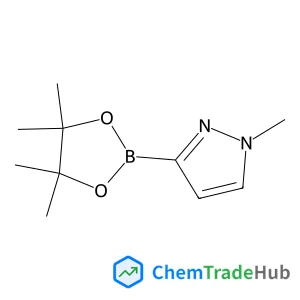
1-Methyl-3-(4,4,5,5-tetramethyl-1,3,2-dioxaborolan-2-yl)-1H-pyrazole
CAS Number:
1020174-04-2
Molecular Formula:
C10H17BN2O2
Victor Gray, Ambra Dreos, Paul Erhart, Bo Albinsson, Kasper Moth-Poulsen, Maria Abrahamsson
Triplet–triplet annihilation photon upconversion (TTA-UC) can, through a number of energy transfer processes, efficiently combine two low frequency photons into one photon of higher frequency. TTA-UC systems consist of one absorbing species (the sensitizer) and one emitting species (the annihilator). Herein, we show that the structurally similar annihilators, 9,10-diphenylanthracene (DPA, 1), 9-(4-phenylethynyl)-10-phenylanthracene (2) and 9,10-bis(phenylethynyl)anthracene (BPEA, 3) have very different upconversion efficiencies, 15.2 ± 2.8%, 15.9 ± 1.3% and 1.6 ± 0.8%, respectively (of a maximum of 50%). We show that these results can be understood in terms of a loss channel, previously unaccounted for, originating from the difference between the BPEA singlet and triplet surface shapes. The difference between the two surfaces results in a fraction of the triplet state population having geometries not energetically capable of forming the first singlet excited state. This is supported by TD-DFT calculations of the annihilator excited state surfaces as a function of phenyl group rotation. We thereby highlight that the commonly used “spin-statistical factor” should be used with caution when explaining TTA-efficiencies. Furthermore, we show that the precious metal free zinc octaethylporphyrin (ZnOEP) can be used for efficient sensitization and that the upconversion quantum yield is maximized when sensitizer–annihilator spectral overlap is minimized (ZnOEP with 2).
DOI: 10.1039/C3CP50606A
Erik C. Neyts, Umedjon Khalilov, Bart Partoens
DOI: 10.1039/C3CP51621K
Je Hyun Bae, Yang-Rae Kim, R. Soyoung Kim, Taek Dong Chung
DOI: 10.1039/C3CP50175B
G. Ramos-Sanchez, P. B. Balbuena
DOI: 10.1039/C3CP51791H
Minqiang Hou, Jianling Zhang, Buxing Han, Qingqing Mei, Hui Ning, Dezhong Yang
DOI: 10.1039/C3CP44670K
Rocio Esquembre, Jesus M. Sanz, J. Gerard Wall, Francisco del Monte, C. Reyes Mateo, M. Luisa Ferrer
DOI: 10.1039/C3CP44299C
Esther Rebollar, Javier R. Vázquez de Aldana, Ignacio Martín-Fabiani, Margarita Hernández, Daniel R. Rueda, Tiberio A. Ezquerra, Concepción Domingo, Pablo Moreno, Marta Castillejo
DOI: 10.1039/C3CP51523K
Chang-Lyoul Lee, Shinuk Cho, Seung-Hwan Oh, Seung-Hyeon Moon, Ahmed Elbarbary
DOI: 10.1039/C3CP52151F
Juraj Sibik, Evgenyi Y. Shalaev, J. Axel Zeitler
DOI: 10.1039/C3CP51936H
Antonio Politano, Davide Campi
DOI: 10.1039/C3CP51954F
Waste containing N-Methoxy-N-methyl-1,3-thiazole-5-carboxamide (CAS: 898825-89-3...
N-(4-Biphenylyl)dibenzo[b,d]furan-4-amine should be stored in a tightly sealed c...
The market for 3-Acetamido-5-amino-2,4,6-triiodobenzoic acid (CAS: 1713-07-1) is...
Benzyl 2-O-acetyl-3,4,6-tri-O-benzyl-beta-D-galactopyranoside (CAS: 61820-03-9) ...
2-Ethylpiperazine dihydrochloride (CAS: 438050-52-3) is regulated under the Glob...
1,1'-[1,3-Phenylenebis(methylene)]bis(3-methyl-1H-pyrrole-2,5-dione) (CAS: 11946...
Several alternatives can be used in the synthesis of 5-Fluoro-2-(1-pyrrolidinyl)...
Proper personal protective equipment (PPE) must be worn when handling this compo...
When handling 6-Bromoimidazo[1,2-a]pyridin-8-amine, it is important to wear appr...
Alternatives to (2S,4R)-4-(4-Nitrobenzyl)pyrrolidine-2-carboxylic acid hydrochlo...

Physical Chemistry Chemical Physics (PCCP) is an international journal co-owned by 19 physical chemistry and physics societies from around the world. This journal publishes original, cutting-edge research in physical chemistry, chemical physics and biophysical chemistry. To be suitable for publication in PCCP, articles must include significant innovation and/or insight into physical chemistry; this is the most important criterion that reviewers and Editors will judge against when evaluating submissions. The journal has a broad scope and welcomes contributions spanning experiment, theory, computation and data science. Topical coverage includes spectroscopy, dynamics, kinetics, statistical mechanics, thermodynamics, electrochemistry, catalysis, surface science, quantum mechanics, quantum computing and machine learning. Interdisciplinary research areas such as polymers and soft matter, materials, nanoscience, energy, surfaces/interfaces, and biophysical chemistry are welcomed if they demonstrate significant innovation and/or insight into physical chemistry. Joined experimental/theoretical studies are particularly appreciated when complementary and based on up-to-date approaches.
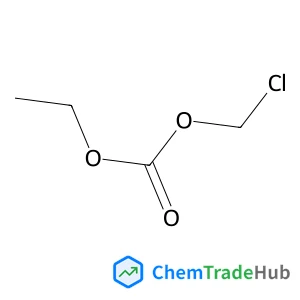
![1,2-Diphenyl-4-[2-(phenylsulfinyl)ethyl]-3,5-pyrazolidinedione structure](https://static.chemtradehub.com/structs/57-/57-96-5-efcc.webp "1,2-Diphenyl-4-[2-(phenylsulfinyl)ethyl]-3,5-pyrazolidinedione structure")
![5-Acetyl-2,3-dihydrobenzo[b]furan structure](https://static.chemtradehub.com/structs/908/90843-31-5-eea4.webp "5-Acetyl-2,3-dihydrobenzo[b]furan structure")
![[4-Amino-2-(methylsulfanyl)-5-pyrimidinyl]methanol structure](https://static.chemtradehub.com/structs/588/588-36-3-fc73.webp "[4-Amino-2-(methylsulfanyl)-5-pyrimidinyl]methanol structure")






