


![[4-(Isobutyrylamino)phenyl]boronic acid structure](https://static.chemtradehub.com/structs/874/874219-50-8-6ab5.webp "[4-(Isobutyrylamino)phenyl]boronic acid structure")
Plasma treatment effect on polymer buried interfacial structure and property
Literature Information
Publication Date
2017-04-19
DOI
10.1039/C7CP00567A
Impact Factor
3.676
Authors
Nathan W. Ulrich, John Andre, Jaimal Williamson, Kang-Wook Lee, Zhan Chen
View Original
Abstract
Adhesion is important in many industrial applications including those in the microelectronics industry. Flip-chip assemblies commonly utilize epoxy underfills to promote reliability and the buried interfacial structure of underfills is crucial to device lifetime. Poor adhesion at this interface can cause premature device failure. One method to increase adhesion strength is to plasma treat the substrate attached to underfills, however, the mechanism of this increase in adhesion strength has not been thoroughly investigated at the molecular level in situ, because it is difficult to probe a buried interface where the adhesion occurs. In this work, sum frequency generation (SFG) vibrational spectroscopy was utilized to investigate the buried polymer/epoxy resin interface at the molecular level. Plasma treatment was performed on the polymer surfaces and the effects were examined. The buried interfaces between the polymer surface before and after plasma treatment and epoxy were then investigated to understand if the effects of the treatment can be observed using SFG. It was found that the molecular structure of the buried interface of the pristine polymer surface in contact with epoxy is drastically different from the buried interface of the plasma treated surface with epoxy. The buried interface containing the plasma treated polymer surface was found to be considerably more disordered and had much higher adhesion strength. This research elucidates the plasma treatment effects on structures and properties of buried polymer/epoxy interfaces, providing in-depth understanding on the mechanism of adhesion strength increase facilitated by plasma treatment.
Recommended Journals

Journal of Peptide Science

Russian Journal of Bioorganic Chemistry

Current Opinion in Solid State & Materials Science

Russian Chemical Bulletin

Journal of Natural Medicines

Acta Materialia

Crystallography Reports

Chemistry Education Research and Practice

Journal of Saudi Chemical Society

Saudi Pharmaceutical Journal
Related Literature
Rapid Wolff–Kishner reductions in a silicon carbide microreactor
Stephen G. Newman, Lei Gu, Christoph Lesniak, Georg Victor, Frank Meschke, Lahbib Abahmane, Klavs F. Jensen
2013-11-12
Paper
DOI: 10.1039/C3GC41942H
Signal loss in 1D magic-angle spinning exchange NMR (CODEX): radio-frequency limitations and intermediate motions
Christiane Hackel, Cornelius Franz, Anja Achilles, Kay Saalwächter, Detlef Reichert
2009-07-17
Paper
DOI: 10.1039/B906527J
Investigation on the dynamics of electron transport and recombination in TiO2nanotube/nanoparticle composite electrodes for dye-sensitized solar cells
Raheleh Mohammadpour, Azam Iraji zad, Anders Hagfeldt, Gerrit Boschloo
2011-11-03
Paper
DOI: 10.1039/C1CP21517E
ZnO nanorods on reduced graphene sheets with excellent field emission, gas sensor and photocatalytic properties
Rujia Zou, Guanjie He, Kaibing Xu, Qian Liu, Zhenyu Zhang, Junqing Hu
2013-05-16
Paper
DOI: 10.1039/C3TA11490B
Near-infrared light-responsive, diselenide containing core-cross-linked micelles prepared by the Diels–Alder click reaction for photocontrollable drug release application
Sabrina Aufar Salma, Dong Woo Kim, Cuong Minh Quoc Le, Byung-Hyun Ahn, Gun-Do Kim, Kwon Taek Lim
2018-09-06
Paper
DOI: 10.1039/C8PY00961A
Activities comparison of Schiff base zinc and tri-zinc complexes for alternating copolymerization of CO2 and epoxides
Yonghang Xu, Min Xiao, Shuanjin Wang, Mei Pan, Yuezhong Meng
2014-02-12
Paper
DOI: 10.1039/C4PY00008K
A gene-activating skin substitute comprising PLLA/POSS nanofibers and plasmid DNA encoding ANG and bFGF promotes in vivo revascularization and epidermalization
Dongwei Wu, Jianwang Tan, Zhibin Liu
2018-09-28
Paper
DOI: 10.1039/C8TB02006J
Sustainable route to methyl-9-hydroxononanoate (polymer precursor) by oxidative cleavage of fatty acid methyl ester from rapeseed oil
Kévin Louis, Laurence Vivier, Jean-Marc Clacens, Markus Brandhorst, Jean-Luc Dubois, Karine De Oliveira Vigier, Yannick Pouilloux
2013-10-04
Communication
DOI: 10.1039/C3GC41491D
You might also like
Compound Q&A
Are there alternatives to 1-(4-Chlorophenyl)-N-hydroxymethanimine (CAS: 3848-36-0) in synthesis?
When considering alternatives to 1-(4-Chlorophenyl)-N-hydroxymethanimine (CAS: 3...
3848-36-01-(4-Chlorophenyl)-N...
Compound Q&A
How should (1R,9S,10S,12S,14E,16S,19R,20R,21S,22R)-3,9,21-Trihydroxy-5,10,12,14,16,20,22-heptamethyl-23,24-dioxatetracyclo[17.3.1.1~6,9~.0~2,7~]tetracosa-2,5,7,14-tetraen-4-one (CAS: 183202-73-5) be stored?
This compound should be stored in a cool, dry place away from direct sunlight. I...
183202-73-5(1R,9S,10S,12S,14E,1...
Compound Q&A
How is 3-(4-Bromophenyl)-5-(2-fluorophenyl)-1,2,4-oxadiazole (CAS: 419553-16-5) typically synthesized?
3-(4-Bromophenyl)-5-(2-fluorophenyl)-1,2,4-oxadiazole is synthesized through a m...
419553-16-53-(4-Bromophenyl)-5-...
Compound Q&A
How is 5-Chloro-2-(4-chlorophenyl)-4-methyl-6-[3-(1-piperidinyl)propoxy]pyrimidine (CAS: 1639220-19-1) typically synthesized?
5-Chloro-2-(4-chlorophenyl)-4-methyl-6-[3-(1-piperidinyl)propoxy]pyrimidine (CAS...
1639220-19-15-Chloro-2-(4-chloro...
Compound Q&A
What industries use 2-Chloro-4-(difluoromethoxy)pyridine (CAS: 1206978-15-5)?
2-Chloro-4-(difluoromethoxy)pyridine is used in the pharmaceutical industry for ...
1206978-15-52-Chloro-4-(difluoro...
Compound Q&A
What regulatory guidelines apply to 3-Chloro-6-methylpyridazine (CAS: 1121-79-5)?
3-Chloro-6-methylpyridazine (CAS: 1121-79-5) is classified under the Globally Ha...
1121-79-53-Chloro-6-methylpyr...
Compound Q&A
Are there alternatives to Methyl 4,5-dimethyl-2-nitrobenzoate in synthesis?
Several alternatives can be used in the synthesis of Methyl 4,5-dimethyl-2-nitro...
90922-74-0Methyl 4,5-dimethyl-...
Compound Q&A
Are there alternatives to (2E,2'E)-3,3'-(1,4-Phenylene)bisacrylaldehyde in synthesis?
Alternatives to (2E,2'E)-3,3'-(1,4-Phenylene)bisacrylaldehyde include other acry...
63405-68-5(2E,2'E)-3,3'-(1,4-P...
Compound Q&A
What is 3-Amino-5-chloropyridin-2-ol hydrochloride (CAS: 1261906-29-9)?
3-Amino-5-chloropyridin-2-ol hydrochloride is an organic compound with the CAS n...
1261906-29-93-Amino-5-chloropyri...
Compound Q&A
What precautions should be taken when handling 6,7-Difluoro-2,3-dihydro-4H-chromen-4-one (CAS: 1092349-93-3)?
When handling 6,7-Difluoro-2,3-dihydro-4H-chromen-4-one, it is essential to wear...
1092349-93-36,7-Difluoro-2,3-dih...
Source Journal
Physical Chemistry Chemical Physics

CiteScore:
5.5
Self-citation Rate:
10.3%
Articles per Year:
3036
Physical Chemistry Chemical Physics (PCCP) is an international journal co-owned by 19 physical chemistry and physics societies from around the world. This journal publishes original, cutting-edge research in physical chemistry, chemical physics and biophysical chemistry. To be suitable for publication in PCCP, articles must include significant innovation and/or insight into physical chemistry; this is the most important criterion that reviewers and Editors will judge against when evaluating submissions. The journal has a broad scope and welcomes contributions spanning experiment, theory, computation and data science. Topical coverage includes spectroscopy, dynamics, kinetics, statistical mechanics, thermodynamics, electrochemistry, catalysis, surface science, quantum mechanics, quantum computing and machine learning. Interdisciplinary research areas such as polymers and soft matter, materials, nanoscience, energy, surfaces/interfaces, and biophysical chemistry are welcomed if they demonstrate significant innovation and/or insight into physical chemistry. Joined experimental/theoretical studies are particularly appreciated when complementary and based on up-to-date approaches.
Recommended Compounds
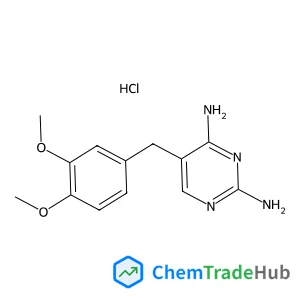
5-(3,4-Dimethoxybenzyl)-2,4-pyrimidinediamine hydrochloride (1:1)
CAS Number:
2507-23-5
Molecular Formula:
C13H17ClN4O2
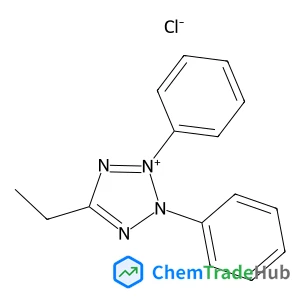
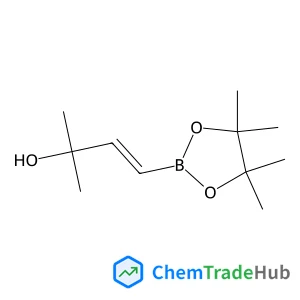
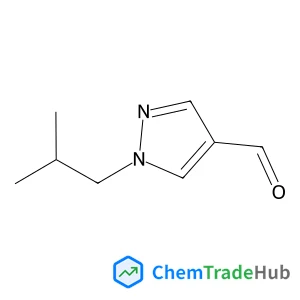
(E)-2-methyl-4-(4,4,5,5-tetramethyl-1,3,2-dioxaborolan-2-yl)but-3-en-2-ol
CAS Number:
581802-26-8
Molecular Formula:
C11H21BO3
Recommended Suppliers





Disclaimer
This page provides academic journal information for reference and research purposes only. We are not affiliated with any journal publishers and do not handle publication submissions. For publication-related inquiries, please contact the respective journal publishers directly.
If you notice any inaccuracies in the information displayed, please contact us at support@chemtradehub.com. We will promptly review and address your concerns.