












The mechanism of the Ser-(cis)Ser-Lys catalytic triad of peptide amidases
Literature Information
Publication Date
2017-03-30
DOI
10.1039/C7CP00277G
Impact Factor
3.676
Authors
N. M. F. S. A. Cerqueira, H. Moorthy, P. A. Fernandes, M. J. Ramos
View Original
Abstract
In this paper, we report a theoretical investigation of the catalytic mechanism of peptide amidases that involve a Ser-(cis)Ser-Lys catalytic triad. Previous suggestions propose that these enzymes should follow a distinct catalytic mechanism from the one that is present in the classic Ser-His-Asp catalytic triad. The theoretical and computational results obtained in this work indicate the opposite idea, showing that both mechanisms are very similar and only few differences are observed between both reactions. The results reveal that the different alignment of the Ser-(cis)Ser-Lys catalytic triad in relation to the classical Ser-His-Asp triad may provide a better stabilisation of the reaction intermediates, and therefore make these enzymes catalytically more efficient. The catalytic mechanism has been determined at the M06-2X/6-311++G**//B3LYP/6-31G* level of theory and requires five sequential steps instead of the two that are generally proposed: (i) nucleophilic attack of serine on the carbonyl group of the substrate, forming the first tetrahedral intermediate, (ii) formation of an acyl–enzyme complex, (ii) release of an ammonia product, (iv) nucleophilic attack of a water molecule forming the second tetrahedral intermediate, and (iv) the release of the product of the reaction, the carboxylic acid. The computational results suggest that the rate-limiting step is the first one that requires an activation free energy of 15.93 kcal mol−1. This result agrees very well with the available experimental data that predict a reaction rate of 2200 s−1, which corresponds to a free energy barrier of 14 kcal mol−1.
Related Literature
Spatial metabolic fingerprinting using FT-IR spectroscopy: investigating abiotic stresses on Micrasterias hardyi
Soyab A. Patel, Felicity Currie, Nalin Thakker, Royston Goodacre
2008-10-21
Paper
DOI: 10.1039/B809441A
Facile analysis of metabolites by capillary electrophoresis coupled to matrix-assisted laser desorption/ionization mass spectrometry using target plates with polysilazane nanocoating and grooves
Andrea Amantonico, Pawel L. Urban, Renato Zenobi
2009-05-27
Communication
DOI: 10.1039/B907039G
In situ detection of pterins by SERS
Ross Stevenson, Robert J. Stokes, Donna MacMillan, David Armstrong, Karen Faulds, Roger Wadsworth, Suma Kunuthur, Colin J. Suckling, Duncan Graham
2009-05-20
Paper
DOI: 10.1039/B905562B
Electronic integrated multisensor tongue applied to grape juice and wine analysis
Lia Moreno i Codinachs, Antoni Baldi, Andrey Ipatov, Andrey Bratov, Cecilia Jiménez-Jorquera
2008-07-25
Paper
DOI: 10.1039/B801228H
Biomechanical analysis of cancerous and normal cells based on bulge generation in a microfluidic device
Sang-Jin Park
2008-07-30
Paper
DOI: 10.1039/B805355C
Rapid hydrocarbon analysis using a miniature rectilinear ion trap mass spectrometer
Kathleen E. Edwards, Kuangnan Qian, R. Graham Cooks
2008-06-23
Paper
DOI: 10.1039/B805813J
Multiple sized europium(III) chelate-dyed polystyrene particles as donors in FRET – an application for sensitive protein quantification utilizing competitive adsorption
Antti Valanne, Jouko Peltonen, Tero Soukka, Pekka Hänninen, Harri Härmä
2009-03-02
Paper
DOI: 10.1039/B821210D
Immunoassay for P38 MAPK using surface enhanced resonance Raman spectroscopy (SERRS)
Phil Douglas, Robert J. Stokes, Duncan Graham, W. Ewen Smith
2008-04-04
Paper
DOI: 10.1039/B715824F
Viral detection using DNA functionalized gold filaments
Jonas W. Perez, Frederick R. Haselton, David W. Wright
2009-05-15
Paper
DOI: 10.1039/B904191E
You might also like
Compound Q&A
Are there alternatives to 1-(4-Chlorophenyl)-N-hydroxymethanimine (CAS: 3848-36-0) in synthesis?
When considering alternatives to 1-(4-Chlorophenyl)-N-hydroxymethanimine (CAS: 3...
3848-36-01-(4-Chlorophenyl)-N...
Compound Q&A
How should (1R,9S,10S,12S,14E,16S,19R,20R,21S,22R)-3,9,21-Trihydroxy-5,10,12,14,16,20,22-heptamethyl-23,24-dioxatetracyclo[17.3.1.1~6,9~.0~2,7~]tetracosa-2,5,7,14-tetraen-4-one (CAS: 183202-73-5) be stored?
This compound should be stored in a cool, dry place away from direct sunlight. I...
183202-73-5(1R,9S,10S,12S,14E,1...
Compound Q&A
How is 3-(4-Bromophenyl)-5-(2-fluorophenyl)-1,2,4-oxadiazole (CAS: 419553-16-5) typically synthesized?
3-(4-Bromophenyl)-5-(2-fluorophenyl)-1,2,4-oxadiazole is synthesized through a m...
419553-16-53-(4-Bromophenyl)-5-...
Compound Q&A
How is 5-Chloro-2-(4-chlorophenyl)-4-methyl-6-[3-(1-piperidinyl)propoxy]pyrimidine (CAS: 1639220-19-1) typically synthesized?
5-Chloro-2-(4-chlorophenyl)-4-methyl-6-[3-(1-piperidinyl)propoxy]pyrimidine (CAS...
1639220-19-15-Chloro-2-(4-chloro...
Compound Q&A
What industries use 2-Chloro-4-(difluoromethoxy)pyridine (CAS: 1206978-15-5)?
2-Chloro-4-(difluoromethoxy)pyridine is used in the pharmaceutical industry for ...
1206978-15-52-Chloro-4-(difluoro...
Compound Q&A
What regulatory guidelines apply to 3-Chloro-6-methylpyridazine (CAS: 1121-79-5)?
3-Chloro-6-methylpyridazine (CAS: 1121-79-5) is classified under the Globally Ha...
1121-79-53-Chloro-6-methylpyr...
Compound Q&A
Are there alternatives to Methyl 4,5-dimethyl-2-nitrobenzoate in synthesis?
Several alternatives can be used in the synthesis of Methyl 4,5-dimethyl-2-nitro...
90922-74-0Methyl 4,5-dimethyl-...
Compound Q&A
Are there alternatives to (2E,2'E)-3,3'-(1,4-Phenylene)bisacrylaldehyde in synthesis?
Alternatives to (2E,2'E)-3,3'-(1,4-Phenylene)bisacrylaldehyde include other acry...
63405-68-5(2E,2'E)-3,3'-(1,4-P...
Compound Q&A
What is 3-Amino-5-chloropyridin-2-ol hydrochloride (CAS: 1261906-29-9)?
3-Amino-5-chloropyridin-2-ol hydrochloride is an organic compound with the CAS n...
1261906-29-93-Amino-5-chloropyri...
Compound Q&A
What precautions should be taken when handling 6,7-Difluoro-2,3-dihydro-4H-chromen-4-one (CAS: 1092349-93-3)?
When handling 6,7-Difluoro-2,3-dihydro-4H-chromen-4-one, it is essential to wear...
1092349-93-36,7-Difluoro-2,3-dih...
Source Journal
Physical Chemistry Chemical Physics

CiteScore:
5.5
Self-citation Rate:
10.3%
Articles per Year:
3036
Physical Chemistry Chemical Physics (PCCP) is an international journal co-owned by 19 physical chemistry and physics societies from around the world. This journal publishes original, cutting-edge research in physical chemistry, chemical physics and biophysical chemistry. To be suitable for publication in PCCP, articles must include significant innovation and/or insight into physical chemistry; this is the most important criterion that reviewers and Editors will judge against when evaluating submissions. The journal has a broad scope and welcomes contributions spanning experiment, theory, computation and data science. Topical coverage includes spectroscopy, dynamics, kinetics, statistical mechanics, thermodynamics, electrochemistry, catalysis, surface science, quantum mechanics, quantum computing and machine learning. Interdisciplinary research areas such as polymers and soft matter, materials, nanoscience, energy, surfaces/interfaces, and biophysical chemistry are welcomed if they demonstrate significant innovation and/or insight into physical chemistry. Joined experimental/theoretical studies are particularly appreciated when complementary and based on up-to-date approaches.
Recommended Compounds
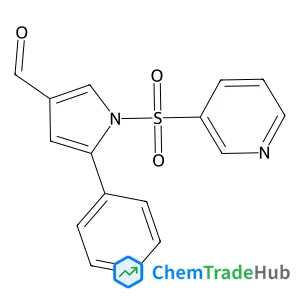
5-Phenyl-1-(pyridin-3-ylsulfonyl)-1H-pyrrole-3-carbaldehyde
CAS Number:
881676-90-0
Molecular Formula:
C16H12N2O3S
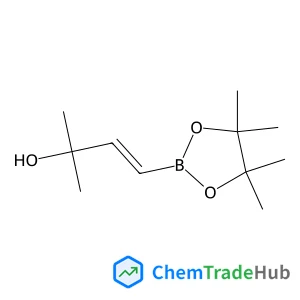
(E)-2-methyl-4-(4,4,5,5-tetramethyl-1,3,2-dioxaborolan-2-yl)but-3-en-2-ol
CAS Number:
581802-26-8
Molecular Formula:
C11H21BO3

5-(3,4-Dimethoxybenzyl)-2,4-pyrimidinediamine hydrochloride (1:1)
CAS Number:
2507-23-5
Molecular Formula:
C13H17ClN4O2
Recommended Suppliers




Disclaimer
This page provides academic journal information for reference and research purposes only. We are not affiliated with any journal publishers and do not handle publication submissions. For publication-related inquiries, please contact the respective journal publishers directly.
If you notice any inaccuracies in the information displayed, please contact us at support@chemtradehub.com. We will promptly review and address your concerns.