












Spatial metabolic fingerprinting using FT-IR spectroscopy: investigating abiotic stresses on Micrasterias hardyi
Literature Information
Publication Date
2008-10-21
DOI
10.1039/B809441A
Impact Factor
4.616
Authors
Soyab A. Patel, Felicity Currie, Nalin Thakker, Royston Goodacre
View Original
Abstract
The release of active pharmaceutical ingredients (APIs) into the environment is an ecologically important topic for study because, whilst APIs have been designed to have a wide range of biological properties for the target of interest (usually in man), little information on potential ecological risks is currently available regarding their effects on the organisms that inhabit the environment. In this study, the algae Micrasterias hardyi was exposed to propranolol, metoprolol (beta-adrenergic receptor agonist drugs) and mefenamic acid (a non steroidal anti-inflammatory drug), at concentrations ranging between 0.002–0.2 mM. Initial studies showed that Fourier transform infrared (FT-IR) spectroscopy on algal homogenates illustrated that all three APIs had a quantitative effect on the metabolism of the organisms and it was possible to estimate the level of API exposure from the FT-IR metabolic fingerprints using partial least squares (PLS) regression. From the inspection of the PLS loadings matrices it was possible to elucidate that all drugs caused effects on protein and lipid levels. Most strikingly propranolol had significant effects on the lipid components of the cell. These were dramatically reduced possibly as a consequence of loss of membrane integrity. In order to investigate this further, FT-IR microspectroscopy was used to generate detailed metabolic fingerprinting maps. These chemical maps revealed that all the drugs had a dramatic effect on the distribution of various chemical species throughout the algae, and that all drugs had an affect on protein and lipid levels. In particular, as noted in the PLS analyses for propranolol treated cells, the lipid complement found in the lipid storage areas in the processes of M. hardyi was greatly reduced. This illustrates the power of spatial metabolic fingerprinting for investigating abiotic stresses on complex biological species.
Recommended Journals
Related Literature
The N-methylpyrrolidone–(C1–C10) alkan-1-ols solvent systems
Begoña García, Rafael Alcalde, Santiago Aparicio, José M. Leal
2002-02-27
Paper
DOI: 10.1039/B109709C
Theoretical calculation of rovibronic energy levels and anharmonic resonances in the ground X 2Π state of HCP+ and DCP+
Małgorzata Biczysko, Riccardo Tarroni
2002-01-31
Paper
DOI: 10.1039/B107282J
P–ρ–T and Ps–ρs–Ts properties of methanol + water and n-propanol + water solutions in wide range of state parameters
2002-02-18
Paper
DOI: 10.1039/B109077C
Molecular structure and infrared spectra of dimethyl oxalate
Susy Branco Lopes, Leszek Lapinski, Rui Fausto
2002-02-04
Paper
DOI: 10.1039/B107232N
Photo- and radiation-chemical production of radical cations of methylbenzenes and benzyl alcohols and their reactivity in aqueous solution
2002-03-14
Paper
DOI: 10.1039/B109974D
A full dimensional ab initio direct trajectory study on the ionization dynamics of SiH4
Hiroto Tachikawa
2002-02-22
Paper
DOI: 10.1039/B109641A
Symmetry and distortive π-electrons in two- and three-dimensional conjugated systems
A. Rassat
2002-02-22
Paper
DOI: 10.1039/B109712C
2D gel permeation chromatography (2D GPC) correlation studies of the growth process for perfluoro-octyltriethoxysilanepolymer aggregates
Kenichi Izawa, Toshiaki Ogasawara, Hideki Masuda, Hirofumi Okabayashi, Charmian J. O'Connor, Isao Noda
2002-02-13
Paper
DOI: 10.1039/B107556J
Gibbs solution of the van der Waals–Maxwell problem and universality of the liquid–gas coexistence curve
Vitaly B. Rogankov, Leonid Z. Boshkov
2002-02-18
Paper
DOI: 10.1039/B107989C
Solvent effects in the photodenitrogenation of the azoalkane diazabicyclo[2.2.1]hept-2-ene: viscosity- and polarity-controlled stereoselectivity in housane formation from the diazenyl diradical
Waldemar Adam, Manfred Diedering
2002-02-13
Paper
DOI: 10.1039/B110562K
You might also like
Compound Q&A
What regulatory guidelines apply to 6-Bromo-2-methylimidazo[1,2-a]pyrimidine (CAS: 1111638-05-1)?
6-Bromo-2-methylimidazo[1,2-a]pyrimidine (CAS: 1111638-05-1) falls under various...
1111638-05-16-Bromo-2-methylimid...
Compound Q&A
Are there alternatives to 1-Pyrrolidineethanol, β-methyl-α-phenyl-, (αS,βR) (CAS: 123620-80-4) in synthesis?
While there are no direct alternatives, similar compounds like 1-Pyrrolidineetha...
123620-80-41-Pyrrolidineethanol...
Compound Q&A
Is 4-Methyl-2,6-bis(2-methyl-2-propanyl)phenyl methylcarbamate (CAS: 1918-11-2) safe?
4-Methyl-2,6-bis(2-methyl-2-propanyl)phenyl methylcarbamate (CAS: 1918-11-2) is ...
1918-11-24-Methyl-2,6-bis(2-m...
Compound Q&A
How should 2-(3-Bromo-4-fluorophenyl)-1,3-dioxolane (CAS: 77771-04-1) be stored?
2-(3-Bromo-4-fluorophenyl)-1,3-dioxolane (CAS: 77771-04-1) should be stored in a...
77771-04-12-(3-Bromo-4-fluorop...
Compound Q&A
What are the physical and chemical properties of 4,5,6,7-Tetrahydro-1H-indazole hydrochloride (CAS: 18161-11-0)?
4,5,6,7-Tetrahydro-1H-indazole hydrochloride is a white crystalline solid with a...
18161-11-04,5,6,7-Tetrahydro-1...
Compound Q&A
What is (2R)-1-Methoxy-3-phenyl-2-propanamine (CAS: 59919-07-2)?
(2R)-1-Methoxy-3-phenyl-2-propanamine is a chiral organic compound with the CAS ...
59919-07-2(2R)-1-Methoxy-3-phe...
Compound Q&A
What industries use Ethyl 1-(1-phenylethyl)-1H-imidazole-5-carboxylate (CAS: 56649-47-9)?
Ethyl 1-(1-phenylethyl)-1H-imidazole-5-carboxylate is used in various industries...
56649-47-9Ethyl 1-(1-phenyleth...
Compound Q&A
What regulatory guidelines apply to 4-[(1E,3S)-1-(4-Hydroxyphenyl)-1,4-pentadien-3-yl]phenol (CAS: 17676-24-3)?
4-[(1E,3S)-1-(4-Hydroxyphenyl)-1,4-pentadien-3-yl]phenol (CAS: 17676-24-3) falls...
17676-24-34-[(1E,3S)-1-(4-Hydr...
Compound Q&A
What industries use (S)-3-Amino-5-phenylpentanoic acid hydrochloride (CAS: 331846-97-0)?
(S)-3-Amino-5-phenylpentanoic acid hydrochloride is primarily used in the pharma...
331846-97-0(S)-3-Amino-5-phenyl...
Compound Q&A
How is 7-methoxy-1-benzothiophene-2-carboxylic acid (CAS: 88791-07-5) typically synthesized?
7-Methoxy-1-benzothiophene-2-carboxylic acid is typically synthesized by reactin...
88791-07-57-methoxy-1-benzothi...
Source Journal
Analyst

CiteScore:
7.8
Self-citation Rate:
5.6%
Articles per Year:
653
Analyst publishes analytical and bioanalytical research that reports premier fundamental discoveries and inventions, and the applications of those discoveries, unconfined by traditional discipline barriers.
Recommended Compounds
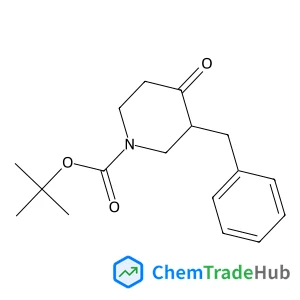
2-Methyl-2-propanyl 3-benzyl-4-oxo-1-piperidinecarboxylate
CAS Number:
193274-82-7
Molecular Formula:
C17H23NO3
Recommended Suppliers




Disclaimer
This page provides academic journal information for reference and research purposes only. We are not affiliated with any journal publishers and do not handle publication submissions. For publication-related inquiries, please contact the respective journal publishers directly.
If you notice any inaccuracies in the information displayed, please contact us at support@chemtradehub.com. We will promptly review and address your concerns.