












Comparative studies on conventional and solvent-free synthesis toward hydrazones: application of PXRD and chemometric data analysis in mechanochemical reaction monitoring
Literature Information
Publication Date
2018-02-13
DOI
10.1039/C7CE02136D
Impact Factor
3.545
Authors
Jana Pisk, Tomica Hrenar, Mirta Rubčić, Gordana Pavlović, Vladimir Damjanović, Jasna Lovrić, Marina Cindrić, Višnja Vrdoljak
View Original
Abstract
Synthesis of hydrazones was performed via both conventional and solvent-free routes using the corresponding hydrazide (isonicotinic hydrazide, nicotinic hydrazide, 2-aminobenzhydrazide or 4-aminobenzhydrazide) and appropriate aldehyde (salicylaldehyde, 3-methoxysalicylaldehyde or 4-methoxysalicylaldehyde). A systematic study dedicated to solvatomorphism or polymorphism screening resulted in the formation of twelve novel crystalline forms, and eight of these were characterized via the single crystal X-ray diffraction method. In all studied structures, the molecules were assembled into endless supramolecular chains, discrete rings, chains of rings or nets. The mechanochemical synthesis employing liquid-assisted grinding was also applied and the nicotinic- and isonicotinic-based hydrazones were found to form readily from their corresponding precursors. The chemometric study using principal component analysis for mechanochemical synthesis monitoring was implemented for the first time to provide an insight into the reaction profiles. A thoughtful combination of ex situ powder X-ray diffraction and chemometric analysis was essential to identify a stepwise mechanism for the hydrazone formation via an intermediate phase. In five investigated reactions the first principal component accounted for at least 75% of the total variance, whereas in the case of two reactions this component accounted for 69.72 and 46.23% of the total variance. The hydrazones were also evaluated for cytotoxic activity in vitro. All compounds exhibited weak to moderate cytotoxicity against THP-1 and no cytotoxicity against HepG2 cells. Substantial antibacterial activity was obtained against Moraxella catarrhalis while no growth inhibition of Staphylococcus aureus, Enterococcus faecalis and Escherichia coli was observed.
Related Literature
Visible light driven efficient metal free single atom catalyst supported on nanoporous carbon nitride for nitrogen fixation
Kalishankar Bhattacharyya, Ayan Datta
2019-05-20
Paper
DOI: 10.1039/C9CP00997C
Mixtures of LiTFSI and urea: ideal thermodynamic behavior as key to the formation of deep eutectic solvents?
2019-05-23
Paper
DOI: 10.1039/C9CP01440C
Oxygen transport and surface exchange mechanisms in LSCrF–ScCeSZ dual-phase ceramics
Zonghao Shen, Stephen J. Skinner, John A. Kilner
2019-05-24
Paper
DOI: 10.1039/C9CP02175B
Alkali carbonates promote CO2 capture by sodium orthosilicate
Jia Liu, Zhen Wang, Zirui Wang, Jinwan Song, Guangshi Li, Qian Xu, Jinglin You, Hongwei Cheng, Xionggang Lu
2019-05-23
Paper
DOI: 10.1039/C9CP01306G
Nanoscale PDA disassembly in ionic liquids: structure–property relationships underpinning redox tuning
Marianna Ambrico, Paola Manini, Paolo F. Ambrico, Teresa Ligonzo, Giuseppe Casamassima, Paola Franchi, Luca Valgimigli, Andrea Mezzetta, Cinzia Chiappe, Marco d'Ischia
2019-05-09
Paper
DOI: 10.1039/C9CP01545K
Thermodynamics and kinetics of an oxygen adatom on pristine and functionalized graphene: insight gained into their anticorrosion properties
Shaoxian Zheng, Jibin Pu, Junhui Sun, Liang-Feng Huang, Liping Wang, Qunji Xue
2019-03-25
Paper
DOI: 10.1039/C8CP07533F
Spectroscopic diagnostic for the ring-size of carbohydrates in the gas phase: furanose and pyranose forms of GalNAc
Baptiste Schindler, Laurent Legentil, Abdul-Rhaman Allouche, Vincent Ferrières
2019-05-23
Paper
DOI: 10.1039/C8CP04082F
The catalytic mechanism of S-acyltransferases: acylation is triggered on by a loose transition state and deacylation is turned off by a tight transition state
Xia Wang, Grace Mercure Bakanina Kissanga, E. Li, Qiang Li, Jianzhuang Yao
2019-05-17
Paper
DOI: 10.1039/C9CP02248A
Tuning the magnetism of two-dimensional hematene by ferroelectric polarization
Guangbiao Zhang, Wei Sun, Jingyu Li, Yuanxu Wang
2019-05-22
Paper
DOI: 10.1039/C9CP01981B
New equations of state for the hard polyhedron fluids
Hua Jiang, A. Mulero
2019-05-23
Paper
DOI: 10.1039/C9CP02033K
You might also like
Compound Q&A
What are the main uses of 1H-Indazole-6-carbonitrile (CAS: 141290-59-7)?
1H-Indazole-6-carbonitrile finds applications in pharmaceuticals, where it serve...
141290-59-71H-Indazole-6-carbon...
Compound Q&A
How should waste containing Dioctyl (2E)-2-butenedioate (CAS: 2997-85-5) be handled?
Waste containing Dioctyl (2E)-2-butenedioate (CAS: 2997-85-5) should be collecte...
2997-85-5Dioctyl (2E)-2-buten...
Compound Q&A
What industries use Sodium [(1,2-benzoxazol-3-ylmethyl)sulfonyl]azanide (CAS: 68291-98-5)?
Sodium [(1,2-benzoxazol-3-ylmethyl)sulfonyl]azanide is primarily used in pharmac...
68291-98-5Sodium [(1,2-benzoxa...
Compound Q&A
Are there alternatives to Dimethyl 4-(4,4,5,5-tetramethyl-1,3,2-dioxaborolan-2-yl)-2,6-pyridinedicarboxylate (CAS: 741709-66-0) in synthesis?
Dimethyl 4-(4,4,5,5-tetramethyl-1,3,2-dioxaborolan-2-yl)-2,6-pyridinedicarboxyla...
741709-66-0Dimethyl 4-(4,4,5,5-...
Compound Q&A
How should waste containing 2-Fluoro-6-hydrazinopyridine (CAS: 80714-39-2) be handled?
Waste containing 2-Fluoro-6-hydrazinopyridine (CAS: 80714-39-2) should be manage...
80714-39-22-Fluoro-6-hydrazino...
Compound Q&A
What is 6-Formyl-2-pyridinecarboxylic acid (CAS: 499214-11-8)?
6-Formyl-2-pyridinecarboxylic acid is an organic compound with the molecular for...
499214-11-86-Formyl-2-pyridinec...
Compound Q&A
What is the market or research trend for 3-(3,4-dimethoxyphenyl)-2,5-dimethyl-N-(2-morpholin-4-ylethyl)pyrazolo[1,5-a]pyrimidin-7-amine (CAS: 900874-91-1)?
Research trends for this compound indicate a focus on its potential applications...
900874-91-13-(3,4-dimethoxyphen...
Compound Q&A
How is 9H-Tribenzo[b,d,f]azepine (CAS: 29875-73-8) typically synthesized?
9H-Tribenzo[b,d,f]azepine is typically synthesized via a multi-step process invo...
29875-73-89H-Tribenzo[b,d,f]az...
Compound Q&A
How is 1-Cyclopropyl-7-ethoxy-6-fluoro-8-methoxy-4-oxo-1,4-dihydro-3-quinolinecarboxylic acid (CAS: 1797982-51-4) typically synthesized?
1-Cyclopropyl-7-ethoxy-6-fluoro-8-methoxy-4-oxo-1,4-dihydro-3-quinolinecarboxyli...
1797982-51-41-Cyclopropyl-7-etho...
Compound Q&A
How should waste containing Methyl 3-oxo-1,2,3,4-tetrahydro-6-quinoxalinecarboxylate (CAS: 671820-52-3) be handled?
Waste containing Methyl 3-oxo-1,2,3,4-tetrahydro-6-quinoxalinecarboxylate (CAS: ...
671820-52-3Methyl 3-oxo-1,2,3,4...
Source Journal
CrystEngComm

CiteScore:
5.5
Self-citation Rate:
7.7%
Articles per Year:
643
CrystEngComm is the forum for the design and understanding of crystalline materials. We welcome studies on the investigation of molecular behaviour within crystals, control of nucleation and crystal growth, engineering of crystal structures, and construction of crystalline materials with tuneable properties and functions. We publish hypothesis-driven research into… how crystal design affects thermodynamics, phase transitional behaviours, polymorphism, morphology control, solid state reactivity (crystal-crystal solution-crystal, and gas-crystal reactions), optoelectronics, ferroelectric materials, non-linear optics, molecular and bulk magnetism, conductivity and quantum computing, catalysis, absorption and desorption, and mechanical properties. Using Techniques and methods including… Single crystal and powder X-ray, electron, and neutron diffraction, solid-state spectroscopy, spectrometry, and microscopy, modelling and data mining, and empirical, semi-empirical and ab-initio theoretical evaluations. On crystalline and solid-state materials. We particularly welcome work on MOFs, coordination polymers, nanocrystals, host-guest and multi-component molecular materials. We also accept work on peptides and liquid crystals. All papers should involve the use or development of a design or optimisation strategy. Routine structural reports or crystal morphology descriptions, even when combined with an analysis of properties or potential applications, are generally considered to be outside the scope of the journal and are unlikely to be accepted.
Recommended Compounds
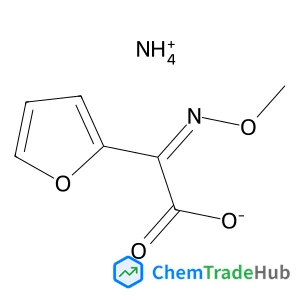
Ammonium (Z)-2-(furan-2-yl)-2-(methoxyimino)acetate
CAS Number:
97148-39-5
Molecular Formula:
C7H10N2O4
Recommended Suppliers






Disclaimer
This page provides academic journal information for reference and research purposes only. We are not affiliated with any journal publishers and do not handle publication submissions. For publication-related inquiries, please contact the respective journal publishers directly.
If you notice any inaccuracies in the information displayed, please contact us at support@chemtradehub.com. We will promptly review and address your concerns.