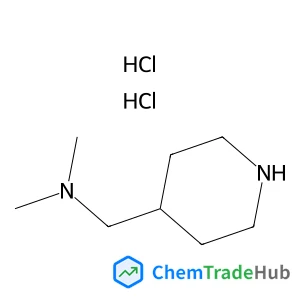
N,N-dimethyl(piperidin-4-yl)methanamine hydrochloride
CAS Number:
172281-72-0
Molecular Formula:
C8H20Cl2N2
Nuli Xie, Shiyuan Liu, Xiaohai Yang, Xiaoxiao He, Jin Huang, Kemin Wang
With the rapid development of DNA nanotechnology, various DNA nanostructures with different shapes and sizes have been self-assembled using “bottom-up” fabrication strategies and applied to a wide range of fields such as biosensors, drug delivery and tools for molecular biology. As a classical and simple polyhedron, DNA tetrahedron can be easily synthesised by a one-step assembly. Due to the excellent biocompatibility and cellular permeability, it provides a universal and promising platform to construct a series of biosensors and drug delivery systems for living cells studies. Moreover, the high programmability of DNA tetrahedron determines its capability to perform artful design and combine with other materials. Herein, we review and summarise the development and applications of DNA tetrahedron in living cell studies. We mainly focus on two parts, cellular biosensors for the detection of nucleic acids, proteins, small molecules and cancer cells and drug delivery systems for chemotherapy, immunotherapy, photodynamic therapy and gene silencing. With the rapid progress in DNA tetrahedron as well as DNA nanotechnology, new avenues and opportunities have opened up in analytical chemistry, molecular biology and medicine.
Huacai Yan, Fusheng Li, Qingyu Kong
DOI: 10.1039/D1CP03837K
Ke Peng, Natalie Preisig, Thomas Sottmann, Cosima Stubenrauch
DOI: 10.1039/D1CP02522H
Xue-fang Yu, Ting-he Fu, Bo Xiao, Hong-yuan Yu, Qingzhong Li
DOI: 10.1039/D1CP00030F
Carlos O. Amorim, João S. Amaral, Vítor S. Amaral
DOI: 10.1039/D1CP00885D
DOI: 10.1039/D1CP02273C
Jack M. Woolley, Konstantina M. Krokidi, Maria A. Tesa-Serrate, Nicholas D. M. Hine, Vasilios G. Stavros
DOI: 10.1039/D1CP03759E
Takafumi Miura, Shun Tsunekawa, Sho Onishi, Toshiaki Ina, Kehsuan Wang, Genta Watanabe, Chechia Hu, Hiroshi Kondoh, Takeshi Kawai
DOI: 10.1039/D1CP03323A
Yasuhiko Sato, Hiroshi Yao
DOI: 10.1039/D1CP02106K
Philip Marmet, Lorenz Holzer, Jan G. Grolig, Holger Bausinger, Andreas Mai, Joseph M. Brader, Thomas Hocker
DOI: 10.1039/D1CP01962G
Ethyl 4-chlorothieno[2,3-b]pyridine-5-carboxylate (CAS: 59713-58-5) can be synth...
5-Methyl-1H-indole-3-carbaldehyde (CAS: 52562-50-2) is subject to various regula...
(1,3-Dimethyl-2,4-dioxo-1,2,3,4-tetrahydro-5-pyrimidinyl)boronic acid is a white...
Waste containing Sulfocostunolide A (CAS: 1016983-51-9) should be handled with c...
When handling Murraxocin (CAS: 88478-44-8), ensure proper personal protective eq...
Formvar (CAS: 63148-64-1) is an alkyd resin characterized by a high molecular we...
(S)-4-benzyl-2-((benzyloxy)methyl)morpholine is generally safe when handled with...
Methyl 1-(5-bromo-2-pyrimidinyl)cyclopropanecarboxylate (CAS: 1447607-69-3) is p...
2-Methyl-1-phenyl-1-propanamine hydrochloride (CAS: 24290-47-9) is generally con...
3-(4-Bromophenyl)-2-methylpropanoic acid is synthesized through a multi-step pro...

Analyst publishes analytical and bioanalytical research that reports premier fundamental discoveries and inventions, and the applications of those discoveries, unconfined by traditional discipline barriers.