












Low temperature dehydrations of non-activated alcohols via halide catalysis
Literature Information
Publication Date
2016-04-07
DOI
10.1039/C6QO00069J
Impact Factor
5.281
Authors
X. Zhang, S. J. Desrochers, A. D. Carl, N. Geagea, K. Zielinski, M. H. Emmert
View Original
Abstract
Activating kinetically inert C–O bonds such as in primary alcohols is an important challenge for the transformation of biomass-derived feedstocks. The herein described methodology addresses this issue through a combination of halide and acid catalysis. The novel mechanistic pathway proposed based on detailed experimental studies enables selective olefin formation from alcohols – as opposed to ether formation – at relatively low temperatures. Suitable substrates are tertiary, secondary, and even primary alcohols. Furthermore, the observed selectivity for the Hoffman elimination product and the realization of a non-rearranging Friedel–Crafts alkylation suggest that the reaction medium with high concentrations of halide (NBu4Br) enables reaction outcomes that cannot be obtained through carbocation intermediates.
Recommended Journals
Related Literature
Photoredox catalyzed release of carbon-based radicals from 2-substituted-1,3-imidazolidines
Adrián Luguera Ruiz, Elena Mariani, Stefano Protti, Maurizio Fagnoni
2023-12-07
Research Article
DOI: 10.1039/D3QO01856C
Photocatalytic decarboxylative phosphorylation of N-aryl glycines
Jiangwei Wen, Xue Sun, Kelu Yan, Tingtao Yan, Zhen Liu, Yang Li, Jianjing Yang
2023-12-05
Research Article
DOI: 10.1039/D3QO01577G
Asymmetric total synthesis of montanine-type amaryllidaceae alkaloids
Fang Wang, Xiaohan Xu, Yangtian Yan, Jiayang Zhang, Yang Yang
2023-12-03
Research Article
DOI: 10.1039/D3QO01835K
Correction: A facile, one-pot reductive alkylation of aromatic and heteroaromatic amines in aqueous micellar media: a chemoenzymatic approach
Ganesh Sambasivam, Karthikeyan Sivashanmugam
2023-11-03
Correction
DOI: 10.1039/D3OB90144K
Autocatalytic photoinduced oxidative dehydrogenation of pyrido[2,3-d]pyrimidin-7(8H)-ones: synthesis of C5–C6 unsaturated systems with concomitant formation of a long-lived radical
Claudi de Rocafiguera, Vega Lloveras, José Vidal-Gancedo, Jordi Teixidó, Roger Estrada-Tejedor, José I. Borrell, Raimon Puig de la Bellacasa
2023-11-02
Research Article
DOI: 10.1039/D3QO01358H
N-Aminophthalimide-mediated aerobic deborohydroxylation of boronic acid in air
Wenzheng Zhang, Zhenxing Yan, Chuan-Ying Li
2023-11-21
Research Article
DOI: 10.1039/D3QO01651J
A catalyst-free cross-coupling of isocyanates and triarylboranes for secondary amide synthesis
You-Wei Wu, Mu-Xiang Chen, Yan Li, Lu-Min Hu, Lili Zhao, Zhenhua Jia, Xuefei Zhao, Xu-Hong Hu
2023-11-23
Research Article
DOI: 10.1039/D3QO01617J
Synthesis of imidazo[1,2-a]pyridinones via a visible light-photocatalyzed functionalization of alkynes/nitrile insertion/cyclization tandem sequence using micro-flow technology
Minghui Wei, Jiankun Chen, Chengkou Liu, Zhao Yang, Hong Qin, Yujing Hu, Jindian Duan, Yuguang Li
2023-11-17
Research Article
DOI: 10.1039/D3QO01508D
Cu-catalyzed arylation of S-tosyl peptides with arylboronic acids
Junjie Ying, Jingrong Huang, Chenguang Liu, Fa-Jie Chen
2023-11-08
Research Article
DOI: 10.1039/D3QO01534C
Asymmetric permanganate dihydroxylation of enoates: substrate scope, mechanistic insights and application in bicalutamide synthesis
Peilong Gu, Shuangshuang Wang, Xiangxiang Wen, Jinxin Tian, Chao Wang, Lili Zong, Choon-Hong Tan
2023-12-11
Research Article
DOI: 10.1039/D3QO01729J
You might also like
Compound Q&A
How should 2-Methylbenzene-1,4-diamine dihydrochloride (CAS: 615-45-2) be stored?
2-Methylbenzene-1,4-diamine dihydrochloride (CAS: 615-45-2) should be stored in ...
615-45-22-Methylbenzene-1,4-...
Compound Q&A
Is (1S,4S)-2,5-Diazabicyclo[2.2.1]heptane dihydrobromide (CAS: 132747-20-7) safe?
(1S,4S)-2,5-Diazabicyclo[2.2.1]heptane dihydrobromide is generally considered sa...
132747-20-7(1S,4S)-2,5-Diazabic...
Compound Q&A
What industries use (6-Chloropyridazin-3-YL)methanamine (CAS: 871826-15-2)?
(6-Chloropyridazin-3-YL)methanamine finds applications in the pharmaceutical ind...
871826-15-2(6-Chloropyridazin-3...
Compound Q&A
What are the main uses of 2-Fluoro-3-methylphenol (CAS: 77772-72-6)?
2-Fluoro-3-methylphenol is primarily used in the synthesis of pharmaceuticals, p...
77772-72-62-Fluoro-3-methylphe...
Compound Q&A
What precautions should be taken when handling 3-Methoxy-4-nitrobenzonitrile (CAS: 177476-75-4)?
When handling 3-Methoxy-4-nitrobenzonitrile, it is important to wear appropriate...
177476-75-43-Methoxy-4-nitroben...
Compound Q&A
What precautions should be taken when handling 1,3-Oxazolo[4,5-b]pyridine-2(3H)-thione (CAS: 211949-57-4)?
When handling 1,3-Oxazolo[4,5-b]pyridine-2(3H)-thione (CAS: 211949-57-4), it is ...
211949-57-4[1,3]Oxazolo[4,5-b]p...
Compound Q&A
What regulatory guidelines apply to 4-Ethynylbenzamide (CAS: 90347-86-7)?
4-Ethynylbenzamide (CAS: 90347-86-7) falls under various regulatory guidelines i...
90347-86-74-Ethynylbenzamide
Compound Q&A
What are the main uses of 3-(2-Ethylphenyl)-2-thioxo-4-imidazolidinone (CAS: 186822-57-1)?
3-(2-Ethylphenyl)-2-thioxo-4-imidazolidinone is primarily used as an intermediat...
186822-57-13-(2-Ethylphenyl)-2-...
Compound Q&A
What is (2-Fluoro-6-methoxyphenyl)acetic acid (CAS: 500912-19-6)?
(2-Fluoro-6-methoxyphenyl)acetic acid, also known as 4-fluoro-3-methoxybenzoic a...
500912-19-6(2-Fluoro-6-methoxyp...
Compound Q&A
What is the market or research trend for 2-[4-(Hydroxymethyl)phenoxy]ethanol (CAS: 102196-18-9)?
Market trends for 2-[4-(Hydroxymethyl)phenoxy]ethanol (CAS: 102196-18-9) indicat...
102196-18-92-[4-(Hydroxymethyl)...
Source Journal
Organic Chemistry Frontiers

CiteScore:
7.8
Self-citation Rate:
8.7%
Articles per Year:
724
Organic Chemistry Frontiers publishes high-quality research from across organic chemistry. Emphases are placed on studies that make significant contributions to the field of organic chemistry by reporting either new or significantly improved protocols or methodologies. Topics include, but are not limited to the following: Organic synthesis Development of synthetic methodologies Catalysis Natural products Functional organic materials Supramolecular and macromolecular chemistry Physical and computational organic chemistry
Recommended Compounds
![2-Methyl-2-propanyl {3-[4-(4,4,5,5-tetramethyl-1,3,2-dioxaborolan-2-yl)phenyl]-3-oxetanyl}carbamate structure](https://static.chemtradehub.com/structs/127/1279090-25-3-1b84.webp "2-Methyl-2-propanyl {3-[4-(4,4,5,5-tetramethyl-1,3,2-dioxaborolan-2-yl)phenyl]-3-oxetanyl}carbamate structure")
2-Methyl-2-propanyl {3-[4-(4,4,5,5-tetramethyl-1,3,2-dioxaborolan-2-yl)phenyl]-3-oxetanyl}carbamate
CAS Number:
1279090-25-3
Molecular Formula:
C20H30BNO5
![[(5-Methyl-1,3,4-thiadiazol-2-yl)sulfanyl]acetic acid structure](https://static.chemtradehub.com/structs/509/50918-26-8-4ce8.webp "[(5-Methyl-1,3,4-thiadiazol-2-yl)sulfanyl]acetic acid structure")
[(5-Methyl-1,3,4-thiadiazol-2-yl)sulfanyl]acetic acid
CAS Number:
50918-26-8
Molecular Formula:
C5H6N2O2S2
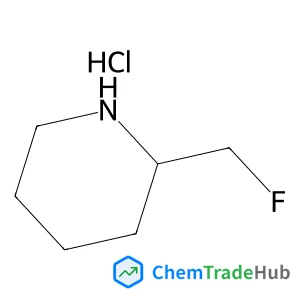
(2S)-2-(Fluoromethyl)piperidine hydrochloride (1:1)
CAS Number:
886216-73-5
Molecular Formula:
C6H13ClFN
Recommended Suppliers




Disclaimer
This page provides academic journal information for reference and research purposes only. We are not affiliated with any journal publishers and do not handle publication submissions. For publication-related inquiries, please contact the respective journal publishers directly.
If you notice any inaccuracies in the information displayed, please contact us at support@chemtradehub.com. We will promptly review and address your concerns.