












π-Stacked poly(vinyl ketone)s with accumulated push–pull triphenylamine moieties in the side chain
Literature Information
Publication Date
2016-11-30
DOI
10.1039/C6PY01737A
Impact Factor
5.582
Authors
Heng Wang, Yue Wang, Xichong Ye, Haruka Hayama, Hiroyoshi Sugino, Hideyuki Nakano
View Original
Abstract
A novel triphenylamine containing vinyl ketone monomer, isopropenyl 4-[bis(4-methylphenyl)amino]phenyl ketone (IMAPK), was prepared from bis[(4-methylphenyl)amino]benzene and methacryloyl chloride through the Friedel–Crafts acylation. t-Butyl 4-[bis(4-methylphenyl)amino]phenyl ketone (BMAPK) was also synthesized as a monomeric unit model. IMAPK was homopolymerized and copolymerized with styrene under free-radical conditions. While homopolymerizability of IMAPK was rather low, copolymers with styrene were obtained at fair monomer conversions. The obtained polymers were proposed to possess a rather rigid, restricted conformation in which the side-chain chromophores are π-stacked on the basis of NMR spectra, and they indicated remarkable hypochromicity and red shifts in absorbance spectra and red shifts in emission spectra compared with BMAPK. In addition, the polymers exhibited red shifts in the emission spectra of which the extent was higher in a more polar solvent among cyclohexane, tetrahydrofuran, chloroform, and acetonitrile; this observation was ascribed to the conformational relaxation of the side-chain 4-[bis(4-methylphenyl)amino]phenyl group in excited states which is facilitated in a polar solvent. The conformational relaxation may be facilitated also by close interactions between the side-chain chromophore groups along the polymer chain. In addition, polymer aggregation was found to occur in solution where the size of aggregates was greater in cyclohexane than in tetrahydrofuran. Further, the polymers showed reduced oxidation potentials compared with BMAPK in cyclic voltammetry analysis, supporting that they have a π-stacked conformation.
Recommended Journals
Related Literature
PEGylation within a confined hydrophobic cavity of a protein
2019-11-13
Paper
DOI: 10.1039/C9CP04387J
Ultra-low lattice thermal conductivity of monolayer penta-silicene and penta-germanene
Zhibin Gao, Zhaofu Zhang, Gang Liu, Jian-Sheng Wang
2019-10-30
Paper
DOI: 10.1039/C9CP05246A
Low-temperature NO oxidation using lattice oxygen in Fe-site substituted SrFeO3−δ
Kazuki Tamai, Kazuo Kato
2020-09-08
Paper
DOI: 10.1039/D0CP03726E
Acid–base equilibrium of the chromophore counterion results in distinct photoisomerization reactivity in the primary event of proteorhodopsin
Manish Singh, Rei Abe-Yoshizumi, Tatsuya Tsukuda
2019-11-13
Paper
DOI: 10.1039/C9CP04991F
From the Linnett–Gillespie model to the polarization of the spin valence shells of metals in complexes
David I. Ramírez-Palma, Fernando Cortés-Guzmán
2020-08-04
Paper
DOI: 10.1039/D0CP02064H
Computational modeling of ionic currents through difform graphene nanopores with consistent cross-sectional areas
2019-11-07
Paper
DOI: 10.1039/C9CP05459F
Anisotropic dielectric behavior of layered perovskite-like Cs3Bi2I9 crystals in the terahertz region
Qihao Sun, Wenhui Yang, Yuanbo Cheng, Jiangpeng Dong, Mengqin Zhu, BinBin Zhang, Menghua Zhu, Wanqi Jie
2020-10-12
Paper
DOI: 10.1039/D0CP04485G
Hydrophobic functional liquids based on trioctylphosphine oxide (TOPO) and carboxylic acids
Emily L. Byrne, Ruairi O’Donnell, Mark Gilmore, Nancy Artioli, John D. Holbrey, Małgorzata Swadźba-Kwaśny
2020-10-06
Paper
DOI: 10.1039/D0CP02605K
Protocol for optically pumping AlH+ to a pure quantum state
Panpan Huang, Schuyler Kain, Antonio G. S. de Oliveira-Filho, Brian C. Odom
2020-10-21
Paper
DOI: 10.1039/D0CP04036C
A data-driven approach to determine dipole moments of diatomic molecules
Xiangyue Liu, Gerard Meijer, Jesús Pérez-Ríos
2020-08-24
Paper
DOI: 10.1039/D0CP03810E
You might also like
Compound Q&A
What are the main uses of (5-Sulfamoyl-3-pyridinyl)boronic acid (CAS: 951233-61-7)?
(5-Sulfamoyl-3-pyridinyl)boronic acid is primarily used in chemical synthesis, p...
951233-61-7(5-Sulfamoyl-3-pyrid...
Compound Q&A
How is Benzyl 2-methyl-2-(methylsulfonyl)-4-pentenoate (CAS: 1942858-50-5) typically synthesized?
Benzyl 2-methyl-2-(methylsulfonyl)-4-pentenoate is typically synthesized via est...
1942858-50-5Benzyl 2-methyl-2-(m...
Compound Q&A
What precautions should be taken when handling 8-Fluoroquinolin-6-ol (CAS: 209353-22-0)?
When handling 8-Fluoroquinolin-6-ol (CAS: 209353-22-0), it is important to use p...
209353-22-08-Fluoroquinolin-6-o...
Compound Q&A
What are the physical and chemical properties of 1,3-Dibromo-5-(2-methyl-2-propanyl)benzene (CAS: 129316-09-2)?
1,3-Dibromo-5-(2-methyl-2-propanyl)benzene (CAS: 129316-09-2) is a crystalline c...
129316-09-21,3-Dibromo-5-(2-met...
Compound Q&A
What industries use Ethyl 7-chloro-4-oxo-1-(1,3-thiazol-2-yl)-1,4-dihydro-1,8-naphthyridine-3-carboxylate (CAS: 174726-87-5)?
Ethyl 7-chloro-4-oxo-1-(1,3-thiazol-2-yl)-1,4-dihydro-1,8-naphthyridine-3-carbox...
174726-87-5Ethyl 7-chloro-4-oxo...
Compound Q&A
What precautions should be taken when handling Delta-7-Avenasterol (CAS: 23290-26-8)?
When handling Delta-7-Avenasterol (CAS: 23290-26-8), it is important to wear app...
23290-26-8Delta-7-Avenasterol
Compound Q&A
What precautions should be taken when handling N-({(5R)-3-[3-Fluoro-4-(4-morpholinyl)phenyl]-2-oxo-1,3-oxazolidin-5-yl}methyl)acetamide (CAS: 872992-20-6)?
Proper handling involves the use of personal protective equipment such as gloves...
872992-20-6N-({(5R)-3-[3-Fluoro...
Compound Q&A
What precautions should be taken when handling 2-Methyl-2-proanyl 4-[(2-aminophenyl)amino]-1-piperidinecarboxylate (CAS: 79099-00-6)?
When handling 2-Methyl-2-proanyl 4-[(2-aminophenyl)amino]-1-piperidinecarboxylat...
79099-00-62-Methyl-2-propanyl ...
Compound Q&A
What is N-Methyl-4-chlorobenzylamine hydrochloride (CAS: 65542-24-7)?
N-Methyl-4-chlorobenzylamine hydrochloride (CAS: 65542-24-7) is a organic compou...
65542-24-7N-Methyl-4-chloroben...
Compound Q&A
Is [2-(Dodecyloxy)ethoxy]acetic acid (CAS: 27306-90-7) safe?
[2-(Dodecyloxy)ethoxy]acetic acid (CAS: 27306-90-7) is generally considered safe...
27306-90-7[2-(Dodecyloxy)ethox...
Source Journal
Polymer Chemistry

CiteScore:
8.6
Self-citation Rate:
7.3%
Articles per Year:
457
Polymer Chemistry welcomes submissions in all areas of polymer science that have a strong focus on macromolecular chemistry. Manuscripts may cover a broad range of fields, yet no direct application focus is required.
Recommended Compounds
![2-Azaspiro[4.5]decane-3,8-dione structure](https://static.chemtradehub.com/structs/914/914780-96-4-e94b.webp "2-Azaspiro[4.5]decane-3,8-dione structure")
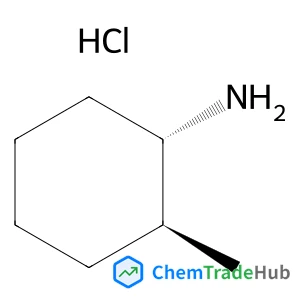
(1R,2R)-2-Methylcyclohexanamine hydrochloride (1:1)
CAS Number:
39558-31-1
Molecular Formula:
C7H16ClN
![[3-Fluoro-4-(1-pyrrolidinylcarbonyl)phenyl]boronic acid structure](https://static.chemtradehub.com/structs/874/874289-09-5-e3d4.webp "[3-Fluoro-4-(1-pyrrolidinylcarbonyl)phenyl]boronic acid structure")
[3-Fluoro-4-(1-pyrrolidinylcarbonyl)phenyl]boronic acid
CAS Number:
874289-09-5
Molecular Formula:
C11H13BFNO3
Recommended Suppliers





Disclaimer
This page provides academic journal information for reference and research purposes only. We are not affiliated with any journal publishers and do not handle publication submissions. For publication-related inquiries, please contact the respective journal publishers directly.
If you notice any inaccuracies in the information displayed, please contact us at support@chemtradehub.com. We will promptly review and address your concerns.