












Direct arylation of fluoroarenes toward linear, bent-shaped and branched π-conjugated polymers: polycondensation post-polymerization approaches
Literature Information
Publication Date
2016-08-24
DOI
10.1039/C6PY01237J
Impact Factor
5.582
Authors
Shotaro Hayashi, Yuki Togawa, Yoshihisa Kojima, Toshio Koizumi
View Original
Abstract
A direct arylation polycondensation of fluoroarenes with 2,7-dibromo-9,9-dioctylfluorene, F8, was achieved in a low polar solvent, toluene. The polycondensation of 1,2,4,5-tetrafluorobenzene, M1, or 2,2′,3,3′,4,4′,5,5′-octafluorobiphenyl, M1′, with F8 in toluene under our optimal conditions (2.5 mol% of palladium acetate, 5.0 mol% of tBu2MeHBF4, 2.0 equiv. of acetic acid, 3.0 equiv. of K2CO3, 0.6 M, 120 °C, 24 h) gave high molecular weight linear π-conjugated polymers (Mn > 60 000 and 40 000, respectively). Carboxylate additives promoted the direct arylation polycondensation. On the other hand, the direct arylation polycondensation of M1 with F8 gave insoluble products under the same conditions when DMAc was used instead of toluene. The network structure was probably formed by side reactions on the polymer chain. Thus, toluene is a useful solvent for the direct arylation polycondensation of fluoroarenes. In contrast with the linear (through) conjugated polymer synthesis, the direct arylation polycondensation of 1,2,3,5-tetrafluorobenzene, M2, with F8 gave bent-shaped (cross) conjugated polymers (Mn = 7300). The direct arylation polycondensation of 1,3,5-trifluorobenzene, M3 with F8 (monomer ratio 1 : 1) gave branched polymers having many unreacted C–H of trifluorobenzene inner and end units (Mn = 2900, DB = 53%). The degree of branching, DB, of the polymer was 53%, but the Mn value of the polymer was low (2900). Ozawa's conditions in toluene were also effective for synthesizing a high molecular weight linear polymer from F8 and M1. In contrast with our polycondensation, however, the polycondensation of F8 with M2 or M3 did not proceed well under Ozawa's conditions. Our polycondensation method is applicable to the synthesis of various fluoroarene-based polymers. The direct arylation post-polymerization (polymer reaction) to the remaining C–H bonds of the low-molecular weight branched polymer with F8 afforded a branched π-conjugated polymer with a higher molecular weight (Mn = 10 600, DB = 50%). This is the first example of direct arylation post-polymerization between “polymer and polymer” or “polymer and bromoarenes”.
Recommended Journals
Related Literature
Glyco-helix: parallel lactose-lactose interactions stabilize an α-helical structure of multi-glycosylated peptide
Tomikazu Sasaki
2003-03-24
Communication
DOI: 10.1039/B212364A
Stereoselective formation of dinuclear complexes with anomalous CD spectra
Shane G. Telfer, Tomohiro Sato
2003-03-27
Communication
DOI: 10.1039/B301267K
Self assembly, structure and properties of the decanuclear lanthanide ring complex, Dy10(OC2H4OCH3)30
L. Gunnar Westin, Mikael Kritikos, Andrea Caneschi
2003-03-18
Communication
DOI: 10.1039/B300237C
An efficient synthesis of new fluorinated uracil derivatives
Santos Fustero, Esther Salavert, Juan F. Sanz-Cervera, Julio Piera, Amparo Asensio
2003-02-27
Communication
DOI: 10.1039/B300796K
High tetraalkylaluminate fluxionality in half-sandwich complexes of the trivalent rare-earth metals
Reiner Anwander, Michael G. Klimpel, H. Martin Dietrich, Dmitry J. Shorokhov, Wolfgang Scherer
2003-03-24
Communication
DOI: 10.1039/B212754G
Inner C-cyanide addition and nucleophilic addition to Ni(ii) N-confused porphyrins
Ziwei Xiao, Brian O. Patrick, David Dolphin
2003-03-31
Communication
DOI: 10.1039/B211990K
Isolation and characterisation of transition and main group metal complexes supported by hydrogen-bonded zwitterionic polyphenolic ligands
Mary F. Mahon
2003-06-19
Communication
DOI: 10.1039/B303618A
Oligonucleosides with a nucleobase-including backbone; synthesis and self-association of novel dinucleotide analogues
Andrew J. Matthews, Punit K. Bhardwaj, Andrea Vasella
2003-03-12
Communication
DOI: 10.1039/B300932G
Recent developments in the non-cyclopentadienyl organometallic and related chemistry of scandium
Philip Mountford, Benjamin D. Ward
2003-06-19
Feature Article
DOI: 10.1039/B212813F
Polymernanosphere lithography: fabrication of an ordered trigonal polymeric nanostructure
Dong Kee Yi, Dong-Yu Kim
2003-03-26
Communication
DOI: 10.1039/B300638G
You might also like
Compound Q&A
What precautions should be taken when handling 2-Methyl-2-propanyl 5-amino-2-thiophenecarboxylate (CAS: 1498311-57-1)?
When handling 2-Methyl-2-propanyl 5-amino-2-thiophenecarboxylate (CAS: 1498311-5...
1498311-57-12-Methyl-2-propanyl ...
Compound Q&A
What are the physical and chemical properties of 5-Bromo-1,2-dichloro-3-fluorobenzene (CAS: 1000572-93-9)?
5-Bromo-1,2-dichloro-3-fluorobenzene (CAS: 1000572-93-9) is a crystalline solid ...
1000572-93-95-Bromo-1,2-dichloro...
Compound Q&A
How should (2R)-2-Amino-2-(4-bromophenyl)ethanol (CAS: 354153-64-3) be stored?
(2R)-2-Amino-2-(4-bromophenyl)ethanol (CAS: 354153-64-3) should be stored in a c...
354153-64-3(2R)-2-Amino-2-(4-br...
Compound Q&A
What regulatory guidelines apply to Methyl 4-(aminomethyl)tetrahydro-2H-pyran-4-carboxylate hydrochloride (CAS: 362707-24-2)?
Methyl 4-(aminomethyl)tetrahydro-2H-pyran-4-carboxylate hydrochloride (CAS: 3627...
362707-24-2Methyl 4-(aminomethy...
Compound Q&A
What are the main uses of 1,4-dimethyl-1H-pyrazole-5-sulfonyl chloride (CAS: 1174834-52-6)?
1,4-Dimethyl-1H-pyrazole-5-sulfonyl chloride is primarily used as an intermediat...
1174834-52-61,4-dimethyl-1H-pyra...
Compound Q&A
Is Dinaphtho[1,2-b:2',1'-d]furan (CAS: 239-69-0) safe?
Dinaphtho[1,2-b:2',1'-d]furan is generally safe when handled with appropriate pe...
239-69-0Dinaphtho[1,2-b:2',1...
Compound Q&A
What is the market or research trend for 7-Methyl-7,9-dihydro-1H-purine-2,6,8(3H)-trione (CAS: 612-37-3)?
The market for 7-Methyl-7,9-dihydro-1H-purine-2,6,8(3H)-trione (CAS: 612-37-3) i...
612-37-37-Methyl-7,9-dihydro...
Compound Q&A
What are the physical and chemical properties of 2-(4-Chlorophenyl)malonaldehyde (CAS: 205676-17-1)?
2-(4-Chlorophenyl)malonaldehyde (CAS: 205676-17-1) is a colorless or light yello...
205676-17-12-(4-Chlorophenyl)ma...
Compound Q&A
How is 2-Methylchrysene (CAS: 3351-32-4) typically synthesized?
2-Methylchrysene (CAS: 3351-32-4) is typically synthesized via the reaction of c...
3351-32-42-Methylchrysene
Compound Q&A
Is N-(6-aminopyrimidin-4-yl)acetamide (CAS: 89533-23-3) safe?
N-(6-aminopyrimidin-4-yl)acetamide (CAS: 89533-23-3) is generally considered saf...
89533-23-3N-(6-aminopyrimidin-...
Source Journal
Polymer Chemistry

CiteScore:
8.6
Self-citation Rate:
7.3%
Articles per Year:
457
Polymer Chemistry welcomes submissions in all areas of polymer science that have a strong focus on macromolecular chemistry. Manuscripts may cover a broad range of fields, yet no direct application focus is required.
Recommended Compounds
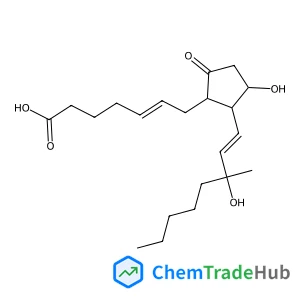
(5Z,11alpha,13E,15R)-11,15-Dihydroxy-15-methyl-9-oxoprosta-5,13-dien-1-oic acid
CAS Number:
55028-70-1
Molecular Formula:
C21H34O5
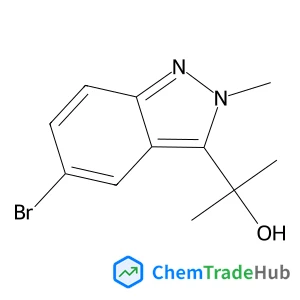
2-(5-Bromo-2-methyl-2H-indazol-3-yl)-2-propanol
CAS Number:
1823787-20-7
Molecular Formula:
C11H13BrN2O
![2-[2-(2-Methoxyethoxy)ethoxy]-2-methylpropane structure](https://static.chemtradehub.com/structs/527/52788-79-1-71c1.webp "2-[2-(2-Methoxyethoxy)ethoxy]-2-methylpropane structure")
Recommended Suppliers






Disclaimer
This page provides academic journal information for reference and research purposes only. We are not affiliated with any journal publishers and do not handle publication submissions. For publication-related inquiries, please contact the respective journal publishers directly.
If you notice any inaccuracies in the information displayed, please contact us at support@chemtradehub.com. We will promptly review and address your concerns.