












Mechanistic insights into the catalytic reaction of ferulic acid decarboxylase from Aspergillus niger: a QM/MM study
Literature Information
Publication Date
2017-02-20
DOI
10.1039/C6CP08811B
Impact Factor
3.676
Authors
Ge Tian, Yongjun Liu
View Original
Abstract
Ubiquinone plays a pivotal role in the aerobic cellular respiratory electron transport chain, whereas ferulic acid decarboxylase (FDC) is involved in the biosynthesis of ubiquinone precursor. Recently, the complete crystal structure of FDC (based on the co-expression of the A. niger fdc1 gene in E. coli with the associated ubix gene from E. coli) at high resolution was reported. Herein, the detailed catalytic non-oxidative decarboxylation mechanism of FDC has been investigated by a combined quantum mechanics/molecular mechanics (QM/MM) approach. Calculation results indicate that, after the 1,3-dipolar cycloaddition of the substrate and cofactor, the carboxylic group can readily split off from the adduct, and the overall energy barrier of the whole catalytic reaction is 23.5 kcal mol−1. According to the energy barrier analysis, the protonation step is rate-limiting. The conserved protonated Glu282 is suggested to be the proton donor through a “water bridge”. Besides, two cases, that is, the generated CO2 escapes from the active site or remains in the active site, were considered. It was found that the prolonged leaving of CO2 can facilitate the protonation of the intermediate. In particular, our calculations shed light on the detailed function of both cofactors prFMNiminium and prFMNketamine in the decarboxylation step. The cofactor prFMNiminium is the catalytically relevant species compared with prFMNketamine.
Related Literature
Chemoenzymatic synthesis of a peptide containing nylon monomer units for thermally processable peptide material application
Kenjiro Yazawa, Joan Gimenez-Dejoz, Takaaki Hikima, Keiji Numata
2017-05-23
Communication
DOI: 10.1039/C7PY00770A
Insight into the polymerization mechanism of photoinduced step transfer-addition & radical-termination (START) polymerizations
Tianchi Xu, Lifen Zhang, Zhenping Cheng, Xiulin Zhu
2017-06-13
Paper
DOI: 10.1039/C7PY00709D
Formation of polyoxazoline-silica nanoparticles via the surface-initiated cationic polymerization of 2-methyl-2-oxazoline
G. Bissadi, R. Weberskirch
2016-07-22
Paper
DOI: 10.1039/C6PY01034B
The origin of bisignate circularly polarized luminescence (CPL) spectra from chiral polymer aggregates and molecular camphor: anti-Kasha's rule revealed by CPL excitation (CPLE) spectra
Sang Thi Duong, Michiya Fujiki
2017-07-17
Paper
DOI: 10.1039/C7PY00958E
Triazolinedione-“clicked” poly(phosphoester)s: systematic adjustment of thermal properties
Laetitia Vlaminck, Maria M. Velencoso, Filip E. Du Prez, Frederik R. Wurm
2017-06-21
Communication
DOI: 10.1039/C7PY00813A
Opportunities for dual RDRP agents in synthesizing novel polymeric materials
Samuel Pearson, Claude St Thomas, Ramiro Guerrero-Santos, Franck D'Agosto
2017-04-24
Review Article
DOI: 10.1039/C7PY00344G
Self-assembly and functionalization of alternating copolymer vesicles
Chuanlong Li, Chuanshuang Chen, Shanlong Li, Tahir Rasheed, Ping Huang, Tong Huang, Yinglin Zhang, Wei Huang, Yongfeng Zhou
2017-07-10
Paper
DOI: 10.1039/C7PY00908A
The energy dissipation and Mullins effect of tough polymer/graphene oxide hybrid nanocomposite hydrogels
Ziqing Tang, Feng Chen, Qiang Chen, Lin Zhu, Xiaoqiang Yan, Hong Chen, Baiping Ren, Jia Yang, Gang Qin, Jie Zheng
2017-07-12
Paper
DOI: 10.1039/C7PY01068K
RAFT-mediated, visible light-initiated single unit monomer insertion and its application in the synthesis of sequence-defined polymers
Changkui Fu, Zixuan Huang, Craig J. Hawker, Graeme Moad, Jiangtao Xu, Cyrille Boyer
2017-06-26
Communication
DOI: 10.1039/C7PY00713B
You might also like
Compound Q&A
What are the main uses of 4-Nitrophenyl phosphate disodium salt hexahydrate (CAS: 333338-18-4)?
4-Nitrophenyl phosphate disodium salt hexahydrate is primarily used as a substra...
333338-18-44-Nitrophenyl phosph...
Compound Q&A
What are the main uses of 2-(Trifluoromethyl)-1,3-oxazole-4-carboxylic Acid (CAS: 1060816-01-4)?
2-(Trifluoromethyl)-1,3-oxazole-4-carboxylic Acid (CAS: 1060816-01-4) is widely ...
1060816-01-42-(Trifluoromethyl)-...
Compound Q&A
How should 2-Fluoro-4-biphenylcarboxylic acid (CAS: 137045-30-8) be stored?
2-Fluoro-4-biphenylcarboxylic acid should be stored in a cool, dry place at room...
137045-30-82-Fluoro-4-biphenylc...
Compound Q&A
What industries use Prednisolone-21-Carboxylic Acid (CAS: 61549-70-0)?
Prednisolone-21-Carboxylic Acid is primarily used in the pharmaceutical industry...
61549-70-0Prednisolone-21-Carb...
Compound Q&A
How should 4-(Hydrazinomethyl)-1,2,3-benzenetriol (CAS: 3614-72-0) be stored?
4-(Hydrazinomethyl)-1,2,3-benzenetriol (CAS: 3614-72-0) should be stored in a co...
3614-72-04-(Hydrazinomethyl)-...
Compound Q&A
What industries use 4-Amino-1-methyl-1H-pyrazole-5-carboxylic acid hydrochloride (CAS: 92534-70-8)?
4-Amino-1-methyl-1H-pyrazole-5-carboxylic acid hydrochloride (CAS: 92534-70-8) i...
92534-70-84-Amino-1-methyl-1H-...
Compound Q&A
What regulatory guidelines apply to dehydropachymic acid (CAS: 77012-31-8)?
Dehydropachymic acid (CAS: 77012-31-8) is regulated by various agencies. It fall...
77012-31-8Dehydropachymic acid
Compound Q&A
What is the market or research trend for 6-[(2,2-Dimethylpropanoyl)amino]nicotinic acid (CAS: 898561-66-5)?
The market and research trends for 6-[(2,2-Dimethylpropanoyl)amino]nicotinic aci...
898561-66-56-[(2,2-Dimethylprop...
Compound Q&A
How should 1,10-Phenanthroline-2,9-dicarbaldehyde (CAS: 57709-62-3) be stored?
1,10-Phenanthroline-2,9-dicarbaldehyde should be stored in a cool, dry place awa...
57709-62-31,10-Phenanthroline-...
Compound Q&A
How is 5-Carbamoyl-11-oxo-10,11-dihydro-5H-dibenzo[b,f]azepin-10-yl acetate (CAS: 113952-21-9) typically synthesized?
5-Carbamoyl-11-oxo-10,11-dihydro-5H-dibenzo[b,f]azepin-10-yl acetate can be synt...
113952-21-95-Carbamoyl-11-oxo-1...
Source Journal
Physical Chemistry Chemical Physics

CiteScore:
5.5
Self-citation Rate:
10.3%
Articles per Year:
3036
Physical Chemistry Chemical Physics (PCCP) is an international journal co-owned by 19 physical chemistry and physics societies from around the world. This journal publishes original, cutting-edge research in physical chemistry, chemical physics and biophysical chemistry. To be suitable for publication in PCCP, articles must include significant innovation and/or insight into physical chemistry; this is the most important criterion that reviewers and Editors will judge against when evaluating submissions. The journal has a broad scope and welcomes contributions spanning experiment, theory, computation and data science. Topical coverage includes spectroscopy, dynamics, kinetics, statistical mechanics, thermodynamics, electrochemistry, catalysis, surface science, quantum mechanics, quantum computing and machine learning. Interdisciplinary research areas such as polymers and soft matter, materials, nanoscience, energy, surfaces/interfaces, and biophysical chemistry are welcomed if they demonstrate significant innovation and/or insight into physical chemistry. Joined experimental/theoretical studies are particularly appreciated when complementary and based on up-to-date approaches.
Recommended Compounds
![N-[2-(4-Hydroxyphenoxy)-4-nitrophenyl]methanesulfonamide structure](https://static.chemtradehub.com/structs/109/109032-22-6-7c88.webp "N-[2-(4-Hydroxyphenoxy)-4-nitrophenyl]methanesulfonamide structure")
N-[2-(4-Hydroxyphenoxy)-4-nitrophenyl]methanesulfonamide
CAS Number:
109032-22-6
Molecular Formula:
C13H12N2O6S
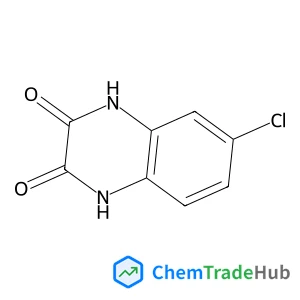
6-CHLORO-2,3-DIOXO-1,2,3,4-TETRAHYDROQUINOXALINE, 97
CAS Number:
169-14-2
Molecular Formula:
C8H5ClN2O2
Recommended Suppliers





Disclaimer
This page provides academic journal information for reference and research purposes only. We are not affiliated with any journal publishers and do not handle publication submissions. For publication-related inquiries, please contact the respective journal publishers directly.
If you notice any inaccuracies in the information displayed, please contact us at support@chemtradehub.com. We will promptly review and address your concerns.