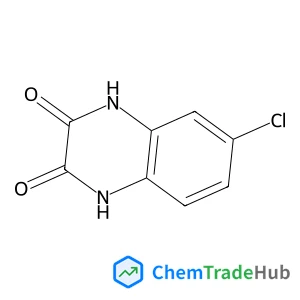
6-CHLORO-2,3-DIOXO-1,2,3,4-TETRAHYDROQUINOXALINE, 97
CAS Number:
169-14-2
Molecular Formula:
C8H5ClN2O2
A. Simon, J. A. Noble, G. Rouaut, C. Aupetit, C. Iftner, J. Mascetti
In this paper, we report a combined theoretical and experimental study of coronene:water interactions in low temperature argon matrices. The theoretical calculations were performed using the mixed density functional-based tight binding/force field approach. The results are discussed in the light of experimental matrix isolation FTIR spectroscopic data. We show that, in the solid phase, (C24H12)(H2O)n (n ≤ 6) σ-type complexes, i.e. with water molecules coordinated on the edge of coronene, are formed, whereas in the gas phase, π-interaction is preferred. These σ-complexes are characterised by small shifts in water absorption bands and a larger blue shift of the out-of-plane γ(CH) deformation of coronene, with the shift increasing with the number of complexed water molecules. Such σ interaction is expected to favour photochemical reaction between water and coronene at the edges of the coronene molecule, leading to the formation of oxidation products at low temperature, even in the presence of only a few water molecules and at radiation energies below the ionisation potential of coronene.
Zhi Li, De-Yi Wang
DOI: 10.1039/C7PY00660H
T. Hoeks, E. Kung, J. P. Lens, P. J. McCloskey, B. A. J. Noordover, J. P. A. Heuts
DOI: 10.1039/C6PY00925E
Yueyue Gao, Yong Zhang, Zhitian Liu, Liancheng Zhao
DOI: 10.1039/C7PY00850C
Shi-Xi Li, Lei Liu, Liu-Jie Zhang, Bo Wu, Cai-Xia Wang, Wei Zhou, Ren-Xi Zhuo, Shi-Wen Huang
DOI: 10.1039/C6PY00874G
Renquan Gu, Xiaoyu Ma, Yuming Zhao
DOI: 10.1039/C6PY01095D
Yaqing Qu, Shuang Wang, Habib Khan, Chengqiang Gao, Heng Zhou
DOI: 10.1039/C5PY01917F
4-Nitrophenyl phosphate disodium salt hexahydrate is primarily used as a substra...
2-(Trifluoromethyl)-1,3-oxazole-4-carboxylic Acid (CAS: 1060816-01-4) is widely ...
2-Fluoro-4-biphenylcarboxylic acid should be stored in a cool, dry place at room...
Prednisolone-21-Carboxylic Acid is primarily used in the pharmaceutical industry...
4-(Hydrazinomethyl)-1,2,3-benzenetriol (CAS: 3614-72-0) should be stored in a co...
4-Amino-1-methyl-1H-pyrazole-5-carboxylic acid hydrochloride (CAS: 92534-70-8) i...
Dehydropachymic acid (CAS: 77012-31-8) is regulated by various agencies. It fall...
The market and research trends for 6-[(2,2-Dimethylpropanoyl)amino]nicotinic aci...
1,10-Phenanthroline-2,9-dicarbaldehyde should be stored in a cool, dry place awa...
5-Carbamoyl-11-oxo-10,11-dihydro-5H-dibenzo[b,f]azepin-10-yl acetate can be synt...

Physical Chemistry Chemical Physics (PCCP) is an international journal co-owned by 19 physical chemistry and physics societies from around the world. This journal publishes original, cutting-edge research in physical chemistry, chemical physics and biophysical chemistry. To be suitable for publication in PCCP, articles must include significant innovation and/or insight into physical chemistry; this is the most important criterion that reviewers and Editors will judge against when evaluating submissions. The journal has a broad scope and welcomes contributions spanning experiment, theory, computation and data science. Topical coverage includes spectroscopy, dynamics, kinetics, statistical mechanics, thermodynamics, electrochemistry, catalysis, surface science, quantum mechanics, quantum computing and machine learning. Interdisciplinary research areas such as polymers and soft matter, materials, nanoscience, energy, surfaces/interfaces, and biophysical chemistry are welcomed if they demonstrate significant innovation and/or insight into physical chemistry. Joined experimental/theoretical studies are particularly appreciated when complementary and based on up-to-date approaches.
![N-[2-(4-Hydroxyphenoxy)-4-nitrophenyl]methanesulfonamide structure](https://static.chemtradehub.com/structs/109/109032-22-6-7c88.webp "N-[2-(4-Hydroxyphenoxy)-4-nitrophenyl]methanesulfonamide structure")