


Remarkable influence of ‘phane effect’ on the excited-state properties of cofacially oriented coumarins
Literature Information
Publication Date
2017-01-06
DOI
10.1039/C6CP07720J
Impact Factor
3.676
Authors
Arindam Mukhopadhyay, Vijay Kumar Maka, Jarugu Narasimha Moorthy
View Original
Abstract
A comprehensive investigation of the photophysics of a cofacially oriented bis-coumarin based on naphthalene, i.e., Cou-Nap, designed and synthesized to examine the influence of π-electronic communication between the two fluorophores, reveals exceptional excited-state properties. While the anticipated [2 + 2] photocycloaddition is not observed despite the fact that the two reactive coumarin units are at a distance of 3.8 Å, the fluorescence quantum yields and singlet lifetimes in different solvents are found to be remarkably higher when compared to those of the parent coumarin and a mono-coumarin model system, i.e., Cou-Dur. In addition to large solvent-induced Stokes shifts, Cou-Nap displays intriguing temperature-dependent emission in a nonpolar solvent such as cyclohexane. The observed photophysical properties are reconciled based on the so-called ‘phane effect’ that is operative in cyclophanes. In the latter, an effective π−π interaction between the aromatic rings modifies the attributes of the chromophore in such a manner that the observed properties cannot be associated with the individual aromatic rings. The temperature-dependent emission is proposed to arise as a consequence of thermally activated ISC from the singlet-excited state to one of the higher energy triplet states. The results constitute, for the first time, the demonstration of modification of the excited-state properties of a fluorophore in a non-cyclophane system by ‘phane effect’.
Recommended Journals

Cellulose

Heteroatom Chemistry

Biocatalysis and Biotransformation

Herald of the Russian Academy of Sciences

Journal of the Indian Institute of Science

Bioorganic & Medicinal Chemistry Letters

Critical Reviews in Solid State and Materials Sciences

Colloid Journal

Medicinal Chemistry Research

Chinese Journal of Chemistry
Related Literature
NANOGOLD decorated by pHLIP peptide: comparative force field study
2015-04-09
Paper
DOI: 10.1039/C5CP01136A
Dynamics of aqueous binary glass-formers confined in MCM-41
Khalid Elamin, Helén Jansson, Jan Swenson
2015-04-20
Paper
DOI: 10.1039/C5CP00751H
Towards multielectron photocatalysis: a porphyrin array for lateral hole transfer and capture on a metal oxide surface
Bradley J. Brennan, Alec C. Durrell, Matthieu Koepf, Robert H. Crabtree, Gary W. Brudvig
2015-04-16
Paper
DOI: 10.1039/C5CP01683E
Collision-induced dissociation products of the protonated dipeptide carnosine: structural elucidation, fragmentation pathways and potential energy surface analysis
Eslam M. Moustafa, Ida Ritacco, Emilia Sicilia
2015-04-09
Paper
DOI: 10.1039/C5CP00958H
A molecular dynamics study of guest–host hydrogen bonding in alcohol clathrate hydrates
Masaki Hiratsuka, Ryo Ohmura, Amadeu K. Sum, Saman Alavi, Kenji Yasuoka
2015-03-25
Paper
DOI: 10.1039/C4CP05732E
Activation of weak IR fundamentals of two species of astrochemical interest in the Td point group – the importance of amorphous ices
R. L. Hudson, P. A. Gerakines, M. J. Loeffler
2015-04-16
Paper
DOI: 10.1039/C5CP00975H
Fabrication of nanoscale heterostructures comprised of graphene-encapsulated gold nanoparticles and semiconducting quantum dots for photocatalysis
Yuan Li
2015-04-13
Paper
DOI: 10.1039/C5CP00928F
Tuning the switching behavior of binary oxide-based resistive memory devices by inserting an ultra-thin chemically active metal nanolayer: a case study on the Ta2O5–Ta system
Shuang Gao, Fei Zeng, Minjuan Wang, Guangyue Wang, Cheng Song, Feng Pan
2015-04-17
Paper
DOI: 10.1039/C5CP01235J
A density functional study of silver clusters on a stepped graphite surface: formation of self-assembled nano-wires
Akansha Singh, Prasenjit Sen
2015-04-14
Paper
DOI: 10.1039/C5CP01016K
You might also like
Compound Q&A
How should waste containing N-Methoxy-N-methyl-1,3-thiazole-5-carboxamide (CAS: 898825-89-3) be handled?
Waste containing N-Methoxy-N-methyl-1,3-thiazole-5-carboxamide (CAS: 898825-89-3...
898825-89-3N-Methoxy-N-methyl-1...
Compound Q&A
How should N-(4-Biphenylyl)dibenzo[b,d]furan-4-amine (CAS: 1318338-47-4) be stored?
N-(4-Biphenylyl)dibenzo[b,d]furan-4-amine should be stored in a tightly sealed c...
1318338-47-4N-(4-Biphenylyl)dibe...
Compound Q&A
What is the market or research trend for 3-Acetamido-5-amino-2,4,6-triiodobenzoic acid (CAS: 1713-07-1)?
The market for 3-Acetamido-5-amino-2,4,6-triiodobenzoic acid (CAS: 1713-07-1) is...
1713-07-13-Acetamido-5-amino-...
Compound Q&A
How should Benzyl 2-O-acetyl-3,4,6-tri-O-benzyl-beta-D-galactopyranoside (CAS: 61820-03-9) be stored?
Benzyl 2-O-acetyl-3,4,6-tri-O-benzyl-beta-D-galactopyranoside (CAS: 61820-03-9) ...
61820-03-9Benzyl 2-O-acetyl-3,...
Compound Q&A
What regulatory guidelines apply to 2-Ethylpiperazine dihydrochloride (CAS: 438050-52-3)?
2-Ethylpiperazine dihydrochloride (CAS: 438050-52-3) is regulated under the Glob...
438050-52-32-Ethylpiperazine di...
Compound Q&A
What regulatory guidelines apply to 1,1'-[1,3-Phenylenebis(methylene)]bis(3-methyl-1H-pyrrole-2,5-dione) (CAS: 119462-56-5)?
1,1'-[1,3-Phenylenebis(methylene)]bis(3-methyl-1H-pyrrole-2,5-dione) (CAS: 11946...
119462-56-51,1'-[1,3-Phenyleneb...
Compound Q&A
Are there alternatives to 5-Fluoro-2-(1-pyrrolidinyl)pyridine (CAS: 1287217-79-1) in synthesis?
Several alternatives can be used in the synthesis of 5-Fluoro-2-(1-pyrrolidinyl)...
1287217-79-15-Fluoro-2-(1-pyrrol...
Compound Q&A
What precautions should be taken when handling 1-((2R,3R,4R,5R)-5-((bis(4-methoxyphenyl)(phenyl)methoxy)methyl)-4-hydroxy-3-methoxytetrahydrofuran-2-yl)-5-methylpyrimidine-2,4(1H,3H)-dione (CAS: 153631-19-7)?
Proper personal protective equipment (PPE) must be worn when handling this compo...
153631-19-71-((2R,3R,4R,5R)-5-(...
Compound Q&A
What precautions should be taken when handling 6-Bromoimidazo[1,2-a]pyridin-8-amine (CAS: 676371-00-9)?
When handling 6-Bromoimidazo[1,2-a]pyridin-8-amine, it is important to wear appr...
676371-00-96-Bromoimidazo[1,2-a...
Compound Q&A
Are there alternatives to (2S,4R)-4-(4-Nitrobenzyl)pyrrolidine-2-carboxylic acid hydrochloride (CAS: 1049740-22-8) in synthesis?
Alternatives to (2S,4R)-4-(4-Nitrobenzyl)pyrrolidine-2-carboxylic acid hydrochlo...
1049740-22-8(2S,4R)-4-(4-Nitrobe...
Source Journal
Physical Chemistry Chemical Physics

CiteScore:
5.5
Self-citation Rate:
10.3%
Articles per Year:
3036
Physical Chemistry Chemical Physics (PCCP) is an international journal co-owned by 19 physical chemistry and physics societies from around the world. This journal publishes original, cutting-edge research in physical chemistry, chemical physics and biophysical chemistry. To be suitable for publication in PCCP, articles must include significant innovation and/or insight into physical chemistry; this is the most important criterion that reviewers and Editors will judge against when evaluating submissions. The journal has a broad scope and welcomes contributions spanning experiment, theory, computation and data science. Topical coverage includes spectroscopy, dynamics, kinetics, statistical mechanics, thermodynamics, electrochemistry, catalysis, surface science, quantum mechanics, quantum computing and machine learning. Interdisciplinary research areas such as polymers and soft matter, materials, nanoscience, energy, surfaces/interfaces, and biophysical chemistry are welcomed if they demonstrate significant innovation and/or insight into physical chemistry. Joined experimental/theoretical studies are particularly appreciated when complementary and based on up-to-date approaches.
Recommended Compounds

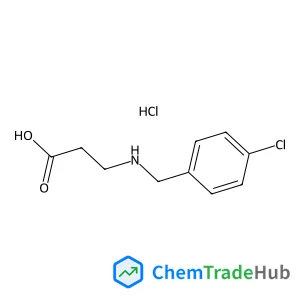
N-(4-Chlorobenzyl)-beta-alanine hydrochloride (1:1)
CAS Number:
1172479-10-5
Molecular Formula:
C10H13Cl2NO2
Recommended Suppliers




Disclaimer
This page provides academic journal information for reference and research purposes only. We are not affiliated with any journal publishers and do not handle publication submissions. For publication-related inquiries, please contact the respective journal publishers directly.
If you notice any inaccuracies in the information displayed, please contact us at support@chemtradehub.com. We will promptly review and address your concerns.