












![19-[Chloro(dideuterio)methyl]-19-deuterio-20,20-dideuteriooxyoctatriacontane-18,21-dione structure](https://static.chemtradehub.com/structs/124/1246818-85-8-6244.webp "19-[Chloro(dideuterio)methyl]-19-deuterio-20,20-dideuteriooxyoctatriacontane-18,21-dione structure")
19-[Chloro(dideuterio)methyl]-19-deuterio-20,20-dideuteriooxyoctatriacontane-18,21-dione
CAS Number:
1246818-85-8
Molecular Formula:
C39H75ClO4
Furong Wang, Uli Schmidhammer, Aurélien de La Lande, Mehran Mostafavi
Oxidation by the ultra-short lived radical cation of water, H2O˙+, can potentially take place at the interface of water and numerous heterogeneous systems involved in radiation therapy, energy and environmental industries. The oxidation processes induced by H2O˙+ can be mimicked in highly concentrated solutions where the nearest neighbors of H2O˙+ may be molecules other than water. The reactivity of H2O˙+ and D2O˙+ is probed in hydrogenated and deuterated sulfuric acid solutions of various concentrations. The oxidized solute, sulfate radical, is observed at 7 ps and remarkably higher yields are found in deuterated solutions. The isotopic effects reveal the competition between two ultrafast reactions: proton transfer toward H2O (D2O) and electron transfer from HSO4− to H2O˙+ (D2O˙+). Density functional theory simulations decipher the electron transfer mechanism: it proceeds via sub-femtosecond charge migration and is not affected by isotopic substitution. This work definitively demonstrates why direct oxidation triggered by H2O˙+ can be competitive with proton transfer.
Dmitry I. Sharapa, Jan Schwabedissen, Vladimir V. Rybkin
DOI: 10.1039/C6CP05849C
Sacha Noimark, Rafael Gómez-Bombarelli, Alexander J. MacRobert, Ivan P. Parkin, Christopher W. M. Kay
DOI: 10.1039/C6CP02529C
Shengxue Yang, Wenqi Xiong, Congxin Xia, Hui Cai, Bin Chen, Xiaoting Wang, Xinzheng Zhang, Zhongming Wei, Sefaattin Tongay, Jingbo Li
DOI: 10.1039/C6CP04752A
C. Qiu, Y. Krüger, M. Wilke, J. Rička, M. Frenz
DOI: 10.1039/C6CP04250C
Guanglin Kuang, Xu Wang, Christer Halldin, Agneta Nordberg, Bengt Långström, Hans Ågren, Yaoquan Tu
DOI: 10.1039/C6CP02278B
S. Carlotto, M. Sambi, F. Sedona, A. Vittadini, J. Bartolomé, F. Bartolomé
DOI: 10.1039/C6CP04787D
Hui Zhang, Yuqi Li, Yaoguang Xu, Zexiang Lu, Lihui Chen, Liulian Huang
DOI: 10.1039/C6CP04932J
Thach V. Can, Marc A. Caporini, Albert A. Smith, Robert G. Griffin
DOI: 10.1039/C6CP04623A
Piotr Piatkowski, Boiko Cohen, Samrana Kazim, Shahzada Ahmad, Abderrazzak Douhal
DOI: 10.1039/C6CP02682F
Rui-Ning Wang, Guo-Yi Dong, Shu-Fang Wang, Guang-Sheng Fu, Jiang-Long Wang
DOI: 10.1039/C6CP04339A
2-(2-Chloroacetamido)-3-phenylpropanoic acid (CAS: 7765-11-9) is generally consi...
2-(Benzyloxy)-5-bromobenzoic acid can be handled safely if appropriate precautio...
(4-Methyl-1,2,5-oxadiazol-3-yl)methanamine hydrochloride is a chemical compound ...
2-(5-Hexylthiophen-2-yl)-4,4,5,5-tetramethyl-1,3,2-dioxaborolane (CAS: 917985-54...
While 4-(8-Methyl-9H-1,3-dioxolo[4,5-h][2,3]benzodiazepin-5-yl)benzenamine (CAS:...
The market for tert-butyl 3-hydroxy-4,5,7,8-tetrahydro-2H-pyrazolo[3,4-d]azepine...
Waste containing 3,5-Diamino-1H-pyrazole-4-carbonitrile (CAS: 6844-58-2) should ...
(6-Fluoro-3-pyridinyl)boronic acid can be synthesized through the reaction of 6-...
Dibenzyl carbonimidoylbiscarbamate (CAS: 10065-79-9) finds applications in vario...
The market for (beta,beta,2,3,4,5,6-~2~H_7_)Phenylalanine (CAS: 74228-83-4) is g...

Physical Chemistry Chemical Physics (PCCP) is an international journal co-owned by 19 physical chemistry and physics societies from around the world. This journal publishes original, cutting-edge research in physical chemistry, chemical physics and biophysical chemistry. To be suitable for publication in PCCP, articles must include significant innovation and/or insight into physical chemistry; this is the most important criterion that reviewers and Editors will judge against when evaluating submissions. The journal has a broad scope and welcomes contributions spanning experiment, theory, computation and data science. Topical coverage includes spectroscopy, dynamics, kinetics, statistical mechanics, thermodynamics, electrochemistry, catalysis, surface science, quantum mechanics, quantum computing and machine learning. Interdisciplinary research areas such as polymers and soft matter, materials, nanoscience, energy, surfaces/interfaces, and biophysical chemistry are welcomed if they demonstrate significant innovation and/or insight into physical chemistry. Joined experimental/theoretical studies are particularly appreciated when complementary and based on up-to-date approaches.
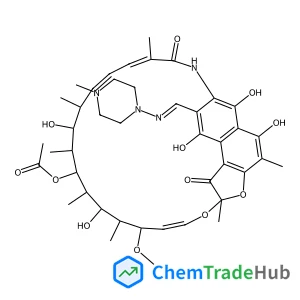
![(1R)-N-((1R)-1-Phenylethyl)-1-[4-(tert-butyldimethylsilyloxymethyl)cyclohexyl]ethan-1-amine structure](https://static.chemtradehub.com/structs/672/672314-45-3-47ef.webp "(1R)-N-((1R)-1-Phenylethyl)-1-[4-(tert-butyldimethylsilyloxymethyl)cyclohexyl]ethan-1-amine structure")
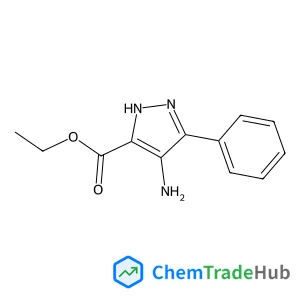
![3,7-Di(1,1':3',1''-terphenyl-5'-yl)-10,11,12,13-tetrahydrodiindeno[7,1-de:1',7'-fg][1,3,2]dioxaphosphocin-5-ol 5-oxide structure](https://static.chemtradehub.com/structs/135/1352810-38-8-3f10.webp "3,7-Di(1,1':3',1''-terphenyl-5'-yl)-10,11,12,13-tetrahydrodiindeno[7,1-de:1',7'-fg][1,3,2]dioxaphosphocin-5-ol 5-oxide structure")




