












The water association band as a marker of hydrogen bonds in trehalose amorphous matrices
Literature Information
Publication Date
2017-01-04
DOI
10.1039/C6CP06848K
Impact Factor
3.676
Authors
Sergio Giuffrida, Lorenzo Cordone
View Original
Abstract
The relevant role played by residual water in modulating the dynamics and structure of a protein, a matrix and their coupling has been thoroughly studied in bioprotective amorphous saccharide matrices via experiments and simulations. In order to better characterize this residual water and the hydrogen bond structures in which it is involved, in this work infrared spectroscopy experiments are conducted on trehalose–water systems. The properties of water are inferred from the study of a peculiar infrared band, the water association band, which we exploited as a marker of the hydrogen bonds in which water is involved. Our aim was the identification of populations of water molecules, which give rise to the different components to which the water association band can be easily decomposed. The attribution of these components to families of water molecules is accomplished by studying the band behaviour with a suitable use of Hofmeister salts, known to have a structure-making or structure-breaking activity, and therefore able to modify the hydrogen bond network by enhancing or depressing the local order. The results allow ascribing, in almost all samples, five band components to either a chaotropic or kosmotropic environment, and further define two of them as bulk-like or ice-like water. The characterization of different components enables the use of this band as a tool to deepen the knowledge of other low-water hydrated matrices with a new approach. A differential analysis of peak frequencies and populations of the components in a bulky system, containing or not embedded components or interfaces (e.g. proteins, polymers, surfaces or even massive cosolutes), makes it possible to draw information on the properties of hydrogen bonds which are formed in the investigated systems.
Related Literature
Polymer defect engineering – conductive 2D organic platelets from precise thiophene-doped polyethylene
Oksana Suraeva, Beomjin Jeong, Kamal Asadi, Katharina Landfester, Ingo Lieberwirth
2021-03-02
Paper
DOI: 10.1039/D1PY00117E
Hollow microspherical carbazole-based conjugated polymers by photoinduced step-growth polymerization
Tugba Celiker, Ali Suerkan, Sinem Altinisik, Mert Akgun, Sermet Koyuncu
2021-07-21
Paper
DOI: 10.1039/D1PY00822F
Construction of biodegradable core cross-linked nanoparticles from near infrared dyes encoded in polyprodrug amphiphiles and investigation of their synergistic anticancer activity
Xiaoxu Mao, Shoukui Hu, Ke Shang, Guangwei Yang, Jinhao Yan, Chao Ma, Jun Yin
2021-03-05
Paper
DOI: 10.1039/D1PY00128K
Polymers and boron neutron capture therapy (BNCT): a potent combination
Anaïs Pitto-Barry
2021-03-23
Review Article
DOI: 10.1039/D0PY01392G
Nitroreductase-responsive polymeric micelles based on 4-nitrobenzyl and AIE moieties for intracellular doxorubicin release
Xue-Yi Sun, Ya-Xuan Liang, Cheng-Yan Wu, Quan Tang, Rui Liu, Zhong-Lin Lu, Lan He
2021-04-05
Paper
DOI: 10.1039/D1PY00232E
Detection and evaluation of polymer–polymer interactions in dilute solutions of associating polymers
Georges M. Pavlov, Anna A. Gosteva, Olga V. Okatova, Olga A. Dommes, Irina I. Gavrilova
2021-03-22
Paper
DOI: 10.1039/D0PY01725F
A dual stimuli responsive natural polymer based superabsorbent hydrogel engineered through a novel cross-linker
Safiya Nisar, Sonal Chauhan, Gurmeet Singh, Virender Singh, Sunita Rattan
2021-03-23
Paper
DOI: 10.1039/D0PY01729A
Oxazoline-methacrylate graft-copolymers with upper critical solution temperature behaviour in Yubase oil
Matilde Concilio, Nga Nguyen, C. Remzi Becer
2021-05-28
Paper
DOI: 10.1039/D1PY00534K
You might also like
Compound Q&A
What precautions should be taken when handling 4-(2-Furylmethyl)thiomorpholine 1,1-dioxide (CAS: 79206-94-3)?
When handling 4-(2-Furylmethyl)thiomorpholine 1,1-dioxide (CAS: 79206-94-3), it ...
79206-94-34-(2-Furylmethyl)thi...
Compound Q&A
What precautions should be taken when handling 4-Chloro-N-[2-(4-morpholinyl)ethyl]benzamide (CAS: 71320-77-9)?
When handling 4-Chloro-N-[2-(4-morpholinyl)ethyl]benzamide (CAS: 71320-77-9), it...
71320-77-94-Chloro-N-[2-(4-mor...
Compound Q&A
How should waste containing 2-[2-(2-Methoxyethoxy)ethoxy]ethyl 4-methylbenzenesulfonate (CAS: 62921-74-8) be handled?
Waste containing this compound (CAS: 62921-74-8) should be handled according to ...
62921-74-82-[2-(2-Methoxyethox...
Compound Q&A
How should waste containing (S)-Methyl 2-amino-3-cyclohexylpropanoate be handled?
Waste containing (S)-Methyl 2-amino-3-cyclohexylpropanoate should be collected i...
40056-18-6(S)-Methyl 2-amino-3...
Compound Q&A
How is 5-({4-[(2S,4R)-4-Hydroxy-2-methyltetrahydro-2H-pyran-4-yl]-2-thienyl}sulfanyl)-1-methyl-1,3-dihydro-2H-indol-2-one (CAS: 166882-70-8) typically synthesized?
This compound can be synthesized using a multi-step process involving the conjug...
166882-70-85-({4-[(2S,4R)-4-Hyd...
Compound Q&A
Are there alternatives to (2E)-3-(3,4-Dichlorophenyl)acrylic acid (CAS: 7312-27-8) in synthesis?
There are several alternatives to (2E)-3-(3,4-Dichlorophenyl)acrylic acid in syn...
7312-27-8(2E)-3-(3,4-Dichloro...
Compound Q&A
How should Ethyl 6-(2-nitrophenyl)imidazo[2,1-b][1,3]thiazole-3-carboxylate (CAS: 925437-84-9) be stored?
Ethyl 6-(2-nitrophenyl)imidazo[2,1-b][1,3]thiazole-3-carboxylate (CAS: 925437-84...
925437-84-9Ethyl 6-(2-nitrophen...
Compound Q&A
How should waste containing 2-(1,3-Thiazol-2-yl)ethanamine (CAS: 18453-07-1) be handled?
Waste containing 2-(1,3-Thiazol-2-yl)ethanamine (CAS: 18453-07-1) should be coll...
18453-07-12-(1,3-Thiazol-2-yl)...
Compound Q&A
How is Methyl 5-iodo-2-methylbenzoate (CAS: 103440-54-6) typically synthesized?
Methyl 5-iodo-2-methylbenzoate can be synthesized through the iodination of meth...
103440-54-6Methyl 5-iodo-2-meth...
Compound Q&A
How is 5-Chloro[1,2,4]triazolo[1,5-a]pyridine (CAS: 1427399-34-5) typically synthesized?
5-Chloro[1,2,4]triazolo[1,5-a]pyridine is commonly synthesized via the condensat...
1427399-34-55-Chloro[1,2,4]triaz...
Source Journal
Physical Chemistry Chemical Physics

CiteScore:
5.5
Self-citation Rate:
10.3%
Articles per Year:
3036
Physical Chemistry Chemical Physics (PCCP) is an international journal co-owned by 19 physical chemistry and physics societies from around the world. This journal publishes original, cutting-edge research in physical chemistry, chemical physics and biophysical chemistry. To be suitable for publication in PCCP, articles must include significant innovation and/or insight into physical chemistry; this is the most important criterion that reviewers and Editors will judge against when evaluating submissions. The journal has a broad scope and welcomes contributions spanning experiment, theory, computation and data science. Topical coverage includes spectroscopy, dynamics, kinetics, statistical mechanics, thermodynamics, electrochemistry, catalysis, surface science, quantum mechanics, quantum computing and machine learning. Interdisciplinary research areas such as polymers and soft matter, materials, nanoscience, energy, surfaces/interfaces, and biophysical chemistry are welcomed if they demonstrate significant innovation and/or insight into physical chemistry. Joined experimental/theoretical studies are particularly appreciated when complementary and based on up-to-date approaches.
Recommended Compounds
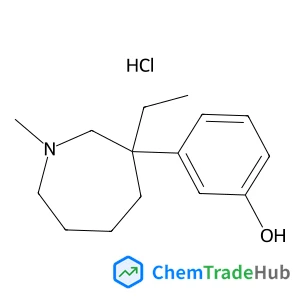
3-(3-Ethyl-1-methyl-3-azepanyl)phenol hydrochloride (1:1)
CAS Number:
59263-76-2
Molecular Formula:
C15H24ClNO

(3beta,7beta,12beta)-3,7,12-Trihydroxy-11,15,23-trioxolanost-8-en-26-oic acid
CAS Number:
98665-22-6
Molecular Formula:
C30H44O8

Recommended Suppliers





Disclaimer
This page provides academic journal information for reference and research purposes only. We are not affiliated with any journal publishers and do not handle publication submissions. For publication-related inquiries, please contact the respective journal publishers directly.
If you notice any inaccuracies in the information displayed, please contact us at support@chemtradehub.com. We will promptly review and address your concerns.