












Aun (n = 1–16) clusters on the ZrO2(111) surface: a DFT+U investigation
Literature Information
Publication Date
2016-10-12
DOI
10.1039/C6CP05977E
Impact Factor
3.676
Authors
Ming-Xing Liang, Liang Zhao
View Original
Abstract
The growth patterns and electronic structures of Aun clusters (n = 1–16) supported on the monoclinic ZrO2(111) surface were investigated using a DFT+U approach. We found that the supported Aun clusters prefer quasi-planar structures and lay flat on the ZrO2 surface. This result agrees well with the experimental results. Both orbital overlap and dispersion interactions contribute to the interaction between the Aun cluster and the ZrO2 surface. Electrons were transferred from the ZrO2 surface to the Aun cluster. Small energy gaps between unoccupied states in the Aun clusters and occupied states in the ZrO2 surface were found, especially for the supported Aun clusters with odd n, which may indicate that more electrons are excited from the ZrO2 surface to the Aun cluster even under visible-light irradiation. In other words, the ZrO2 support may be involved in the photocatalytic process when Aun/ZrO2 is used as a photocatalyst.
Related Literature
Magnetically induced current density in triple-layered beryllium–boron clusters
Slađana Đorđević, Slavko Radenković
2019-03-11
Paper
DOI: 10.1039/C9CP00541B
Revisiting the reaction energetics of the CH3O˙ + O2 (3Σ−) reaction: the crucial role of post-CCSD(T) corrections
Subhasish Mallick, Amit Kumar, Pradeep Kumar
2019-02-27
Paper
DOI: 10.1039/C8CP07536K
The primary photo-dissociation dynamics of carboxylate anions in aqueous solution: decarboxylation
Marlene Møller Madsen, Frank Jensen, Svend J. Knak Jensen, Jan Thøgersen
2019-03-18
Paper
DOI: 10.1039/C8CP07621A
Aromaticity versus regioisomeric effect of β-substituents in porphyrinoids
Yuhang Yao, Yu Rao, Yiwei Liu, Liang Jiang, Jin Xiong, Ying-Jie Fan, Zhen Shen, Jun-Long Zhang
2019-05-01
Paper
DOI: 10.1039/C9CP01177C
Self-assembly and stimuli-responsive behaviours of side-chain liquid crystalline copolymers: a dissipative particle dynamics simulation approach
Yisheng Lv, Liquan Wang, Fangsheng Wu, Shuting Gong, Jie Wei, Shaoliang Lin
2019-03-13
Paper
DOI: 10.1039/C9CP00400A
The interaction of ethylammonium tetrafluoroborate [EtNH3+][BF4−] ionic liquid on the Li(001) surface: towards understanding early SEI formation on Li metal
Jonathan Clarke-Hannaford, Michael Breedon, Adam S. Best, Michelle J. S. Spencer
2019-04-24
Paper
DOI: 10.1039/C9CP01200A
High throughput approach to investigating ternary solvents of aqueous non-stoichiometric protic ionic liquids
Dilek Yalcin, Calum J. Drummond, Tamar L. Greaves
2018-12-03
Paper
DOI: 10.1039/C8CP05894F
Insight into the halogen-bond nature of noble gas-chlorine systems by molecular beam scattering experiments, ab initio calculations and charge displacement analysis
Leonardo Belpassi, Luiz F. Roncaratti, Stefano Falcinelli, David Cappelletti, Fernando Pirani
2019-03-11
Paper
DOI: 10.1039/C9CP00300B
Precise control of the interlayer spacing between graphene sheets by hydrated cations
Liang Chen, Guosheng Shi, Haiping Fang
2019-03-09
Paper
DOI: 10.1039/C8CP07837H
Dynamic exciton localisation in a pyrene–BODIPY–pyrene dye conjugate
Nina Auerhammer, Alexander Schulz, Alexander Schmiedel, Marco Holzapfel, Joscha Hoche, Roland Mitric, Christoph Lambert
2019-03-22
Paper
DOI: 10.1039/C9CP00908F
You might also like
Compound Q&A
How is Ethyl 4-chlorothieno[2,3-b]pyridine-5-carboxylate (CAS: 59713-58-5) typically synthesized?
Ethyl 4-chlorothieno[2,3-b]pyridine-5-carboxylate (CAS: 59713-58-5) can be synth...
59713-58-5Ethyl 4-chlorothieno...
Compound Q&A
What regulatory guidelines apply to 5-Methyl-1H-indole-3-carbaldehyde (CAS: 52562-50-2)?
5-Methyl-1H-indole-3-carbaldehyde (CAS: 52562-50-2) is subject to various regula...
52562-50-25-Methyl-1H-indole-3...
Compound Q&A
What are the physical and chemical properties of (1,3-Dimethyl-2,4-dioxo-1,2,3,4-tetrahydro-5-pyrimidinyl)boronic acid (CAS: 223418-73-3)?
(1,3-Dimethyl-2,4-dioxo-1,2,3,4-tetrahydro-5-pyrimidinyl)boronic acid is a white...
223418-73-3(1,3-Dimethyl-2,4-di...
Compound Q&A
How should waste containing Sulfocostunolide A (CAS: 1016983-51-9) be handled?
Waste containing Sulfocostunolide A (CAS: 1016983-51-9) should be handled with c...
1016983-51-9Sulfocostunolide A
Compound Q&A
What precautions should be taken when handling Murraxocin (CAS: 88478-44-8)?
When handling Murraxocin (CAS: 88478-44-8), ensure proper personal protective eq...
88478-44-8Murraxocin
Compound Q&A
What are the physical and chemical properties of Formvar (CAS: 63148-64-1)?
Formvar (CAS: 63148-64-1) is an alkyd resin characterized by a high molecular we...
63148-64-1Formvar(R)
Compound Q&A
Is (S)-4-benzyl-2-((benzyloxy)methyl)morpholine (CAS: 205242-66-6) safe?
(S)-4-benzyl-2-((benzyloxy)methyl)morpholine is generally safe when handled with...
205242-66-6(S)-4-benzyl-2-((ben...
Compound Q&A
What industries use Methyl 1-(5-bromo-2-pyrimidinyl)cyclopropanecarboxylate (CAS: 1447607-69-3)?
Methyl 1-(5-bromo-2-pyrimidinyl)cyclopropanecarboxylate (CAS: 1447607-69-3) is p...
1447607-69-3Methyl 1-(5-bromo-2-...
Compound Q&A
Is 2-Methyl-1-phenyl-1-propanamine hydrochloride (CAS: 24290-47-9) safe?
2-Methyl-1-phenyl-1-propanamine hydrochloride (CAS: 24290-47-9) is generally con...
24290-47-92-Methyl-1-phenyl-1-...
Compound Q&A
How is 3-(4-Bromophenyl)-2-methylpropanoic acid (CAS: 66735-01-1) typically synthesized?
3-(4-Bromophenyl)-2-methylpropanoic acid is synthesized through a multi-step pro...
66735-01-13-(4-Bromophenyl)-2-...
Source Journal
Physical Chemistry Chemical Physics

CiteScore:
5.5
Self-citation Rate:
10.3%
Articles per Year:
3036
Physical Chemistry Chemical Physics (PCCP) is an international journal co-owned by 19 physical chemistry and physics societies from around the world. This journal publishes original, cutting-edge research in physical chemistry, chemical physics and biophysical chemistry. To be suitable for publication in PCCP, articles must include significant innovation and/or insight into physical chemistry; this is the most important criterion that reviewers and Editors will judge against when evaluating submissions. The journal has a broad scope and welcomes contributions spanning experiment, theory, computation and data science. Topical coverage includes spectroscopy, dynamics, kinetics, statistical mechanics, thermodynamics, electrochemistry, catalysis, surface science, quantum mechanics, quantum computing and machine learning. Interdisciplinary research areas such as polymers and soft matter, materials, nanoscience, energy, surfaces/interfaces, and biophysical chemistry are welcomed if they demonstrate significant innovation and/or insight into physical chemistry. Joined experimental/theoretical studies are particularly appreciated when complementary and based on up-to-date approaches.
Recommended Compounds

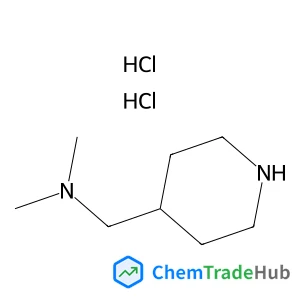
N,N-dimethyl(piperidin-4-yl)methanamine hydrochloride
CAS Number:
172281-72-0
Molecular Formula:
C8H20Cl2N2
Recommended Suppliers





Disclaimer
This page provides academic journal information for reference and research purposes only. We are not affiliated with any journal publishers and do not handle publication submissions. For publication-related inquiries, please contact the respective journal publishers directly.
If you notice any inaccuracies in the information displayed, please contact us at support@chemtradehub.com. We will promptly review and address your concerns.