













Interaction of triarylmethyl radicals with DNA termini revealed by orientation-selective W-band double electron–electron resonance spectroscopy
Literature Information
Publication Date
2016-10-05
DOI
10.1039/C6CP05904J
Impact Factor
3.676
Authors
Gunnar Jeschke, Maxim Yulikov
View Original
Abstract
Spin labels selectively attached to biomolecules allow high-accuracy nanoscale distance measurements using pulsed electron paramagnetic resonance (EPR), in many cases providing the only access to the structure of complex biosystems. Triarylmethyl (TAM) radicals have recently emerged as a new class of spin labels expanding the applicability of the method to physiological temperatures. Along with other factors, the accuracy of the obtained distances crucially relies on the understanding of interactions between biomolecules and spin labels. In this work, we consider such crucial interactions and their impact on pulsed EPR distance measurements in TAM-labeled DNAs. Using orientation-selective high-frequency (94 GHz) double electron–electron resonance (DEER) we demonstrate strong specific interactions between DNA termini and TAM labels, leading to a significant restriction of their conformational mobility. An understanding of such interactions guides the way to select optimum TAM-labeling strategies, thus refining nanoscale EPR distance measurements in nucleic acids and their complexes under physiological conditions.
Recommended Journals
Related Literature
Vibrational self-consistent field calculations for spectroscopy of biological molecules: new algorithmic developments and applications
Tapta Kanchan Roy
2013-04-10
Perspective
DOI: 10.1039/C3CP50739D
(Sub-)femtosecond control of molecular reactions via tailoring the electric field of light
Philipp von den Hoff, Irina Znakovskaya, Regina de Vivie-Riedle
2013-04-09
Perspective
DOI: 10.1039/C3CP50591J
Large excited state two photon absorptions in the near infrared region of surprisingly stable radical cations of (ferrocenyl)indenes
Laura Orian, Stefano Scuppa, Saverio Santi, Moreno Meneghetti
2013-06-03
Paper
DOI: 10.1039/C3CP51257F
C72: gaudiene, a hollow and aromatic all-carbon molecule
Dage Sundholm
2013-04-18
Communication
DOI: 10.1039/C3CP51042E
Monolayer patterning using ketone dipoles
Min Kyoung Kim, Yi Xue, Tereza Pašková, Matthew B. Zimmt
2013-04-09
Paper
DOI: 10.1039/C3CP50808K
The detailed characterization of electrochemically switchable molecular assemblies on silicon electrodes
Simone Ciampi, Michael James, Moinul H. Choudhury, Nadim A. Darwish, J. Justin Gooding
2013-05-02
Paper
DOI: 10.1039/C3CP50355K
Coordination self-assembly of bromo-phenyl and pyridyl functionalized porphyrins with Fe on an Au(111) surface
Xiao Feng Mao, Tao Lin, Jinne Adisoejoso, Ziliang Shi, Xue Song Shang, Pei Nian Liu, Nian Lin
2013-06-04
Communication
DOI: 10.1039/C3CP50779C
TiO2–graphene composites with exposed {001} facets produced by a one-pot solvothermal approach for high performance photocatalyst
Rongbin Zhang
2013-05-29
Paper
DOI: 10.1039/C3CP50942G
You might also like
Compound Q&A
How is Ethyl 4-chlorothieno[2,3-b]pyridine-5-carboxylate (CAS: 59713-58-5) typically synthesized?
Ethyl 4-chlorothieno[2,3-b]pyridine-5-carboxylate (CAS: 59713-58-5) can be synth...
59713-58-5Ethyl 4-chlorothieno...
Compound Q&A
What regulatory guidelines apply to 5-Methyl-1H-indole-3-carbaldehyde (CAS: 52562-50-2)?
5-Methyl-1H-indole-3-carbaldehyde (CAS: 52562-50-2) is subject to various regula...
52562-50-25-Methyl-1H-indole-3...
Compound Q&A
What are the physical and chemical properties of (1,3-Dimethyl-2,4-dioxo-1,2,3,4-tetrahydro-5-pyrimidinyl)boronic acid (CAS: 223418-73-3)?
(1,3-Dimethyl-2,4-dioxo-1,2,3,4-tetrahydro-5-pyrimidinyl)boronic acid is a white...
223418-73-3(1,3-Dimethyl-2,4-di...
Compound Q&A
How should waste containing Sulfocostunolide A (CAS: 1016983-51-9) be handled?
Waste containing Sulfocostunolide A (CAS: 1016983-51-9) should be handled with c...
1016983-51-9Sulfocostunolide A
Compound Q&A
What precautions should be taken when handling Murraxocin (CAS: 88478-44-8)?
When handling Murraxocin (CAS: 88478-44-8), ensure proper personal protective eq...
88478-44-8Murraxocin
Compound Q&A
What are the physical and chemical properties of Formvar (CAS: 63148-64-1)?
Formvar (CAS: 63148-64-1) is an alkyd resin characterized by a high molecular we...
63148-64-1Formvar(R)
Compound Q&A
Is (S)-4-benzyl-2-((benzyloxy)methyl)morpholine (CAS: 205242-66-6) safe?
(S)-4-benzyl-2-((benzyloxy)methyl)morpholine is generally safe when handled with...
205242-66-6(S)-4-benzyl-2-((ben...
Compound Q&A
What industries use Methyl 1-(5-bromo-2-pyrimidinyl)cyclopropanecarboxylate (CAS: 1447607-69-3)?
Methyl 1-(5-bromo-2-pyrimidinyl)cyclopropanecarboxylate (CAS: 1447607-69-3) is p...
1447607-69-3Methyl 1-(5-bromo-2-...
Compound Q&A
Is 2-Methyl-1-phenyl-1-propanamine hydrochloride (CAS: 24290-47-9) safe?
2-Methyl-1-phenyl-1-propanamine hydrochloride (CAS: 24290-47-9) is generally con...
24290-47-92-Methyl-1-phenyl-1-...
Compound Q&A
How is 3-(4-Bromophenyl)-2-methylpropanoic acid (CAS: 66735-01-1) typically synthesized?
3-(4-Bromophenyl)-2-methylpropanoic acid is synthesized through a multi-step pro...
66735-01-13-(4-Bromophenyl)-2-...
Source Journal
Physical Chemistry Chemical Physics

CiteScore:
5.5
Self-citation Rate:
10.3%
Articles per Year:
3036
Physical Chemistry Chemical Physics (PCCP) is an international journal co-owned by 19 physical chemistry and physics societies from around the world. This journal publishes original, cutting-edge research in physical chemistry, chemical physics and biophysical chemistry. To be suitable for publication in PCCP, articles must include significant innovation and/or insight into physical chemistry; this is the most important criterion that reviewers and Editors will judge against when evaluating submissions. The journal has a broad scope and welcomes contributions spanning experiment, theory, computation and data science. Topical coverage includes spectroscopy, dynamics, kinetics, statistical mechanics, thermodynamics, electrochemistry, catalysis, surface science, quantum mechanics, quantum computing and machine learning. Interdisciplinary research areas such as polymers and soft matter, materials, nanoscience, energy, surfaces/interfaces, and biophysical chemistry are welcomed if they demonstrate significant innovation and/or insight into physical chemistry. Joined experimental/theoretical studies are particularly appreciated when complementary and based on up-to-date approaches.
Recommended Compounds
![2-Methyl-2-propanyl 1,6-diazaspiro[3.4]octane-6-carboxylate structure](https://static.chemtradehub.com/structs/115/1158749-79-1-81ee.webp "2-Methyl-2-propanyl 1,6-diazaspiro[3.4]octane-6-carboxylate structure")
2-Methyl-2-propanyl 1,6-diazaspiro[3.4]octane-6-carboxylate
CAS Number:
1158749-79-1
Molecular Formula:
C11H20N2O2
![[2-(Benzyloxy)-3-bromo-5-methylphenyl]boronic acid structure](https://static.chemtradehub.com/structs/870/870777-20-1-24ac.webp "[2-(Benzyloxy)-3-bromo-5-methylphenyl]boronic acid structure")
[2-(Benzyloxy)-3-bromo-5-methylphenyl]boronic acid
CAS Number:
870777-20-1
Molecular Formula:
C14H14BBrO3
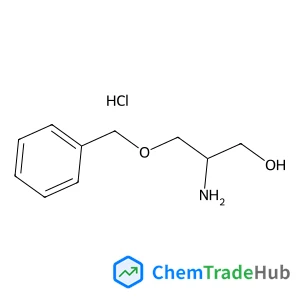
(R)-2-amino-3-(benzyloxy)propan-1-ol hydrochloride
CAS Number:
58577-95-0
Molecular Formula:
C10H16ClNO2
Recommended Suppliers





Disclaimer
This page provides academic journal information for reference and research purposes only. We are not affiliated with any journal publishers and do not handle publication submissions. For publication-related inquiries, please contact the respective journal publishers directly.
If you notice any inaccuracies in the information displayed, please contact us at support@chemtradehub.com. We will promptly review and address your concerns.