












Kinetic and thermodynamic determinants of trace metal partitioning at biointerphases: the role of intracellular speciation dynamics
Literature Information
Publication Date
2016-10-06
DOI
10.1039/C6CP05717A
Impact Factor
3.676
Authors
View Original
Abstract
There is a large body of work evidencing the necessity to evaluate chemical speciation dynamics of trace metals in solution for an accurate definition of their bioavailability to microorganisms. In contrast, the integration of intracellular metal speciation dynamics in biouptake formalisms is still in its early stages. Accordingly, we elaborate here a rationale for the interplay between chemodynamics of intracellular metal complexes and dynamics of processes governing metal biouptake under non-complexing outer medium conditions. These processes include the conductive diffusion of metal ions to the charged soft biointerphase, metal internalisation, excretion of intracellular free metal species and metal depletion from bulk solution. The theory is formulated from Nernst–Planck equations corrected for electrostatic and reaction kinetic terms applied at the biosurface and in the intracellular volume. Computational illustrations demonstrate how biointerfacial metal distribution dynamics inherently reflects the chemodynamic properties of intracellular complexes. In the practical limits of high and weak metal affinity to biosurface internalisation sites, the metal concentration profile is explicitly solved under conditions of strong intracellular complexing agents. Exact analytical expression is further developed for metal partitioning at equilibrium. This provides a way to evaluate the metal biopartition coefficient from refined analysis of bulk metal depletion measured at various cell concentrations. Depending on here-defined dimensionless parameters involving rates of metal internalisation–excretion and complex formation, the formalism defines the nature of the different kinetic regimes governing bulk metal depletion and biouptake. In particular, the conditions leading to an internalisation flux limited by diffusion as a result of demanding intracellular metal complexation are identified.
Related Literature
Mechanism of one-electron oxidation of metformin in aqueous solution
C. Marchetti, R. Lazzaroni, D. Jore, M. Gardès-Albert
2013-04-22
Paper
DOI: 10.1039/C3CP50602A
Study on electrochemiluminescence spectra of ZnO flakes
Lei Wang, Qiaoli Yue, Haibo Li, Shuling Xu, Jifeng Liu
2013-04-26
Communication
DOI: 10.1039/C3CP51240A
Separation of cobalt and nickel by solvent extraction with two mutually immiscible ionic liquids
Sil Wellens, Ben Thijs, Claudia Möller, Koen Binnemans
2013-04-12
Paper
DOI: 10.1039/C3CP50819F
Charge trapping in TiO2 polymorphs as seen by Electron Paramagnetic Resonance spectroscopy
Mario Chiesa, Maria Cristina Paganini, Stefano Livraghi, Elio Giamello
2013-04-24
Perspective
DOI: 10.1039/C3CP50658D
(Sub-)femtosecond control of molecular reactions via tailoring the electric field of light
Philipp von den Hoff, Irina Znakovskaya, Regina de Vivie-Riedle
2013-04-09
Perspective
DOI: 10.1039/C3CP50591J
Efficient hydrogenation over single-site bimetallic RuSn clusters
Lauro Oliver Paz-Borbón, Anders Hellman, John Meurig Thomas, Henrik Grönbeck
2013-04-11
Paper
DOI: 10.1039/C3CP51384J
Photoelectron spectroscopy of aromatic compound clusters of the B12 all-boron benzene: B12Au− and B12(BO)−
Hui Bai, Si-Dian Li, Lai-Sheng Wang
2013-04-17
Paper
DOI: 10.1039/C3CP50167A
Deuterium isotope effects in the polyatomic reaction of O(1D2) + CH4 → OH + CH3
Yoshihiro Ogi, Hiroshi Kohguchi
2013-07-01
Paper
DOI: 10.1039/C3CP51680F
Site-selective effects on guest-molecular adsorption and fabrication of four-component architecture by higher order networks
Li Guan, Xue-Mei Zhang, Shuai Wang, Li-Hua Gan, Qing-Dao Zeng, Chen Wang
2013-03-28
Paper
DOI: 10.1039/C3CP50371B
You might also like
Compound Q&A
How is Ethyl 4-chlorothieno[2,3-b]pyridine-5-carboxylate (CAS: 59713-58-5) typically synthesized?
Ethyl 4-chlorothieno[2,3-b]pyridine-5-carboxylate (CAS: 59713-58-5) can be synth...
59713-58-5Ethyl 4-chlorothieno...
Compound Q&A
What regulatory guidelines apply to 5-Methyl-1H-indole-3-carbaldehyde (CAS: 52562-50-2)?
5-Methyl-1H-indole-3-carbaldehyde (CAS: 52562-50-2) is subject to various regula...
52562-50-25-Methyl-1H-indole-3...
Compound Q&A
What are the physical and chemical properties of (1,3-Dimethyl-2,4-dioxo-1,2,3,4-tetrahydro-5-pyrimidinyl)boronic acid (CAS: 223418-73-3)?
(1,3-Dimethyl-2,4-dioxo-1,2,3,4-tetrahydro-5-pyrimidinyl)boronic acid is a white...
223418-73-3(1,3-Dimethyl-2,4-di...
Compound Q&A
How should waste containing Sulfocostunolide A (CAS: 1016983-51-9) be handled?
Waste containing Sulfocostunolide A (CAS: 1016983-51-9) should be handled with c...
1016983-51-9Sulfocostunolide A
Compound Q&A
What precautions should be taken when handling Murraxocin (CAS: 88478-44-8)?
When handling Murraxocin (CAS: 88478-44-8), ensure proper personal protective eq...
88478-44-8Murraxocin
Compound Q&A
What are the physical and chemical properties of Formvar (CAS: 63148-64-1)?
Formvar (CAS: 63148-64-1) is an alkyd resin characterized by a high molecular we...
63148-64-1Formvar(R)
Compound Q&A
Is (S)-4-benzyl-2-((benzyloxy)methyl)morpholine (CAS: 205242-66-6) safe?
(S)-4-benzyl-2-((benzyloxy)methyl)morpholine is generally safe when handled with...
205242-66-6(S)-4-benzyl-2-((ben...
Compound Q&A
What industries use Methyl 1-(5-bromo-2-pyrimidinyl)cyclopropanecarboxylate (CAS: 1447607-69-3)?
Methyl 1-(5-bromo-2-pyrimidinyl)cyclopropanecarboxylate (CAS: 1447607-69-3) is p...
1447607-69-3Methyl 1-(5-bromo-2-...
Compound Q&A
Is 2-Methyl-1-phenyl-1-propanamine hydrochloride (CAS: 24290-47-9) safe?
2-Methyl-1-phenyl-1-propanamine hydrochloride (CAS: 24290-47-9) is generally con...
24290-47-92-Methyl-1-phenyl-1-...
Compound Q&A
How is 3-(4-Bromophenyl)-2-methylpropanoic acid (CAS: 66735-01-1) typically synthesized?
3-(4-Bromophenyl)-2-methylpropanoic acid is synthesized through a multi-step pro...
66735-01-13-(4-Bromophenyl)-2-...
Source Journal
Physical Chemistry Chemical Physics

CiteScore:
5.5
Self-citation Rate:
10.3%
Articles per Year:
3036
Physical Chemistry Chemical Physics (PCCP) is an international journal co-owned by 19 physical chemistry and physics societies from around the world. This journal publishes original, cutting-edge research in physical chemistry, chemical physics and biophysical chemistry. To be suitable for publication in PCCP, articles must include significant innovation and/or insight into physical chemistry; this is the most important criterion that reviewers and Editors will judge against when evaluating submissions. The journal has a broad scope and welcomes contributions spanning experiment, theory, computation and data science. Topical coverage includes spectroscopy, dynamics, kinetics, statistical mechanics, thermodynamics, electrochemistry, catalysis, surface science, quantum mechanics, quantum computing and machine learning. Interdisciplinary research areas such as polymers and soft matter, materials, nanoscience, energy, surfaces/interfaces, and biophysical chemistry are welcomed if they demonstrate significant innovation and/or insight into physical chemistry. Joined experimental/theoretical studies are particularly appreciated when complementary and based on up-to-date approaches.
Recommended Compounds
![9H-Fluoren-9-ylmethyl [(2S)-1-hydroxy-3-(1H-indol-3-yl)-2-propanyl]carbamate structure](https://static.chemtradehub.com/structs/153/153815-60-2-a67d.webp "9H-Fluoren-9-ylmethyl [(2S)-1-hydroxy-3-(1H-indol-3-yl)-2-propanyl]carbamate structure")
9H-Fluoren-9-ylmethyl [(2S)-1-hydroxy-3-(1H-indol-3-yl)-2-propanyl]carbamate
CAS Number:
153815-60-2
Molecular Formula:
C26H24N2O3
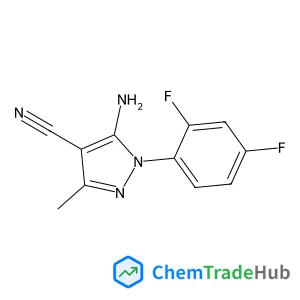
5-Amino-1-(2,4-difluorophenyl)-3-methyl-1H-pyrazole-4-carbonitrile
CAS Number:
1020057-92-4
Molecular Formula:
C11H8F2N4
Recommended Suppliers



Disclaimer
This page provides academic journal information for reference and research purposes only. We are not affiliated with any journal publishers and do not handle publication submissions. For publication-related inquiries, please contact the respective journal publishers directly.
If you notice any inaccuracies in the information displayed, please contact us at support@chemtradehub.com. We will promptly review and address your concerns.