












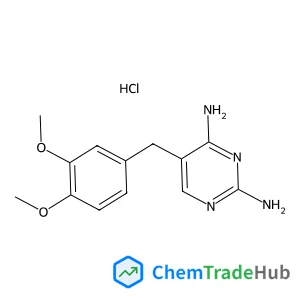
5-(3,4-Dimethoxybenzyl)-2,4-pyrimidinediamine hydrochloride (1:1)
CAS Number:
2507-23-5
Molecular Formula:
C13H17ClN4O2
Xun-Lei Ding, Heng-Lu Liao, Yi-Ming Chen, Dan Wang, Ya-Ya Wang
The adsorption behaviour of a single O atom on Aunq clusters (n = 1–8, q = 0, ±1) was systematically investigated by DFT calculations. Both hybrid and pure GGA functionals (B3LYP and PBE) were used to provide reliable conclusions. The most stable structures of AunOq clusters were obtained by using global optimizations with a genetic algorithm. Cationic clusters tend to become three-dimensional for large clusters, as for Au8O+. The binding of O in AunOq clusters is quite strong, especially in the anionic clusters. The O atom can be bound to one, two, or three Au atoms, obtaining nearly one electron from gold atoms. Similarities have been found between AunOq and Aun+1q in terms of geometric structures and binding energies. Frontier molecular orbitals and the distribution of unpaired spin density on the O atom were discussed, both of which have a close relationship with the activity of the clusters.
Shuchang Wu, Yangming Lin, Bingwei Zhong, Guodong Wen, Hongyang Liu, Dang Sheng Su
DOI: 10.1039/C8CP06175K
Jia Liu, Anping Wang, Kaisong Pu, Shaozheng Zhang, Terence Musho, Liang Chen
DOI: 10.1039/C9CP00151D
Enamul Haque, M. Anwar Hossain, Catherine Stampfl
DOI: 10.1039/C8CP07634K
Andrzej Poniewierski, Krzysztof Sozański, Ying Zhou, Anna Brzozowska-Elliott, Robert Holyst
DOI: 10.1039/C8CP06752J
Tao Yang, Zhen Lei, Shuang Yang, Er-Qiang Chen
DOI: 10.1039/C8CP06679E
DOI: 10.1039/C8CP06780E
Lingyu Wang, Yuhong Liu
DOI: 10.1039/C8CP07195K
Weiliang Wang
DOI: 10.1039/C9CP01232J
Sreejith P. Babu, Perumal Elumalai
DOI: 10.1039/C8CP07500J
Juan P. Aranguren-Abrate, Claude Dedonder-Lardeux, Christophe Jouvet
DOI: 10.1039/C8CP07162D
When considering alternatives to 1-(4-Chlorophenyl)-N-hydroxymethanimine (CAS: 3...
This compound should be stored in a cool, dry place away from direct sunlight. I...
3-(4-Bromophenyl)-5-(2-fluorophenyl)-1,2,4-oxadiazole is synthesized through a m...
5-Chloro-2-(4-chlorophenyl)-4-methyl-6-[3-(1-piperidinyl)propoxy]pyrimidine (CAS...
2-Chloro-4-(difluoromethoxy)pyridine is used in the pharmaceutical industry for ...
3-Chloro-6-methylpyridazine (CAS: 1121-79-5) is classified under the Globally Ha...
Several alternatives can be used in the synthesis of Methyl 4,5-dimethyl-2-nitro...
Alternatives to (2E,2'E)-3,3'-(1,4-Phenylene)bisacrylaldehyde include other acry...
3-Amino-5-chloropyridin-2-ol hydrochloride is an organic compound with the CAS n...
When handling 6,7-Difluoro-2,3-dihydro-4H-chromen-4-one, it is essential to wear...

Physical Chemistry Chemical Physics (PCCP) is an international journal co-owned by 19 physical chemistry and physics societies from around the world. This journal publishes original, cutting-edge research in physical chemistry, chemical physics and biophysical chemistry. To be suitable for publication in PCCP, articles must include significant innovation and/or insight into physical chemistry; this is the most important criterion that reviewers and Editors will judge against when evaluating submissions. The journal has a broad scope and welcomes contributions spanning experiment, theory, computation and data science. Topical coverage includes spectroscopy, dynamics, kinetics, statistical mechanics, thermodynamics, electrochemistry, catalysis, surface science, quantum mechanics, quantum computing and machine learning. Interdisciplinary research areas such as polymers and soft matter, materials, nanoscience, energy, surfaces/interfaces, and biophysical chemistry are welcomed if they demonstrate significant innovation and/or insight into physical chemistry. Joined experimental/theoretical studies are particularly appreciated when complementary and based on up-to-date approaches.
![2-{[(1R,2S)-2-Aminocyclohexyl]amino}-4-{[3-(2H-1,2,3-triazol-2-yl)phenyl]amino}-5-pyrimidinecarboxamide structure](https://static.chemtradehub.com/structs/137/1370261-96-3-40df.webp "2-{[(1R,2S)-2-Aminocyclohexyl]amino}-4-{[3-(2H-1,2,3-triazol-2-yl)phenyl]amino}-5-pyrimidinecarboxamide structure")





