












Coronene-based metal–organic framework: a theoretical exploration
Literature Information
Publication Date
2016-08-17
DOI
10.1039/C6CP05495A
Impact Factor
3.676
Authors
Chandrima Chakravarty, Bikash Mandal, Pranab Sarkar
View Original
Abstract
With the help of first-principle calculations we have proposed a new 2D metal–organic framework (MOF) consisting of a –NH substituted coronene molecule and transition metals. Our study reveals that formation of such crystals is exothermic in nature, i.e. it is an energetically favourable process. The mode of magnetic coupling between the local magnetic moments and hence the overall magnetic moment of the MOF can be tuned by changing the transition metal. Not only the magnetic properties, but also the electronic structure of the MOF can be regulated from half-metal to spin-semiconductor to semimetallic–semiconductor by altering the metal center from Cr to Mn to Fe/Co. Our study also indicates that the change in the ligand structure and its anchoring group is also very effective in tuning the electronic properties of MOFs. The study of transport properties reveals that the half-metallic crystal possesses the maximum value of the spin-filtering efficiency, i.e. 100%.
Related Literature
Highly selective detection of Cu2+ utilizing specific binding between Cu-demetallated superoxide dismutase 1 and the Cu2+ ion viasurface plasmon resonance spectroscopy
Suseung Lee, Inhee Choi, Surin Hong, Young In Yang, Jeongjin Lee, Taewook Kang, Jongheop Yi
2009-09-11
Communication
DOI: 10.1039/B910666A
Green molecular transformation by a B12–TiO2 hybrid catalyst as an alternative to tributyltin hydride
Hisashi Shimakoshi, Makoto Abiru, Shin-ichiro Izumi, Yoshio Hisaeda
2009-09-09
Communication
DOI: 10.1039/B913255D
Redox-noninnocence of N,N′-bis(6-methyl-2-pyridylmethylene)ethane-1,2-diamine (L): synthesis and characterization of diamagnetic [NiII2(L˙˙)2] and [ZnII2(L)Cl4]((L˙˙)2−π diradical dianion of L)
Amrita Mondal, Thomas Weyhermüller, Karl Wieghardt
2009-08-27
Communication
DOI: 10.1039/B912604J
Control and modulation of chirality for azobenzene-substituted polydiacetylene LB films with circularly polarized light
Gang Zou, Hao Jiang, Hideki Kohn, Takaaki Manaka, Mitsumasa Iwamoto
2009-08-03
Communication
DOI: 10.1039/B909085A
Terphenyl crowns: a new family of receptors containing ethereal canopies that direct potassium cation onto benzenoid platforms for cation–π interactions
Ruchi Shukla, Sergey V. Lindeman, Rajendra Rathore
2009-08-20
Communication
DOI: 10.1039/B912796H
Stable silver nanoparticle–DNA conjugates for directed self-assembly of core-satellite silver–gold nanoclusters
Suchetan Pal, Jaswinder Sharma, Hao Yan, Yan Liu
2009-08-25
Communication
DOI: 10.1039/B911069K
Renewable resource-based poly(dodecyloate) by carbonylation polymerization
Dorothee Quinzler, Stefan Mecking
2009-08-14
Communication
DOI: 10.1039/B912294J
Immunotherapy for cancer: synthetic carbohydrate-based vaccines
Therese Buskas, Pamela Thompson, Geert-Jan Boons
2009-07-22
Feature Article
DOI: 10.1039/B908664C
You might also like
Compound Q&A
What precautions should be taken when handling lithium chloride hydrate (1:1:1) (CAS: 16712-20-2)?
When handling lithium chloride hydrate (1:1:1) (CAS: 16712-20-2), it is importan...
16712-20-2Lithium chloride hyd...
Compound Q&A
Is 4-(4H-1,2,4-Triazol-4-yl)piperidine (CAS: 690261-92-8) safe?
4-(4H-1,2,4-Triazol-4-yl)piperidine is generally considered safe for use in phar...
690261-92-84-(4H-1,2,4-Triazol-...
Compound Q&A
How should waste containing 1,3-Thiazole-2-carboxamide (CAS: 16733-85-0) be handled?
Waste containing 1,3-Thiazole-2-carboxamide (CAS: 16733-85-0) should be collecte...
16733-85-01,3-Thiazole-2-carbo...
Compound Q&A
What regulatory guidelines apply to 5-(Difluoromethyl)-2-fluorobenzonitrile (CAS: 934175-58-3)?
5-(Difluoromethyl)-2-fluorobenzonitrile (CAS: 934175-58-3) is subject to regulat...
934175-58-35-(Difluoromethyl)-2...
Compound Q&A
How is Methyl 3-acetamido-2-thiophenecarboxylate (CAS: 22288-79-5) typically synthesized?
Methyl 3-acetamido-2-thiophenecarboxylate can be synthesized by the reaction of ...
22288-79-5Methyl 3-acetamido-2...
Compound Q&A
What is 4-Isoquinolinecarbonitrile (CAS: 34846-65-6)?
4-Isoquinolinecarbonitrile is a chemical compound with the CAS number 34846-65-6...
34846-65-64-Isoquinolinecarbon...
Compound Q&A
How should Methyl 1H-1,2,3-triazole-4-carboxylate (CAS: 877309-59-6) be stored?
Store Methyl 1H-1,2,3-triazole-4-carboxylate (CAS: 877309-59-6) in a cool, dry p...
877309-59-6Methyl 1H-1,2,3-tria...
Compound Q&A
What regulatory guidelines apply to 6-Bromo[1,3]thiazolo[5,4-b]pyridin-2-amine (CAS: 1160791-13-8)?
6-Bromo[1,3]thiazolo[5,4-b]pyridin-2-amine (CAS: 1160791-13-8) is subject to the...
1160791-13-86-Bromo[1,3]thiazolo...
Compound Q&A
Is (2S,3S)-2-Ammonio-3-(3,4-dihydroxyphenyl)-3-hydroxypropanoate (CAS: 23651-95-8) safe?
(2S,3S)-2-Ammonio-3-(3,4-dihydroxyphenyl)-3-hydroxypropanoate (CAS: 23651-95-8) ...
23651-95-8(2S,3S)-2-Ammonio-3-...
Compound Q&A
What are the physical and chemical properties of 7-bromo-3-methyl-3,4-dihydroquinazolin-4-one (CAS: 1293987-84-4)?
7-Bromo-3-methyl-3,4-dihydroquinazolin-4-one is a solid with a crystalline form....
1293987-84-47-bromo-3-methyl-3,4...
Source Journal
Physical Chemistry Chemical Physics

CiteScore:
5.5
Self-citation Rate:
10.3%
Articles per Year:
3036
Physical Chemistry Chemical Physics (PCCP) is an international journal co-owned by 19 physical chemistry and physics societies from around the world. This journal publishes original, cutting-edge research in physical chemistry, chemical physics and biophysical chemistry. To be suitable for publication in PCCP, articles must include significant innovation and/or insight into physical chemistry; this is the most important criterion that reviewers and Editors will judge against when evaluating submissions. The journal has a broad scope and welcomes contributions spanning experiment, theory, computation and data science. Topical coverage includes spectroscopy, dynamics, kinetics, statistical mechanics, thermodynamics, electrochemistry, catalysis, surface science, quantum mechanics, quantum computing and machine learning. Interdisciplinary research areas such as polymers and soft matter, materials, nanoscience, energy, surfaces/interfaces, and biophysical chemistry are welcomed if they demonstrate significant innovation and/or insight into physical chemistry. Joined experimental/theoretical studies are particularly appreciated when complementary and based on up-to-date approaches.
Recommended Compounds
![(1R,5R)-3-{[(2-Methyl-2-propanyl)oxy]carbonyl}-3-azabicyclo[3.1.0]hexane-1-carboxylic acid structure](https://static.chemtradehub.com/structs/116/1165450-63-4-bfe1.webp "(1R,5R)-3-{[(2-Methyl-2-propanyl)oxy]carbonyl}-3-azabicyclo[3.1.0]hexane-1-carboxylic acid structure")
(1R,5R)-3-{[(2-Methyl-2-propanyl)oxy]carbonyl}-3-azabicyclo[3.1.0]hexane-1-carboxylic acid
CAS Number:
1165450-63-4
Molecular Formula:
C11H17NO4
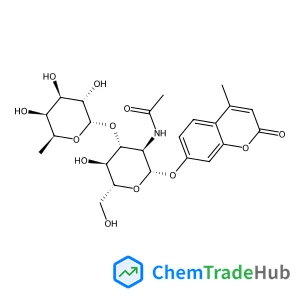
4-Methyl-2-oxo-2H-chromen-7-yl 2-acetamido-2-deoxy-3-O-(6-deoxy-alpha-L-galactopyranosyl)-beta-D-glucopyranoside
CAS Number:
383160-12-1
Molecular Formula:
C24H31NO12
Recommended Suppliers







Disclaimer
This page provides academic journal information for reference and research purposes only. We are not affiliated with any journal publishers and do not handle publication submissions. For publication-related inquiries, please contact the respective journal publishers directly.
If you notice any inaccuracies in the information displayed, please contact us at support@chemtradehub.com. We will promptly review and address your concerns.