












![(1S)-1,5-Anhydro-2-O-alpha-L-arabinopyranosyl-1-[5-hydroxy-7-({6-O-[3-(4-hydroxy-3-methoxyphenyl)propanoyl]-beta-D-glucopyranosyl}oxy)-2-(4-hydroxyphenyl)-4-oxo-4H-chromen-6-yl]-D-glucitol structure](https://static.chemtradehub.com/structs/225/2252345-81-4-bcff.webp "(1S)-1,5-Anhydro-2-O-alpha-L-arabinopyranosyl-1-[5-hydroxy-7-({6-O-[3-(4-hydroxy-3-methoxyphenyl)propanoyl]-beta-D-glucopyranosyl}oxy)-2-(4-hydroxyphenyl)-4-oxo-4H-chromen-6-yl]-D-glucitol structure")
An efficient perovskite solar cell with symmetrical Zn(ii) phthalocyanine infiltrated buffering porous Al2O3 as the hybrid interfacial hole-transporting layer
Literature Information
Publication Date
2016-07-05
DOI
10.1039/C6CP03396B
Impact Factor
3.676
Authors
P. Gao, K. T. Cho, A. Abate, G. Grancini, P. Y. Reddy, M. Srivasu, M. Adachi, A. Suzuki, K. Tsuchimoto, M. Grätzel, Mohammad Khaja Nazeeruddin
View Original
Abstract
A new Zn(II) phthalocyanine (Pc) based low bandgap HTM is introduced for perovskite solar cells. Steady state and time-resolved photoluminescence (PL) measurements indicated an evenly matched hole extraction efficiency between sym-HTPcH and spiro-OMeTAD. On account of the low film quality and resulting high recombination, Zn(II) Pc normally cannot work as an effective HTM. We adopted insulating Al2O3 for the infiltration of sym-HTPcH to form a hybrid interfacial buffer layer, affording perovskite solar cells (PSCs) with an average PCE value of up to 12.3%, which is a significant improvement with respect to the control cell without the meso-Al2O3 layer (4.21%) and is the highest value ever reported for Zn(II) phthalocyanine based devices under AM1.5G standard conditions. A hysteresis test revealed that our device structure with the new HTM exhibited a balanced charge extraction behaviour.
Recommended Journals
Related Literature
Intermolecular interactions between a Ru complex and organic dyes in cosensitized solar cells: a computational study
Hitoshi Kusama, Takashi Funaki, Nagatoshi Koumura, Kazuhiro Sayama
2014-06-16
Paper
DOI: 10.1039/C4CP01880J
Experimental evidence of dual emission in a negatively solvatochromic push–pull pyridinium derivative
B. Carlotti, A. Cesaretti, C. G. Fortuna, A. Spalletti, F. Elisei
2014-11-27
Paper
DOI: 10.1039/C4CP04963B
The substituent effect on the MLCT excited state dynamics of Cu(i) complexes studied by femtosecond time-resolved absorption and observation of coherent nuclear wavepacket motion
Linqiang Hua, Munetaka Iwamura
2014-11-25
Paper
DOI: 10.1039/C4CP03843F
The roughness of the protein energy landscape results in anomalous diffusion of the polypeptide backbone
Martin Volk, Lilia Milanesi, Christopher A. Hunter, Godfrey S. Beddard
2014-11-07
Perspective
DOI: 10.1039/C4CP03058C
Modelling analysis of the structure and porosity of covalent triazine-based frameworks
Christian Reece, David J. Willock, Abbie Trewin
2014-11-14
Communication
DOI: 10.1039/C4CP04046E
Is the contribution of cis and trans protonated 5-methylcytosine-SO3− isomers equal in the conversion to thymine-SO3− under bisulfite conditions? A theoretical perspective
Lu Wang, Caiying Zhang, Wenliang Wang, Suotian Min, Daodao Hu
2014-05-08
Paper
DOI: 10.1039/C4CP00387J
Microsolvation of 2-azetidinone: a model for the peptide group–water interactions
Juan C. López, Raquel Sánchez, Susana Blanco, José L. Alonso
2014-12-05
Paper
DOI: 10.1039/C4CP04577G
1064 nm SERS of NIR active hollow gold nanotags
H. Kearns, N. C. Shand, W. E. Smith, K. Faulds, D. Graham
2014-11-27
Paper
DOI: 10.1039/C4CP04281F
Synthesis and investigation of the imprinting efficiency of ion imprinted nanoparticles for recognizing copper
Aihua Wu
2014-06-16
Paper
DOI: 10.1039/C4CP01858C
You might also like
Compound Q&A
Is 2-(2-chloroacetamido)-3-phenylpropanoic acid (CAS: 7765-11-9) safe?
2-(2-Chloroacetamido)-3-phenylpropanoic acid (CAS: 7765-11-9) is generally consi...
7765-11-92-(2-chloroacetamido...
Compound Q&A
Is 2-(Benzyloxy)-5-bromobenzoic acid (CAS: 62176-31-2) safe?
2-(Benzyloxy)-5-bromobenzoic acid can be handled safely if appropriate precautio...
62176-31-22-(Benzyloxy)-5-brom...
Compound Q&A
What is (4-Methyl-1,2,5-oxadiazol-3-yl)methanamine hydrochloride (CAS: 1159825-48-5)?
(4-Methyl-1,2,5-oxadiazol-3-yl)methanamine hydrochloride is a chemical compound ...
1159825-48-5(4-Methyl-1,2,5-oxad...
Compound Q&A
What is 2-(5-Hexylthiophen-2-yl)-4,4,5,5-tetramethyl-1,3,2-dioxaborolane (CAS: 917985-54-7)?
2-(5-Hexylthiophen-2-yl)-4,4,5,5-tetramethyl-1,3,2-dioxaborolane (CAS: 917985-54...
917985-54-72-(5-Hexylthiophen-2...
Compound Q&A
Are there alternatives to 4-(8-Methyl-9H-1,3-dioxolo[4,5-h][2,3]benzodiazepin-5-yl)benzenamine (CAS: 102771-26-6) in synthesis?
While 4-(8-Methyl-9H-1,3-dioxolo[4,5-h][2,3]benzodiazepin-5-yl)benzenamine (CAS:...
102771-26-64-(8-Methyl-9H-1,3-d...
Compound Q&A
What is the market or research trend for tert-butyl 3-hydroxy-4,5,7,8-tetrahydro-2H-pyrazolo[3,4-d]azepine-6-carboxylate (CAS: 851376-80-2)?
The market for tert-butyl 3-hydroxy-4,5,7,8-tetrahydro-2H-pyrazolo[3,4-d]azepine...
851376-80-2tert-butyl 3-hydroxy...
Compound Q&A
How should waste containing 3,5-Diamino-1H-pyrazole-4-carbonitrile (CAS: 6844-58-2) be handled?
Waste containing 3,5-Diamino-1H-pyrazole-4-carbonitrile (CAS: 6844-58-2) should ...
6844-58-23,5-Diamino-1H-pyraz...
Compound Q&A
How is (6-Fluoro-3-pyridinyl)boronic acid (CAS: 351019-18-6) typically synthesized?
(6-Fluoro-3-pyridinyl)boronic acid can be synthesized through the reaction of 6-...
351019-18-6(6-Fluoro-3-pyridiny...
Compound Q&A
What industries use Dibenzyl carbonimidoylbiscarbamate (CAS: 10065-79-9)?
Dibenzyl carbonimidoylbiscarbamate (CAS: 10065-79-9) finds applications in vario...
10065-79-9Dibenzyl carbonimido...
Compound Q&A
What is the market or research trend for (beta,beta,2,3,4,5,6-~2~H_7_)Phenylalanine (CAS: 74228-83-4)?
The market for (beta,beta,2,3,4,5,6-~2~H_7_)Phenylalanine (CAS: 74228-83-4) is g...
74228-83-4(beta,beta,2,3,4,5,6...
Source Journal
Physical Chemistry Chemical Physics

CiteScore:
5.5
Self-citation Rate:
10.3%
Articles per Year:
3036
Physical Chemistry Chemical Physics (PCCP) is an international journal co-owned by 19 physical chemistry and physics societies from around the world. This journal publishes original, cutting-edge research in physical chemistry, chemical physics and biophysical chemistry. To be suitable for publication in PCCP, articles must include significant innovation and/or insight into physical chemistry; this is the most important criterion that reviewers and Editors will judge against when evaluating submissions. The journal has a broad scope and welcomes contributions spanning experiment, theory, computation and data science. Topical coverage includes spectroscopy, dynamics, kinetics, statistical mechanics, thermodynamics, electrochemistry, catalysis, surface science, quantum mechanics, quantum computing and machine learning. Interdisciplinary research areas such as polymers and soft matter, materials, nanoscience, energy, surfaces/interfaces, and biophysical chemistry are welcomed if they demonstrate significant innovation and/or insight into physical chemistry. Joined experimental/theoretical studies are particularly appreciated when complementary and based on up-to-date approaches.
Recommended Compounds
![{3-[Bis(4-hydroxyphenyl)methyl]-1-[2-(dimethylamino)ethyl]-1H-indol-2-yl}[4-(2-chlorophenyl)-1-piperazinyl]methanone structure](https://static.chemtradehub.com/structs/170/170365-25-0-e4d7.webp "{3-[Bis(4-hydroxyphenyl)methyl]-1-[2-(dimethylamino)ethyl]-1H-indol-2-yl}[4-(2-chlorophenyl)-1-piperazinyl]methanone structure")
{3-[Bis(4-hydroxyphenyl)methyl]-1-[2-(dimethylamino)ethyl]-1H-indol-2-yl}[4-(2-chlorophenyl)-1-piperazinyl]methanone
CAS Number:
170365-25-0
Molecular Formula:
C36H37ClN4O3
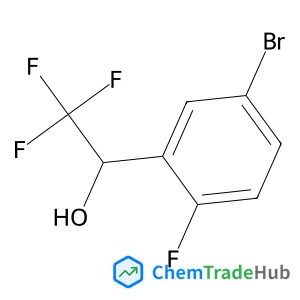
1-(5-Bromo-2-fluorophenyl)-2,2,2-trifluoroethanol
CAS Number:
1039827-16-1
Molecular Formula:
C8H5BrF4O

Recommended Suppliers





Disclaimer
This page provides academic journal information for reference and research purposes only. We are not affiliated with any journal publishers and do not handle publication submissions. For publication-related inquiries, please contact the respective journal publishers directly.
If you notice any inaccuracies in the information displayed, please contact us at support@chemtradehub.com. We will promptly review and address your concerns.