












Elucidation of transport mechanism and enhanced alkali ion transference numbers in mixed alkali metal–organic ionic molten salts
Literature Information
Publication Date
2016-06-29
DOI
10.1039/C6CP01411A
Impact Factor
3.676
Authors
Fangfang Chen
View Original
Abstract
Mixed salts of Ionic Liquids (ILs) and alkali metal salts, developed as electrolytes for lithium and sodium batteries, have shown a remarkable ability to facilitate high rate capability for lithium and sodium electrochemical cycling. It has been suggested that this may be due to a high alkali metal ion transference number at concentrations approaching 50 mol% Li+ or Na+, relative to lower concentrations. Computational investigations for two IL systems illustrate the formation of extended alkali–anion aggregates as the alkali metal ion concentration increases. This tends to favor the diffusion of alkali metal ions compared with other ionic species in electrolyte solutions; behavior that has recently been reported for Li+ in a phosphonium ionic liquid, thus an increasing alkali transference number. The mechanism of alkali metal ion diffusion via this extended coordination environment present at high concentrations is explained and compared to the dynamics at lower concentrations. Heterogeneous alkali metal ion dynamics are also evident and, somewhat counter-intuitively, it appears that the faster ions are those that are generally found clustered with the anions. Furthermore these fast alkali metal ions appear to correlate with fastest ionic liquid solvent ions.
Related Literature
Effects of repulsive interaction on the electric double layer of an imidazolium-based ionic liquid by molecular dynamics simulation
Wenyang Jin, Xiaohong Liu, Yining Han, Shu Li, Tianying Yan
2014-11-25
Paper
DOI: 10.1039/C4CP04853A
A new scoring function for protein–protein docking that identifies native structures with unprecedented accuracy
Irina S. Moreira, João M. Martins, João T. S. Coimbra, Maria J. Ramos, Pedro A. Fernandes
2014-11-26
Paper
DOI: 10.1039/C4CP04688A
Hierarchical TiO2–SnO2–graphene aerogels for enhanced lithium storage
Sheng Han, Jianzhong Jiang, Yanshan Huang, Yanping Tang, Jing Cao, Dongqing Wu
2014-11-27
Communication
DOI: 10.1039/C4CP04887C
The effect of donor content on the efficiency of P3HT:PCBM bilayers: optical and photocurrent spectral data analyses
Mosé Casalegno, Dariusz Kotowski, Andrea Bernardi, Silvia Luzzati, Riccardo Po, Guido Raos
2014-12-02
Paper
DOI: 10.1039/C4CP03827D
Carrier dynamics of a visible-light-responsive Ta3N5 photoanode for water oxidation
Ahmed Ziani, Ela Nurlaela, Dattatray S. Dhawale, Diego Alves Silva, Erkki Alarousu, Omar F. Mohammed, Kazuhiro Takanabe
2014-12-05
Paper
DOI: 10.1039/C4CP05616G
Experimental validation of ‘pnicogen bonding’ in nitrogen by charge density analysis
Sounak Sarkar, Mysore S. Pavan, T. N. Guru Row
2014-12-01
Communication
DOI: 10.1039/C4CP04690K
Hole-transport materials with greatly-differing redox potentials give efficient TiO2–[CH3NH3][PbX3] perovskite solar cells
Antonio Abate, Miquel Planells, Derek J. Hollman, Vishal Barthi, Suresh Chand, Henry J. Snaith, Neil Robertson
2014-12-04
Communication
DOI: 10.1039/C4CP04685D
Theoretical study and design of multifunctional phosphorescent platinum(ii) complexes containing triarylboron moieties for efficient OLED emitters
Yong Wu, Guo-Gang Shan, Hai-Bin Li, Shui-Xing Wu, Xin-Yao Ren, Yun Geng, Zhong-Min Su
2014-12-01
Paper
DOI: 10.1039/C4CP04919E
Elastic strain effects on catalysis of a PdCuSi metallic glass thin film
Yiyi Yang, Tuhina Adit Maark, Andrew Peterson, Sharvan Kumar
2014-12-02
Paper
DOI: 10.1039/C4CP04924A
Excited-state wavepacket and potential reconstruction by coherent anti-Stokes Raman scattering
2014-08-13
Perspective
DOI: 10.1039/C4CP03233K
You might also like
Compound Q&A
What are the main uses of (5-Sulfamoyl-3-pyridinyl)boronic acid (CAS: 951233-61-7)?
(5-Sulfamoyl-3-pyridinyl)boronic acid is primarily used in chemical synthesis, p...
951233-61-7(5-Sulfamoyl-3-pyrid...
Compound Q&A
How is Benzyl 2-methyl-2-(methylsulfonyl)-4-pentenoate (CAS: 1942858-50-5) typically synthesized?
Benzyl 2-methyl-2-(methylsulfonyl)-4-pentenoate is typically synthesized via est...
1942858-50-5Benzyl 2-methyl-2-(m...
Compound Q&A
What precautions should be taken when handling 8-Fluoroquinolin-6-ol (CAS: 209353-22-0)?
When handling 8-Fluoroquinolin-6-ol (CAS: 209353-22-0), it is important to use p...
209353-22-08-Fluoroquinolin-6-o...
Compound Q&A
What are the physical and chemical properties of 1,3-Dibromo-5-(2-methyl-2-propanyl)benzene (CAS: 129316-09-2)?
1,3-Dibromo-5-(2-methyl-2-propanyl)benzene (CAS: 129316-09-2) is a crystalline c...
129316-09-21,3-Dibromo-5-(2-met...
Compound Q&A
What industries use Ethyl 7-chloro-4-oxo-1-(1,3-thiazol-2-yl)-1,4-dihydro-1,8-naphthyridine-3-carboxylate (CAS: 174726-87-5)?
Ethyl 7-chloro-4-oxo-1-(1,3-thiazol-2-yl)-1,4-dihydro-1,8-naphthyridine-3-carbox...
174726-87-5Ethyl 7-chloro-4-oxo...
Compound Q&A
What precautions should be taken when handling Delta-7-Avenasterol (CAS: 23290-26-8)?
When handling Delta-7-Avenasterol (CAS: 23290-26-8), it is important to wear app...
23290-26-8Delta-7-Avenasterol
Compound Q&A
What precautions should be taken when handling N-({(5R)-3-[3-Fluoro-4-(4-morpholinyl)phenyl]-2-oxo-1,3-oxazolidin-5-yl}methyl)acetamide (CAS: 872992-20-6)?
Proper handling involves the use of personal protective equipment such as gloves...
872992-20-6N-({(5R)-3-[3-Fluoro...
Compound Q&A
What precautions should be taken when handling 2-Methyl-2-proanyl 4-[(2-aminophenyl)amino]-1-piperidinecarboxylate (CAS: 79099-00-6)?
When handling 2-Methyl-2-proanyl 4-[(2-aminophenyl)amino]-1-piperidinecarboxylat...
79099-00-62-Methyl-2-propanyl ...
Compound Q&A
What is N-Methyl-4-chlorobenzylamine hydrochloride (CAS: 65542-24-7)?
N-Methyl-4-chlorobenzylamine hydrochloride (CAS: 65542-24-7) is a organic compou...
65542-24-7N-Methyl-4-chloroben...
Compound Q&A
Is [2-(Dodecyloxy)ethoxy]acetic acid (CAS: 27306-90-7) safe?
[2-(Dodecyloxy)ethoxy]acetic acid (CAS: 27306-90-7) is generally considered safe...
27306-90-7[2-(Dodecyloxy)ethox...
Source Journal
Physical Chemistry Chemical Physics

CiteScore:
5.5
Self-citation Rate:
10.3%
Articles per Year:
3036
Physical Chemistry Chemical Physics (PCCP) is an international journal co-owned by 19 physical chemistry and physics societies from around the world. This journal publishes original, cutting-edge research in physical chemistry, chemical physics and biophysical chemistry. To be suitable for publication in PCCP, articles must include significant innovation and/or insight into physical chemistry; this is the most important criterion that reviewers and Editors will judge against when evaluating submissions. The journal has a broad scope and welcomes contributions spanning experiment, theory, computation and data science. Topical coverage includes spectroscopy, dynamics, kinetics, statistical mechanics, thermodynamics, electrochemistry, catalysis, surface science, quantum mechanics, quantum computing and machine learning. Interdisciplinary research areas such as polymers and soft matter, materials, nanoscience, energy, surfaces/interfaces, and biophysical chemistry are welcomed if they demonstrate significant innovation and/or insight into physical chemistry. Joined experimental/theoretical studies are particularly appreciated when complementary and based on up-to-date approaches.
Recommended Compounds
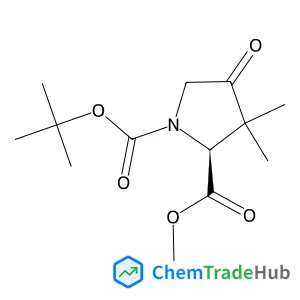
2-Methyl 1-(2-methyl-2-propanyl) (2S)-3,3-dimethyl-4-oxo-1,2-pyrrolidinedicarboxylate
CAS Number:
478698-30-5
Molecular Formula:
C13H21NO5
![[3-Fluoro-4-(1-pyrrolidinylcarbonyl)phenyl]boronic acid structure](https://static.chemtradehub.com/structs/874/874289-09-5-e3d4.webp "[3-Fluoro-4-(1-pyrrolidinylcarbonyl)phenyl]boronic acid structure")
[3-Fluoro-4-(1-pyrrolidinylcarbonyl)phenyl]boronic acid
CAS Number:
874289-09-5
Molecular Formula:
C11H13BFNO3

Recommended Suppliers




Disclaimer
This page provides academic journal information for reference and research purposes only. We are not affiliated with any journal publishers and do not handle publication submissions. For publication-related inquiries, please contact the respective journal publishers directly.
If you notice any inaccuracies in the information displayed, please contact us at support@chemtradehub.com. We will promptly review and address your concerns.