












A new scoring function for protein–protein docking that identifies native structures with unprecedented accuracy
Literature Information
Publication Date
2014-11-26
DOI
10.1039/C4CP04688A
Impact Factor
3.676
Authors
Irina S. Moreira, João M. Martins, João T. S. Coimbra, Maria J. Ramos, Pedro A. Fernandes
View Original
Abstract
Protein–protein (P–P) 3D structures are fundamental to structural biology and drug discovery. However, most of them have never been determined. Many docking algorithms were developed for that purpose, but they have a very limited accuracy in generating native-like structures and identifying the most correct one, in particular when a single answer is asked for. With such a low success rate it is difficult to point out one docked structure as being native-like. Here we present a new, high accuracy, scoring method to identify the 3D structure of P–P complexes among a set of trial poses. It incorporates alanine scanning mutagenesis experimental data that need to be obtained a priori. The scoring scheme works by matching the computational and the experimental alanine scanning mutagenesis results. The size of the trial P–P interface area is also taken into account. We show that the method ranks the trial structures and identifies the native-like structures with unprecedented accuracy (∼94%), providing the correct P–P 3D structures that biochemists and molecular biologists need to pursue their studies. With such a success rate, the bottleneck of protein–protein docking moves from the scoring to searching algorithms.
Related Literature
The interaction of gold and silver nanoparticles with a range of anionic and cationic dyes
H. Kitching, A. J. Kenyon, I. P. Parkin
2014-02-10
Paper
DOI: 10.1039/C3CP55366C
Proton dynamics of two-dimensional oxalate-bridged coordination polymers
Satoshi Miyatsu, Maiko Kofu, Teppei Yamada, Madhusudan Tyagi, Victoria García Sakai
2014-07-03
Paper
DOI: 10.1039/C4CP01432D
Thylakoid direct photobioelectrocatalysis: utilizing stroma thylakoids to improve bio-solar cell performance
Michelle Rasmussen, Shelley D. Minteer
2014-07-03
Paper
DOI: 10.1039/C4CP02754J
Ionic liquid clusters: structure, formation mechanism, and effect on the behavior of ionic liquids
Shimou Chen, Suojiang Zhang, Xiaomin Liu, Jinquan Wang, Jianji Wang, Kun Dong, Jian Sun, Baohua Xu
2013-10-17
Perspective
DOI: 10.1039/C3CP53116C
Chemical etching behaviors of semipolar (112) and nonpolar (110) gallium nitride films
Younghun Jung, Kwang Hyeon Baik, Michael A. Mastro, Jennifer K. Hite, Charles R. Eddy, Jr., Jihyun Kim
2014-06-09
Communication
DOI: 10.1039/C4CP02303J
Molecular collisions coming into focus
Jolijn Onvlee, Sjoerd N. Vogels, Alexander von Zastrow, David H. Parker, Sebastiaan Y. T. van de Meerakker
2014-06-13
Perspective
DOI: 10.1039/C4CP01519C
Quantum chemistry study of the oxidation-induced stability and decomposition of propylene carbonate-containing complexes
Yating Wang, Oleg Borodin, Wenna Huang
2013-12-20
Paper
DOI: 10.1039/C3CP54728K
Enhanced photocatalytic performance at a Au/N–TiO2 hollow nanowire array by a combination of light scattering and reduced recombination
Taeseup Song, P. Lakshmipathiraj, Hyungkyu Han, Volodymyr V. Lysak, C. Terashima, Kazuya Nakata, A. Fujishima, Yong Soo Kang
2014-06-24
Paper
DOI: 10.1039/C4CP02009J
Optical rotation calculations on large molecules using the approximate coupled cluster model CC2 and the resolution-of-the-identity approximation
Daniel H. Friese, Christof Hättig
2014-01-09
Paper
DOI: 10.1039/C3CP54338B
You might also like
Compound Q&A
What are the main uses of (5-Sulfamoyl-3-pyridinyl)boronic acid (CAS: 951233-61-7)?
(5-Sulfamoyl-3-pyridinyl)boronic acid is primarily used in chemical synthesis, p...
951233-61-7(5-Sulfamoyl-3-pyrid...
Compound Q&A
How is Benzyl 2-methyl-2-(methylsulfonyl)-4-pentenoate (CAS: 1942858-50-5) typically synthesized?
Benzyl 2-methyl-2-(methylsulfonyl)-4-pentenoate is typically synthesized via est...
1942858-50-5Benzyl 2-methyl-2-(m...
Compound Q&A
What precautions should be taken when handling 8-Fluoroquinolin-6-ol (CAS: 209353-22-0)?
When handling 8-Fluoroquinolin-6-ol (CAS: 209353-22-0), it is important to use p...
209353-22-08-Fluoroquinolin-6-o...
Compound Q&A
What are the physical and chemical properties of 1,3-Dibromo-5-(2-methyl-2-propanyl)benzene (CAS: 129316-09-2)?
1,3-Dibromo-5-(2-methyl-2-propanyl)benzene (CAS: 129316-09-2) is a crystalline c...
129316-09-21,3-Dibromo-5-(2-met...
Compound Q&A
What industries use Ethyl 7-chloro-4-oxo-1-(1,3-thiazol-2-yl)-1,4-dihydro-1,8-naphthyridine-3-carboxylate (CAS: 174726-87-5)?
Ethyl 7-chloro-4-oxo-1-(1,3-thiazol-2-yl)-1,4-dihydro-1,8-naphthyridine-3-carbox...
174726-87-5Ethyl 7-chloro-4-oxo...
Compound Q&A
What precautions should be taken when handling Delta-7-Avenasterol (CAS: 23290-26-8)?
When handling Delta-7-Avenasterol (CAS: 23290-26-8), it is important to wear app...
23290-26-8Delta-7-Avenasterol
Compound Q&A
What precautions should be taken when handling N-({(5R)-3-[3-Fluoro-4-(4-morpholinyl)phenyl]-2-oxo-1,3-oxazolidin-5-yl}methyl)acetamide (CAS: 872992-20-6)?
Proper handling involves the use of personal protective equipment such as gloves...
872992-20-6N-({(5R)-3-[3-Fluoro...
Compound Q&A
What precautions should be taken when handling 2-Methyl-2-proanyl 4-[(2-aminophenyl)amino]-1-piperidinecarboxylate (CAS: 79099-00-6)?
When handling 2-Methyl-2-proanyl 4-[(2-aminophenyl)amino]-1-piperidinecarboxylat...
79099-00-62-Methyl-2-propanyl ...
Compound Q&A
What is N-Methyl-4-chlorobenzylamine hydrochloride (CAS: 65542-24-7)?
N-Methyl-4-chlorobenzylamine hydrochloride (CAS: 65542-24-7) is a organic compou...
65542-24-7N-Methyl-4-chloroben...
Compound Q&A
Is [2-(Dodecyloxy)ethoxy]acetic acid (CAS: 27306-90-7) safe?
[2-(Dodecyloxy)ethoxy]acetic acid (CAS: 27306-90-7) is generally considered safe...
27306-90-7[2-(Dodecyloxy)ethox...
Source Journal
Physical Chemistry Chemical Physics

CiteScore:
5.5
Self-citation Rate:
10.3%
Articles per Year:
3036
Physical Chemistry Chemical Physics (PCCP) is an international journal co-owned by 19 physical chemistry and physics societies from around the world. This journal publishes original, cutting-edge research in physical chemistry, chemical physics and biophysical chemistry. To be suitable for publication in PCCP, articles must include significant innovation and/or insight into physical chemistry; this is the most important criterion that reviewers and Editors will judge against when evaluating submissions. The journal has a broad scope and welcomes contributions spanning experiment, theory, computation and data science. Topical coverage includes spectroscopy, dynamics, kinetics, statistical mechanics, thermodynamics, electrochemistry, catalysis, surface science, quantum mechanics, quantum computing and machine learning. Interdisciplinary research areas such as polymers and soft matter, materials, nanoscience, energy, surfaces/interfaces, and biophysical chemistry are welcomed if they demonstrate significant innovation and/or insight into physical chemistry. Joined experimental/theoretical studies are particularly appreciated when complementary and based on up-to-date approaches.
Recommended Compounds
![2-Methyl-2-propanyl 4-oxo-3,9-diazabicyclo[4.2.1]nonane-9-carboxylate structure](https://static.chemtradehub.com/structs/131/1312456-05-5-9a15.webp "2-Methyl-2-propanyl 4-oxo-3,9-diazabicyclo[4.2.1]nonane-9-carboxylate structure")
2-Methyl-2-propanyl 4-oxo-3,9-diazabicyclo[4.2.1]nonane-9-carboxylate
CAS Number:
1312456-05-5
Molecular Formula:
C12H20N2O3
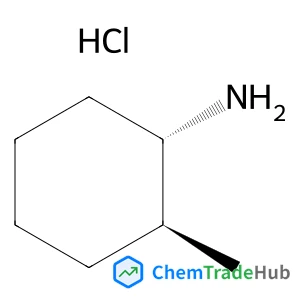
(1R,2R)-2-Methylcyclohexanamine hydrochloride (1:1)
CAS Number:
39558-31-1
Molecular Formula:
C7H16ClN
Recommended Suppliers






Disclaimer
This page provides academic journal information for reference and research purposes only. We are not affiliated with any journal publishers and do not handle publication submissions. For publication-related inquiries, please contact the respective journal publishers directly.
If you notice any inaccuracies in the information displayed, please contact us at support@chemtradehub.com. We will promptly review and address your concerns.