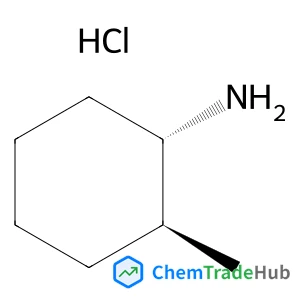
(1R,2R)-2-Methylcyclohexanamine hydrochloride (1:1)
CAS Number:
39558-31-1
Molecular Formula:
C7H16ClN
Yong Wu, Guo-Gang Shan, Hai-Bin Li, Shui-Xing Wu, Xin-Yao Ren, Yun Geng, Zhong-Min Su
The geometries, electronic structures, photophysical properties and spin–orbit coupling (SOC) effects in the radiative process for the recently synthesized complexes (Bppy)Pt(acac) (1) and (BNppy)Pt(acac) (2) as well as the designed complexes 3–6 were investigated by DFT and TD-DFT calculations, to reveal the influences of the functional ligands on charge injection ability and phosphorescence efficiency of emitters. It is found that compared with electron acceptor complex 1, complexes 2–6 have lower ionization potentials and comparable high electronic affinities, which are suited for bipolar luminescent materials. The results also demonstrated that Bppy complexes 1, 5 and 6 have more 3MLCT compositions in T1 emitting states compared with BNppy complexes 2–4, which results in strong SOC and fast kr. Thus, the phosphorescence efficiency of 1 is higher than that of 2. In addition, 5 and 6 have the balanced charge transport and better hole injection ability when the hole-transporting ligand is incorporated to 1. Therefore, 5 and 6 can server as promising candidates for efficient multifunctional phosphorescent OLED emitters owing to their ambipolar characters, balanced charge carrier injection/transport features and high phosphorescence quantum efficiency.
Dominik Oschetzki, Guntram Rauhut
DOI: 10.1039/C4CP02264E
Nasrin Sarmadian, Rolando Saniz, Bart Partoens, Dirk Lamoen, Kalpana Volety, Guido Huyberechts, Johan Paul
DOI: 10.1039/C4CP02788D
K. S. Deepa, P. Shaiju, M. T. Sebastian, E. Bhoje Gowd, J. James
DOI: 10.1039/C4CP01924E
Hirokazu Komatsu, Yuki Daimon, Kohsaku Kawakami, Motomu Kanai
DOI: 10.1039/C4CP02255F
Jianhai Zhou, Xiang Zhu, Jun Hu, Honglai Liu, Ying Hu, Jianwen Jiang
DOI: 10.1039/C3CP55498H
Roman I. Zubatyuk, Svitlana V. Shishkina, Viktoriya V. Dyakonenko, Volodymyr V. Medviediev
DOI: 10.1039/C3CP55390F
Jens Giegerich, Jens Petersen, Roland Mitrić, Ingo Fischer
DOI: 10.1039/C3CP53213E
Christopher D. Bohn, Amit Agrawal, Youngmin Lee, Charles J. Choi, Matthew S. Davis, Paul M. Haney, Henri J. Lezec, Veronika A. Szalai
DOI: 10.1039/C4CP00017J
(5-Sulfamoyl-3-pyridinyl)boronic acid is primarily used in chemical synthesis, p...
Benzyl 2-methyl-2-(methylsulfonyl)-4-pentenoate is typically synthesized via est...
When handling 8-Fluoroquinolin-6-ol (CAS: 209353-22-0), it is important to use p...
1,3-Dibromo-5-(2-methyl-2-propanyl)benzene (CAS: 129316-09-2) is a crystalline c...
Ethyl 7-chloro-4-oxo-1-(1,3-thiazol-2-yl)-1,4-dihydro-1,8-naphthyridine-3-carbox...
When handling Delta-7-Avenasterol (CAS: 23290-26-8), it is important to wear app...
Proper handling involves the use of personal protective equipment such as gloves...
When handling 2-Methyl-2-proanyl 4-[(2-aminophenyl)amino]-1-piperidinecarboxylat...
N-Methyl-4-chlorobenzylamine hydrochloride (CAS: 65542-24-7) is a organic compou...
[2-(Dodecyloxy)ethoxy]acetic acid (CAS: 27306-90-7) is generally considered safe...

Physical Chemistry Chemical Physics (PCCP) is an international journal co-owned by 19 physical chemistry and physics societies from around the world. This journal publishes original, cutting-edge research in physical chemistry, chemical physics and biophysical chemistry. To be suitable for publication in PCCP, articles must include significant innovation and/or insight into physical chemistry; this is the most important criterion that reviewers and Editors will judge against when evaluating submissions. The journal has a broad scope and welcomes contributions spanning experiment, theory, computation and data science. Topical coverage includes spectroscopy, dynamics, kinetics, statistical mechanics, thermodynamics, electrochemistry, catalysis, surface science, quantum mechanics, quantum computing and machine learning. Interdisciplinary research areas such as polymers and soft matter, materials, nanoscience, energy, surfaces/interfaces, and biophysical chemistry are welcomed if they demonstrate significant innovation and/or insight into physical chemistry. Joined experimental/theoretical studies are particularly appreciated when complementary and based on up-to-date approaches.