












Cβ–H stretching vibration as a new probe for conformation of n-propanol in gaseous and liquid states
Literature Information
Publication Date
2016-03-17
DOI
10.1039/C6CP00244G
Impact Factor
3.676
Authors
Yuanqin Yu, Yuxi Wang, Naiyin Hu, Ke Lin, Xiaoguo Zhou, Shilin Liu
View Original
Abstract
The development of potential probes to identify molecular conformation is essential in organic and biological chemistry. In this work, we investigated a site-specific C–H stretching vibration as a conformational probe for a model compound, 1,1,3,3,3-deuterated n-propanol (CD3CH2CD2OH), using stimulated photoacoustic Raman spectroscopy in the gas phase and conventional spontaneous Raman spectroscopy in the liquid state. Along with quantum chemistry calculations, the experiment shows that the CH2 symmetric stretching mode at the β-carbon position is very sensitive to the conformational structure of n-propanol and can serve as a new probe for all five of its conformers. Compared with the O–H stretching vibration, a well-established conformational sensor for n-propanol, the Cβ–H stretching vibration presented here shows better conformational resolution in the liquid state. Furthermore, using this probe, we investigated the conformational preference of n-propanol in pure liquid and in dilute water solution. It is revealed that in pure liquid, n-propanol molecules prefer the trans-OH conformation, and in dilute water solution, this preference is enhanced, indicating that the water molecules play a role of further stabilizing the trans-OH n-propanol conformers. This leads to conformational evolution that n-propanol molecules with gauche-OH structure are transferred to the trans-OH structure upon diluting with water. These results not only provide important information on structures of n-propanol in different environments, but also demonstrate the potential of the C–H stretching vibration as a new tool for conformational analysis. This is especially important when considering that hydrocarbon chains are structural units in organic and biological molecules.
Related Literature
Photoelectron spectroscopy of homogeneous nucleic acid base dimer anions
Yeon Jae Ko, Haopeng Wang, Rui Cao, Dunja Radisic, Soren N. Eustis, Sarah T. Stokes, Svetlana Lyapustina, Shan Xi Tian, Kit H. Bowen
2010-02-11
Paper
DOI: 10.1039/B924950H
The inactivation of lipid peroxide radical by quercetin. A theoretical insight
Sandro G. Chiodo, Monica Leopoldini, Nino Russo, Marirosa Toscano
2010-03-29
Paper
DOI: 10.1039/B924521A
Solvatochromic shifts of single-walled carbon nanotubes in nonpolar microenvironments
Carlos A. Silvera-Batista, Randy K. Wang, Philip Weinberg
2010-05-12
Paper
DOI: 10.1039/B927053A
Predicting the coordination geometry for Mg2+ in the p53 DNA-binding domain: insights from computational studies
Teng Wang, Xueguang Shao, Wensheng Cai, Yonglai Xue, Shuai Wang, Xizeng Feng
2010-11-15
Paper
DOI: 10.1039/C0CP00678E
Affinity of hydroxyapatite (001) and (010) surfaces to formic and alendronic acids: a quantum-mechanical and infrared study
Fabio Chiatti, Marta Corno, Yuriy Sakhno, Gianmario Martra, Piero Ugliengo
2010-11-12
Paper
DOI: 10.1039/C0CP01143F
Electronic structure and optical spectra of catechol on TiO2nanoparticles from real time TD-DFT simulations
R. Sánchez-de-Armas, M. A. San-Miguel, J. Oviedo, A. Márquez, J. F. Sanz
2010-11-25
Paper
DOI: 10.1039/C0CP00906G
Characterization and mechanism study of micrometer-sized secondary assembly of β-cyclodextrin
Yifeng He, Xinghai Shen, Qingde Chen, Hongcheng Gao
2010-10-29
Paper
DOI: 10.1039/C0CP00899K
Photoinduced intra- and intermolecular electron transfer in solutions and in solid organized molecular assemblies
Helge Lemmetyinen, Nikolai V. Tkachenko, Alexander Efimov, Marja Niemi
2010-10-29
Perspective
DOI: 10.1039/C0CP01106A
You might also like
Compound Q&A
What is 1-(2,4,6-Trifluorophenyl)ethanol (CAS: 1250113-83-7)?
1-(2,4,6-Trifluorophenyl)ethanol is an organic compound with the CAS number 1250...
1250113-83-71-(2,4,6-Trifluoroph...
Compound Q&A
Is 1-(2,4-Dimethoxybenzyl)-4-(hydroxymethyl)-2-pyrrolidinone (CAS: 919111-34-5) safe?
1-(2,4-Dimethoxybenzyl)-4-(hydroxymethyl)-2-pyrrolidinone (CAS: 919111-34-5) is ...
919111-34-51-(2,4-Dimethoxybenz...
Compound Q&A
What are the physical and chemical properties of (7S,15R)-6β,15-Diacetoxy-7α,20-epoxy-7-hydroxykaura-2,16-dien-1-one (CAS: 51419-51-3)?
(7S,15R)-6β,15-Diacetoxy-7α,20-epoxy-7-hydroxykaura-2,16-dien-1-one is a crystal...
51419-51-3(7S,15R)-6β,15-Diace...
Compound Q&A
What regulatory guidelines apply to rac-ethyl (1r,4r)-4-hydroxycyclohexane-1-carboxylate, trans (CAS: 3618-04-0)?
The compound rac-ethyl (1r,4r)-4-hydroxycyclohexane-1-carboxylate, trans (CAS: 3...
3618-04-0rac-ethyl (1r,4r)-4-...
Compound Q&A
What is the market or research trend for 2-(2,4-Difluorophenoxy)-3-nitropyridine (CAS: 175135-62-3)?
The market for 2-(2,4-Difluorophenoxy)-3-nitropyridine (CAS: 175135-62-3) is cur...
175135-62-32-(2,4-Difluoropheno...
Compound Q&A
What are the main uses of 6-Diazo-5-oxo-L-norleucine (CAS: 157-03-9)?
The main uses of 6-Diazo-5-oxo-L-norleucine (CAS: 157-03-9) include research in ...
157-03-96-Diazo-5-oxo-L-norl...
Compound Q&A
What precautions should be taken when handling 2-Aminoethyl-mono-amide-DOTA-tris(tBu ester) (CAS: 173308-19-5)?
When handling 2-Aminoethyl-mono-amide-DOTA-tris(tBu ester) (CAS: 173308-19-5), i...
173308-19-52-Aminoethyl-mono-am...
Compound Q&A
How is 5-Methylimidazo[1,2-a]pyridine-3-carbaldehyde (CAS: 178488-37-4) typically synthesized?
5-Methylimidazo[1,2-a]pyridine-3-carbaldehyde (CAS: 178488-37-4) can be synthesi...
178488-37-45-Methylimidazo[1,2-...
Compound Q&A
Are there alternatives to 2,4,6-Trihydroxyisophthalaldehyde (CAS: 4396-13-8) in synthesis?
There are alternative reagents that can be used in the synthesis of 2,4,6-Trihyd...
4396-13-82,4,6-Trihydroxyisop...
Compound Q&A
What is (2Z)-3-(5-Fluoro-1H-indol-3-yl)-2-sulfanylacrylic acid (CAS: 179461-52-0)?
(2Z)-3-(5-Fluoro-1H-indol-3-yl)-2-sulfanylacrylic acid is a chemical compound wi...
179461-52-0(2Z)-3-(5-Fluoro-1H-...
Source Journal
Physical Chemistry Chemical Physics

CiteScore:
5.5
Self-citation Rate:
10.3%
Articles per Year:
3036
Physical Chemistry Chemical Physics (PCCP) is an international journal co-owned by 19 physical chemistry and physics societies from around the world. This journal publishes original, cutting-edge research in physical chemistry, chemical physics and biophysical chemistry. To be suitable for publication in PCCP, articles must include significant innovation and/or insight into physical chemistry; this is the most important criterion that reviewers and Editors will judge against when evaluating submissions. The journal has a broad scope and welcomes contributions spanning experiment, theory, computation and data science. Topical coverage includes spectroscopy, dynamics, kinetics, statistical mechanics, thermodynamics, electrochemistry, catalysis, surface science, quantum mechanics, quantum computing and machine learning. Interdisciplinary research areas such as polymers and soft matter, materials, nanoscience, energy, surfaces/interfaces, and biophysical chemistry are welcomed if they demonstrate significant innovation and/or insight into physical chemistry. Joined experimental/theoretical studies are particularly appreciated when complementary and based on up-to-date approaches.
Recommended Compounds
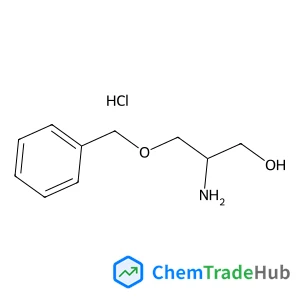
(R)-2-amino-3-(benzyloxy)propan-1-ol hydrochloride
CAS Number:
58577-95-0
Molecular Formula:
C10H16ClNO2
Recommended Suppliers




Disclaimer
This page provides academic journal information for reference and research purposes only. We are not affiliated with any journal publishers and do not handle publication submissions. For publication-related inquiries, please contact the respective journal publishers directly.
If you notice any inaccuracies in the information displayed, please contact us at support@chemtradehub.com. We will promptly review and address your concerns.