












The inactivation of lipid peroxide radical by quercetin. A theoretical insight
Literature Information
Publication Date
2010-03-29
DOI
10.1039/B924521A
Impact Factor
3.676
Authors
Sandro G. Chiodo, Monica Leopoldini, Nino Russo, Marirosa Toscano
View Original
Abstract
The effectiveness of naturally occurring antioxidant quercetin in the inactivation of the damaging lipid peroxide radical was investigated by means of hybrid density functional based approach, using the direct dynamics method, where the thermal rate constants were calculated using variational transition-state theory with multidimensional tunneling. H-atom abstraction in quercetin by CH3OO˙ peroxide occurs preferentially at the 4′OH phenolic site, from both kinetic and thermodynamic points of view. In principle, the narrowness of the obtained adiabatic potential-energy profile makes the occurrence of a significant tunnelling contribution possible. In fact, this contribution enhances the value of the computed rate constant at 300 K from 1.94 × 101 to 9.63 × 10³ M−1 s−1 indicating that quercetin is a potent natural antioxidant in trapping and scavenging free radicals.
Related Literature
Correction: Enantiomeric NMR discrimination of carboxylic acids using actinomycin D as a chiral solvating agent
Liwen Bai, Pian Chen, Jiangxia Xiang, Jiarui Sun, Xinxiang Lei
2019-03-28
Correction
DOI: 10.1039/C9OB90055A
N-Heterocyclic carbene-catalyzed diastereoselective synthesis of sulfenylated indanes via sulfa-Michael–Michael (aldol) cascade reactions
Ze-Nan Feng, Jin-Yun Luo, Yang Zhang, Guang-Fen Du, Lin He
2019-04-12
Communication
DOI: 10.1039/C9OB00210C
Visible light-mediated organophotocatalyzed C–H bond functionalization reactions
Mustafa Uygur, Olga García Mancheño
2019-05-10
Review Article
DOI: 10.1039/C9OB00834A
Direct access to bis-S-heterocycles via copper-catalyzed three component tandem cyclization using S8 as a sulfur source
Peiqi Zhou, Yubing Huang, Wanqing Wu, Wentao Yu, Jianxiao Li, Zhongzhi Zhu, Huanfeng Jiang
2019-03-04
Paper
DOI: 10.1039/C9OB00377K
Doxorubicin-reinforced supramolecular hydrogels of RGD-derived peptide conjugates for pH-responsive drug delivery
Leixia Mei, Ziran Zhai, Suyun He, Tingting Zhu
2019-03-25
Paper
DOI: 10.1039/C9OB00046A
Synthesis and antiproliferative evaluation of new zampanolide mimics
Guanglin Chen, Manee Patanapongpibul, Ziran Jiang, James D. White, Qiao-Hong Chen
2019-03-25
Paper
DOI: 10.1039/C9OB00556K
The cubane paradigm in bioactive molecule discovery: further scope, limitations and the cyclooctatetraene complement‡
Sevan D. Houston, Tyler Fahrenhorst-Jones, Hui Xing, Benjamin A. Chalmers, Melissa L. Sykes, Jeanette E. Stok, Clementina Farfan Soto, Jed M. Burns, Paul V. Bernhardt, James J. De Voss, Glen M. Boyle, Maree T. Smith, John Tsanaktsidis, G. Paul Savage, Vicky M. Avery, Craig M. Williams
2019-06-26
Paper
DOI: 10.1039/C9OB01238A
The disruption of verM activates the production of gliocladiosin A and B in Clonostachys rogersoniana
Yuanyuan Pan, Xingzhong Liu, Yongsheng Che
2019-06-28
Communication
DOI: 10.1039/C9OB01102A
You might also like
Compound Q&A
What is 1-(2,4,6-Trifluorophenyl)ethanol (CAS: 1250113-83-7)?
1-(2,4,6-Trifluorophenyl)ethanol is an organic compound with the CAS number 1250...
1250113-83-71-(2,4,6-Trifluoroph...
Compound Q&A
Is 1-(2,4-Dimethoxybenzyl)-4-(hydroxymethyl)-2-pyrrolidinone (CAS: 919111-34-5) safe?
1-(2,4-Dimethoxybenzyl)-4-(hydroxymethyl)-2-pyrrolidinone (CAS: 919111-34-5) is ...
919111-34-51-(2,4-Dimethoxybenz...
Compound Q&A
What are the physical and chemical properties of (7S,15R)-6β,15-Diacetoxy-7α,20-epoxy-7-hydroxykaura-2,16-dien-1-one (CAS: 51419-51-3)?
(7S,15R)-6β,15-Diacetoxy-7α,20-epoxy-7-hydroxykaura-2,16-dien-1-one is a crystal...
51419-51-3(7S,15R)-6β,15-Diace...
Compound Q&A
What regulatory guidelines apply to rac-ethyl (1r,4r)-4-hydroxycyclohexane-1-carboxylate, trans (CAS: 3618-04-0)?
The compound rac-ethyl (1r,4r)-4-hydroxycyclohexane-1-carboxylate, trans (CAS: 3...
3618-04-0rac-ethyl (1r,4r)-4-...
Compound Q&A
What is the market or research trend for 2-(2,4-Difluorophenoxy)-3-nitropyridine (CAS: 175135-62-3)?
The market for 2-(2,4-Difluorophenoxy)-3-nitropyridine (CAS: 175135-62-3) is cur...
175135-62-32-(2,4-Difluoropheno...
Compound Q&A
What are the main uses of 6-Diazo-5-oxo-L-norleucine (CAS: 157-03-9)?
The main uses of 6-Diazo-5-oxo-L-norleucine (CAS: 157-03-9) include research in ...
157-03-96-Diazo-5-oxo-L-norl...
Compound Q&A
What precautions should be taken when handling 2-Aminoethyl-mono-amide-DOTA-tris(tBu ester) (CAS: 173308-19-5)?
When handling 2-Aminoethyl-mono-amide-DOTA-tris(tBu ester) (CAS: 173308-19-5), i...
173308-19-52-Aminoethyl-mono-am...
Compound Q&A
How is 5-Methylimidazo[1,2-a]pyridine-3-carbaldehyde (CAS: 178488-37-4) typically synthesized?
5-Methylimidazo[1,2-a]pyridine-3-carbaldehyde (CAS: 178488-37-4) can be synthesi...
178488-37-45-Methylimidazo[1,2-...
Compound Q&A
Are there alternatives to 2,4,6-Trihydroxyisophthalaldehyde (CAS: 4396-13-8) in synthesis?
There are alternative reagents that can be used in the synthesis of 2,4,6-Trihyd...
4396-13-82,4,6-Trihydroxyisop...
Compound Q&A
What is (2Z)-3-(5-Fluoro-1H-indol-3-yl)-2-sulfanylacrylic acid (CAS: 179461-52-0)?
(2Z)-3-(5-Fluoro-1H-indol-3-yl)-2-sulfanylacrylic acid is a chemical compound wi...
179461-52-0(2Z)-3-(5-Fluoro-1H-...
Source Journal
Physical Chemistry Chemical Physics

CiteScore:
5.5
Self-citation Rate:
10.3%
Articles per Year:
3036
Physical Chemistry Chemical Physics (PCCP) is an international journal co-owned by 19 physical chemistry and physics societies from around the world. This journal publishes original, cutting-edge research in physical chemistry, chemical physics and biophysical chemistry. To be suitable for publication in PCCP, articles must include significant innovation and/or insight into physical chemistry; this is the most important criterion that reviewers and Editors will judge against when evaluating submissions. The journal has a broad scope and welcomes contributions spanning experiment, theory, computation and data science. Topical coverage includes spectroscopy, dynamics, kinetics, statistical mechanics, thermodynamics, electrochemistry, catalysis, surface science, quantum mechanics, quantum computing and machine learning. Interdisciplinary research areas such as polymers and soft matter, materials, nanoscience, energy, surfaces/interfaces, and biophysical chemistry are welcomed if they demonstrate significant innovation and/or insight into physical chemistry. Joined experimental/theoretical studies are particularly appreciated when complementary and based on up-to-date approaches.
Recommended Compounds
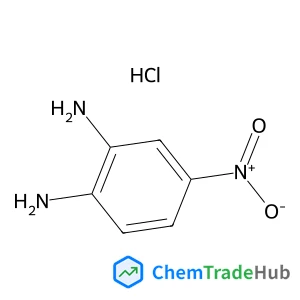
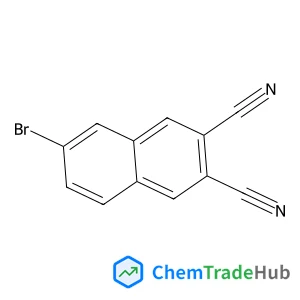
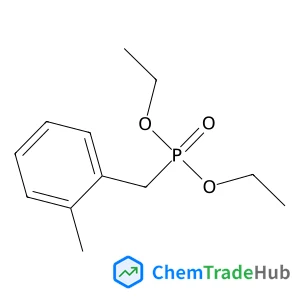
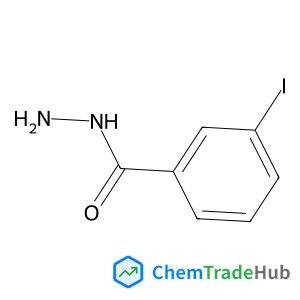
Recommended Suppliers






Disclaimer
This page provides academic journal information for reference and research purposes only. We are not affiliated with any journal publishers and do not handle publication submissions. For publication-related inquiries, please contact the respective journal publishers directly.
If you notice any inaccuracies in the information displayed, please contact us at support@chemtradehub.com. We will promptly review and address your concerns.