












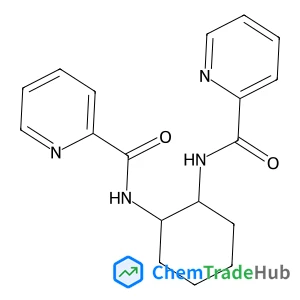
N,N'-(1R,2R)-1,2-Cyclohexanediyldi(2-pyridinecarboxamide)
CAS Number:
218290-24-5
Molecular Formula:
C18H20N4O2
Victoria L. Brewster, Royston Goodacre
In this study we demonstrate the use of Raman spectroscopy to determine protein modifications as a result of glycosylation and iron binding. Most proteins undergo some modifications after translation which can directly affect protein function. Identifying these modifications is particularly important in the production of biotherapeutic agents as they can affect stability, immunogenicity and pharmacokinetics. However, post-translational modifications can often be difficult to detect with regard to the subtle structural changes they induce in proteins. From their Raman spectra apo-and holo-forms of iron-binding proteins, transferrin and ferritin, could be readily distinguished and variations in spectral features as a result of structural changes could also be determined. In particular, differences in solvent exposure of aromatic amino acids residues could be identified between the open and closed forms of the iron-binding proteins. Protein modifications as a result of glycosylation can be even more difficult to identify. Through the application of the chemometric techniques of principal component analysis and partial least squares regression variations in Raman spectral features as a result of glycosylation induced structural modifications could be identified. These were then used to distinguish between glycosylated and non-glycosylated transferrin and to measure the relative concentrations of the glycoprotein within a mixture of the native non-glycosylated protein.
DOI: 10.1039/D0OB00529K
Chandrashekar Mudithanapelli, Mi-hyun Kim
DOI: 10.1039/C9OB02217A
Fuhong Xiao, Yangling Hu, Huawen Huang, Fen Xu, Guo-Jun Deng
DOI: 10.1039/D0OB00362J
Xinjie Wu, Ming Jia, Mengmeng Huang, Jung Keun Kim, Zheng Zhao, Junkai Liu, Jinhu Xi, Yabo Li, Yangjie Wu
DOI: 10.1039/D0OB00479K
Nicholas Konstandaras, Michelle H. Dunn, Max S. Guerry, Christopher D. Barnett, Marcus L. Cole, Jason B. Harper
DOI: 10.1039/C9OB02258A
Joy Chakraborty, Samik Nanda
DOI: 10.1039/D0OB00237B
Dancan K. Njeri, Claude J. Pertuit, Justin R. Ragains
DOI: 10.1039/D0OB00373E
Ji-Qin Hou, Jiang-Hong Yu, Heng Zhao, Ying-Ying Dong, Qiu-Shi Peng, Bao-Bao Zhang, Hao Wang
DOI: 10.1039/C9OB02490E
Yue Qi, Fang Zhang, Lin Wang, Aili Feng, Rongxiu Zhu, Shutao Sun, Wei Li, Lei Liu
DOI: 10.1039/D0OB00551G
Jianzhuang Miao, Yi-Xuan Zheng, Shi-Chao Lu, Shi-Peng Zhang, Ya-Ling Gong, Shu Xu
DOI: 10.1039/D0OB00160K
6-Bromo-2-methylimidazo[1,2-a]pyrimidine (CAS: 1111638-05-1) falls under various...
While there are no direct alternatives, similar compounds like 1-Pyrrolidineetha...
4-Methyl-2,6-bis(2-methyl-2-propanyl)phenyl methylcarbamate (CAS: 1918-11-2) is ...
2-(3-Bromo-4-fluorophenyl)-1,3-dioxolane (CAS: 77771-04-1) should be stored in a...
4,5,6,7-Tetrahydro-1H-indazole hydrochloride is a white crystalline solid with a...
(2R)-1-Methoxy-3-phenyl-2-propanamine is a chiral organic compound with the CAS ...
Ethyl 1-(1-phenylethyl)-1H-imidazole-5-carboxylate is used in various industries...
4-[(1E,3S)-1-(4-Hydroxyphenyl)-1,4-pentadien-3-yl]phenol (CAS: 17676-24-3) falls...
(S)-3-Amino-5-phenylpentanoic acid hydrochloride is primarily used in the pharma...
7-Methoxy-1-benzothiophene-2-carboxylic acid is typically synthesized by reactin...

Analyst publishes analytical and bioanalytical research that reports premier fundamental discoveries and inventions, and the applications of those discoveries, unconfined by traditional discipline barriers.
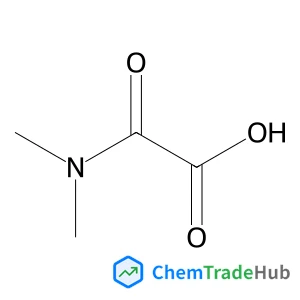
![2-Methyl-2-propanyl 4-{2-fluoro-5-[(4-oxo-3,4-dihydro-1-phthalazinyl)methyl]benzoyl}-1-piperazinecarboxylate structure](https://static.chemtradehub.com/structs/763/763114-04-1-65a9.webp "2-Methyl-2-propanyl 4-{2-fluoro-5-[(4-oxo-3,4-dihydro-1-phthalazinyl)methyl]benzoyl}-1-piperazinecarboxylate structure")
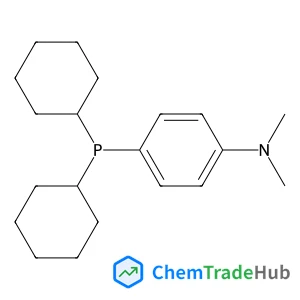
![(3aS,6aS)-1-Methyloctahydropyrrolo[3,4-b]pyrrole structure](https://static.chemtradehub.com/structs/877/877212-98-1-9157.webp "(3aS,6aS)-1-Methyloctahydropyrrolo[3,4-b]pyrrole structure")



