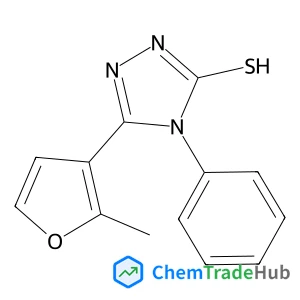
5-(2-Methyl-3-furyl)-4-phenyl-2,4-dihydro-3H-1,2,4-triazole-3-thione
CAS Number:
346464-59-3
Molecular Formula:
C13H11N3OS
Zhigang Sui, Yichu Shan, Lihua Zhang, Yukui Zhang
Exosomes are secreted nanovesicles shed by almost all kinds of cells. Recently, increased interest has been focused on these extracellular vesicles as natural carriers transporting biological contents for intercellular communication. However, current isolation techniques, such as ultracentrifugation, are not convenient and often require specialized equipment. Herein, we describe a polyethylene glycol (PEG)-based approach, which could permit facile, low-cost and effective isolation of exosomes from cell culture supernatant. High-resolution electron microscopes clearly visualized the size and morphology of isolated exosome aggregates, implying the mechanism of PEG-based precipitation. Combined with tandem mass spectrometry analysis, 6299 protein groups encoded by 5120 genes were successfully characterized from HeLa cell culture supernatant, including numerous exosome proteins which could overlap 97% of the Top 100 exosome marker proteins recorded in the ExoCarta database, as well as a series of low-abundance cytokines and biomarkers. Furthermore, we found a higher ratio of neo-cleavage sites in proteins identified from exosomes compared with cellular proteins, revealing the potential roles of exosomes in accumulation and transportation of protein degradation intermediates.

Topics in Catalysis

Bioorganic & Medicinal Chemistry Letters

Biocatalysis and Biotransformation

Herald of the Russian Academy of Sciences

Journal of Asian Natural Products Research

Polycyclic Aromatic Compounds

Chinese Journal of Chemistry

Medicinal Chemistry Research

Colloid Journal

Bioorganic & Medicinal Chemistry
Mingxi Chen, Jianwei Chai, Jing Wu, Wen-Ya Wu, James Lourembam, Ming Lin, Jun-Young Kim, Jaewon Kim, Man-Fai Ng, Henry Medina, Shi Wun Tong, Dongzhi Chi
DOI: 10.1039/D3NH00358B
Chun-Chuan Kao, Jiahao Liu, Chao Ye, Shao-Jian Zhang, Junnan Hao, Shi-Zhang Qiao
DOI: 10.1039/D3TA02866F
Jian Liu, Shicao Zhao, Bowen Duan, Xudong He, Chunming Yang, Xuemei Pu, Xinben Zhang, Yonghao Xiao, Fude Nie, Wen Qian, Geng Li
DOI: 10.1039/D3TA05002E
Chengwu Yang, Pattaraporn Woottapanit, Jin Cao, Yilei Yue, Dongdong Zhang, Jin Yi, Zhiyuan Zeng, Xinyu Zhang, Jiaqian Qin, Yonggang Wang
DOI: 10.1039/D3TA05650C
Sherif Kamal, Yahya Khan, Marko Kralj
DOI: 10.1039/D3NH00310H
Wenli Pan, Nobuya Machida, Toshiyuki Matsunaga, Mukesh Kumar, Neha Thakur, Toshiki Watanabe, Atsushi Sakuda, Akitoshi Hayashi, Masahiro Tatsumisago, Yoshiharu Uchimoto
DOI: 10.1039/D3TA05426H
Risa Ichihashi, Yuta Yamamoto, Kyoichi Sawabe
DOI: 10.1039/D3TA05078E
Amit Nain, Yu-Ting Tseng, Akash Gupta, Yu-Feng Lin, Sangili Arumugam, Yu-Fen Huang
DOI: 10.1039/D3NH00275F
When handling lithium chloride hydrate (1:1:1) (CAS: 16712-20-2), it is importan...
4-(4H-1,2,4-Triazol-4-yl)piperidine is generally considered safe for use in phar...
Waste containing 1,3-Thiazole-2-carboxamide (CAS: 16733-85-0) should be collecte...
5-(Difluoromethyl)-2-fluorobenzonitrile (CAS: 934175-58-3) is subject to regulat...
Methyl 3-acetamido-2-thiophenecarboxylate can be synthesized by the reaction of ...
4-Isoquinolinecarbonitrile is a chemical compound with the CAS number 34846-65-6...
Store Methyl 1H-1,2,3-triazole-4-carboxylate (CAS: 877309-59-6) in a cool, dry p...
6-Bromo[1,3]thiazolo[5,4-b]pyridin-2-amine (CAS: 1160791-13-8) is subject to the...
(2S,3S)-2-Ammonio-3-(3,4-dihydroxyphenyl)-3-hydroxypropanoate (CAS: 23651-95-8) ...
7-Bromo-3-methyl-3,4-dihydroquinazolin-4-one is a solid with a crystalline form....

Analyst publishes analytical and bioanalytical research that reports premier fundamental discoveries and inventions, and the applications of those discoveries, unconfined by traditional discipline barriers.
![6,6-Dimethylbicyclo[3.1.1]hept-2-ene-2-carbaldehyde structure](https://static.chemtradehub.com/structs/564/564-94-3-e746.webp "6,6-Dimethylbicyclo[3.1.1]hept-2-ene-2-carbaldehyde structure")