












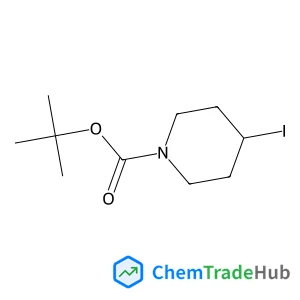
2-Methyl-2-propanyl 4-iodo-1-piperidinecarboxylate
CAS Number:
301673-14-3
Molecular Formula:
C10H18INO2
Zhengkai Chen, Binjie Wang, Jitan Zhang, Wenlong Yu, Zhanxiang Liu
Transition metal-catalyzed direct functionalization of C–H bonds is one of the key emerging strategies that is currently attracting tremendous attention with the aim to provide alternative environmentally friendly and efficient ways for the construction of C–C and C–hetero bonds. In particular, the strategy involving regioselective C–H activation assisted by various functional groups shows high potential, and significant achievements have been made in both the development of novel reactions and the mechanistic study. In this review, we attempt to give an overview of the development of utilizing the functionalities as directing groups. The discussion is directed towards the use of different functional groups as directing groups for the construction of C–C and C–hetero bonds via C–H activation using various transition metal catalysts. The synthetic applications and mechanistic features of these transformations will be discussed, and the review is organized on the basis of the type of directing groups and the type of bond being formed or the catalyst.
Nicole S. Bryce, Jenny Z. Zhang, Renee M. Whan, Natsuho Yamamoto, Trevor W. Hambley
DOI: 10.1039/B902415H
Sungmin Kang, Junji Watanabe, Takashi Takahashi
DOI: 10.1039/B901788G
Sheshanath V. Bhosale, Sidhanath V. Bhosale, Steven J. Langford, Dragan Krsta
DOI: 10.1039/B903699G
Ruth Pérez-Fernández, Michael Pittelkow, Ana M. Belenguer, Laura A. Lane, Carol V. Robinson, Jeremy K. M. Sanders
DOI: 10.1039/B902842K
Christopher R. Graves, Jaqueline L. Kiplinger
DOI: 10.1039/B902969A
Tracy D. Nixon, Lee D. Dingwall, Jason M. Lynam, Adrian C. Whitwood
DOI: 10.1039/B821671A
Yves-Marie Legrand, Arie Van der Lee, Mihail Barboiu
DOI: 10.1039/B822619A
Jennifer E. Readman, Paul M. Forster, Karena W. Chapman, Peter J. Chupas, John B. Parise, Joseph A. Hriljac
DOI: 10.1039/B902874A
Waste containing (6-Bromo-2-naphthyl)oxy](dimethyl)(2-methyl-2-propanyl)silane (...
7-Fluoro-4-isoquinolinecarboxylic acid can be synthesized via a multi-step proce...
2,3,5,6-Tetrabromothieno[3,2-b]thiophene is a crystalline compound with a high m...
1-[4-(Benzylamino)-7,8-dihydro-5H-pyrano[4,3-d]pyrimidin-2-yl]-2-methyl-1H-indol...
The market for imidazo[5,1-d]-1,2,3,5-tetrazine-8-carboxylic acid, 3,4-dihydro-3...
3-(Triisopropylsilyl)propiolaldehyde is a synthetic organic compound with the CA...
6-Nitro-2H-1,4-benzoxazin-3(4H)-one (CAS: 81721-87-1) is subject to various regu...
Waste containing (3-Fluorophenyl)(4-{[(2-methyl-2-propanyl)oxy]carbonyl}-1-piper...
N,N'-4,4'-Biphenyldiyldiisonicotinamide is a white crystalline solid with a mole...
6-Bromo-8-fluoro-2-quinazolinol is primarily used in the pharmaceutical industry...

Organic Chemistry Frontiers publishes high-quality research from across organic chemistry. Emphases are placed on studies that make significant contributions to the field of organic chemistry by reporting either new or significantly improved protocols or methodologies. Topics include, but are not limited to the following: Organic synthesis Development of synthetic methodologies Catalysis Natural products Functional organic materials Supramolecular and macromolecular chemistry Physical and computational organic chemistry
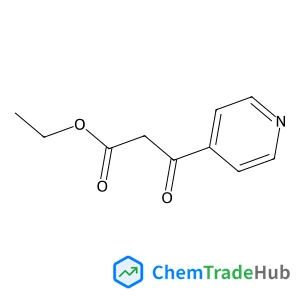
![N-[(E)-Phenylmethylene]benzenesulfonamide structure](https://static.chemtradehub.com/structs/139/13909-34-7-8167.webp "N-[(E)-Phenylmethylene]benzenesulfonamide structure")
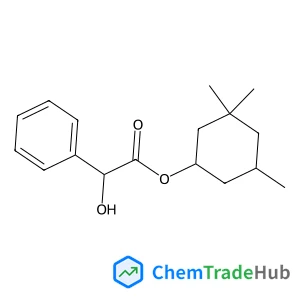
![5-Bromoimidazo[1,2-a]pyridine structure](https://static.chemtradehub.com/structs/692/69214-09-1-d8e2.webp "5-Bromoimidazo[1,2-a]pyridine structure")






