












Polypeptide–poly(ethylene glycol) miktoarm star copolymers with a fluorescently labeled core: synthesis, delivery and imaging of siRNA
Literature Information
Publication Date
2016-01-27
DOI
10.1039/C5PY01656H
Impact Factor
5.582
Authors
Jianbing Huang, Hui Liang, Du Cheng, Jiang Lu
View Original
Abstract
A facile synthetic pathway to polypeptide–PEG miktoarm star copolymers with a fluorescently labeled core has been developed by combination of the reversible addition-fragmentation chain transfer (RAFT) arm-first technique and an aldehyde–aminooxy click reaction. A star polymer backbone with a fluorescently labeled and aldehyde-functionalized core was prepared via the cross-linking of a PEG macro-RAFT agent using an aldehyde-bearing divinyl monomer, 6,6′-(ethane-1,2-diylbis(oxy))bis(3-vinylbenzaldehyde), in combination with a fluorescent aluminum tris(8-hydroxyquinoline)-bearing cross-linker. The aldehyde groups on the core were then coupled with the newly designed aminooxy terminated poly(γ-benzyl-L-glutamate) (PBLG-ONH2) to generate the fluorescently labeled PBLG–PEG miktoarm star copolymer. Further aminolysis of the benzyl groups of PBLG arms with β-hydroxyethylenediamine endowed the miktoarm star polymer with the ability to capture negatively charged siRNA via electrostatic interactions. Owing to the biocompatible polypeptide and PEG arms, the obtained miktoarm star polymer exhibited low cytotoxicity. The miktoarm star polymer/siRNA complexes (formed at N/P ratio = 16) showed a relatively small particle size and appropriate positive zeta potentials, facilitating the cellular uptake. Besides, with its fluorescent property, the star polymer could serve as a probe for cellular tracing. This multifunctional star polymer would thus be of particular interest because of its promising potential in, for example, simultaneous gene delivery and bioimaging.
Recommended Journals
Related Literature
Particle size dependence of the surface-enhanced Raman scattering properties of densely arranged two-dimensional assemblies of Au(core)–Ag(shell) nanospheres
Kosuke Sugawa, Tsuyoshi Akiyama, Yoshimasa Tanoue, Takashi Harumoto, Sayaka Yanagida, Atsuo Yasumori, Shohei Tomita, Joe Otsuki
2014-12-19
Paper
DOI: 10.1039/C4CP05058D
Surface enhanced vibrational spectroscopy and first-principles study of l-cysteine adsorption on noble trimetallic Au/Pt@Rh clusters
B. Loganathan, V. L. Chandraboss, S. Senthilvelan, B. Karthikeyan
2015-01-27
Paper
DOI: 10.1039/C4CP05170J
A cocatalyst-free Eosin Y-sensitized p-type of Co3O4 quantum dot for highly efficient and stable visible-light-driven water reduction and hydrogen production
Ning Zhang, Jinwen Shi, Fujun Niu, Jian Wang, Liejin Guo
2015-07-20
Communication
DOI: 10.1039/C5CP02983J
SERS activity of Ag decorated nanodiamond and nano-β-SiC, diamond-like-carbon and thermally annealed diamond thin film surfaces
Mohan Kumar Kuntumalla, Vadali Venkata Satya Siva Srikanth, Satyavathi Ravulapalli, Upender Gangadharini, Harish Ojha, Narayana Rao Desai, Chandrahas Bansal
2015-02-05
Paper
DOI: 10.1039/C4CP05236F
A means to an interface: investigating monoethanolamine behavior at an aqueous surface
Laura E. McWilliams, Nicholas A. Valley, Sumi N. Wren, Geraldine L. Richmond
2015-07-22
Paper
DOI: 10.1039/C5CP02931G
A novel synthetic route towards monodisperse LaOF:Ln3+ (Ln = Eu, Tb) hollow spheres with multicolor luminescence properties
Ruiqing Li, Linlin Li, Yimai Liang, Nannan Zhang, Yali Liu, Shucai Gan
2015-07-21
Paper
DOI: 10.1039/C5CP03421C
Nonlinear optical imaging of single plasmonic nanoparticles with 30 nm resolution
Anke Horneber, Kai Braun, Jan Rogalski, Paul Leiderer, Alfred J. Meixner, Dai Zhang
2015-01-23
Paper
DOI: 10.1039/C4CP05342G
Controlled functionalisation of single-walled carbon nanotube network electrodes for the enhanced voltammetric detection of dopamine
Sharel P. E, Thomas S. Miller, Julie V. Macpherson, Patrick R. Unwin
2015-09-08
Paper
DOI: 10.1039/C5CP04905A
You might also like
Compound Q&A
Is 2-(2-chloroacetamido)-3-phenylpropanoic acid (CAS: 7765-11-9) safe?
2-(2-Chloroacetamido)-3-phenylpropanoic acid (CAS: 7765-11-9) is generally consi...
7765-11-92-(2-chloroacetamido...
Compound Q&A
Is 2-(Benzyloxy)-5-bromobenzoic acid (CAS: 62176-31-2) safe?
2-(Benzyloxy)-5-bromobenzoic acid can be handled safely if appropriate precautio...
62176-31-22-(Benzyloxy)-5-brom...
Compound Q&A
What is (4-Methyl-1,2,5-oxadiazol-3-yl)methanamine hydrochloride (CAS: 1159825-48-5)?
(4-Methyl-1,2,5-oxadiazol-3-yl)methanamine hydrochloride is a chemical compound ...
1159825-48-5(4-Methyl-1,2,5-oxad...
Compound Q&A
What is 2-(5-Hexylthiophen-2-yl)-4,4,5,5-tetramethyl-1,3,2-dioxaborolane (CAS: 917985-54-7)?
2-(5-Hexylthiophen-2-yl)-4,4,5,5-tetramethyl-1,3,2-dioxaborolane (CAS: 917985-54...
917985-54-72-(5-Hexylthiophen-2...
Compound Q&A
Are there alternatives to 4-(8-Methyl-9H-1,3-dioxolo[4,5-h][2,3]benzodiazepin-5-yl)benzenamine (CAS: 102771-26-6) in synthesis?
While 4-(8-Methyl-9H-1,3-dioxolo[4,5-h][2,3]benzodiazepin-5-yl)benzenamine (CAS:...
102771-26-64-(8-Methyl-9H-1,3-d...
Compound Q&A
What is the market or research trend for tert-butyl 3-hydroxy-4,5,7,8-tetrahydro-2H-pyrazolo[3,4-d]azepine-6-carboxylate (CAS: 851376-80-2)?
The market for tert-butyl 3-hydroxy-4,5,7,8-tetrahydro-2H-pyrazolo[3,4-d]azepine...
851376-80-2tert-butyl 3-hydroxy...
Compound Q&A
How should waste containing 3,5-Diamino-1H-pyrazole-4-carbonitrile (CAS: 6844-58-2) be handled?
Waste containing 3,5-Diamino-1H-pyrazole-4-carbonitrile (CAS: 6844-58-2) should ...
6844-58-23,5-Diamino-1H-pyraz...
Compound Q&A
How is (6-Fluoro-3-pyridinyl)boronic acid (CAS: 351019-18-6) typically synthesized?
(6-Fluoro-3-pyridinyl)boronic acid can be synthesized through the reaction of 6-...
351019-18-6(6-Fluoro-3-pyridiny...
Compound Q&A
What industries use Dibenzyl carbonimidoylbiscarbamate (CAS: 10065-79-9)?
Dibenzyl carbonimidoylbiscarbamate (CAS: 10065-79-9) finds applications in vario...
10065-79-9Dibenzyl carbonimido...
Compound Q&A
What is the market or research trend for (beta,beta,2,3,4,5,6-~2~H_7_)Phenylalanine (CAS: 74228-83-4)?
The market for (beta,beta,2,3,4,5,6-~2~H_7_)Phenylalanine (CAS: 74228-83-4) is g...
74228-83-4(beta,beta,2,3,4,5,6...
Source Journal
Polymer Chemistry

CiteScore:
8.6
Self-citation Rate:
7.3%
Articles per Year:
457
Polymer Chemistry welcomes submissions in all areas of polymer science that have a strong focus on macromolecular chemistry. Manuscripts may cover a broad range of fields, yet no direct application focus is required.
Recommended Compounds
![5-Chloropyrrolo[2,1-f][1,2,4]triazin-4(3H)-one structure](https://static.chemtradehub.com/structs/888/888720-60-3-4f7c.webp "5-Chloropyrrolo[2,1-f][1,2,4]triazin-4(3H)-one structure")
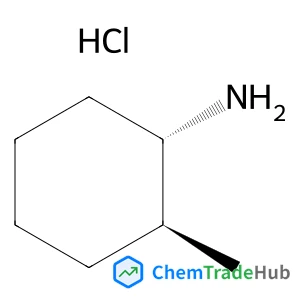
(1R,2R)-2-Methylcyclohexanamine hydrochloride (1:1)
CAS Number:
39558-31-1
Molecular Formula:
C7H16ClN
![2-(5-Bromo-1H-pyrrolo[2,3-B]pyridin-3-YL)acetic acid structure](https://static.chemtradehub.com/structs/106/1060795-03-0-0589.webp "2-(5-Bromo-1H-pyrrolo[2,3-B]pyridin-3-YL)acetic acid structure")
2-(5-Bromo-1H-pyrrolo[2,3-B]pyridin-3-YL)acetic acid
CAS Number:
1060795-03-0
Molecular Formula:
C9H7BrN2O2
Recommended Suppliers






Disclaimer
This page provides academic journal information for reference and research purposes only. We are not affiliated with any journal publishers and do not handle publication submissions. For publication-related inquiries, please contact the respective journal publishers directly.
If you notice any inaccuracies in the information displayed, please contact us at support@chemtradehub.com. We will promptly review and address your concerns.