












A study on the chain propagation of benzoxazine
Literature Information
Publication Date
2015-11-20
DOI
10.1039/C5PY01397F
Impact Factor
5.582
Authors
Hongyuan Wang, Rongqi Zhu, Po Yang, Yi Gu
View Original
Abstract
The chain propagations of Bisphenol A-aniline benzoxazine (defined as BA-a) polymerized by thermal induction and in the presence of various catalysts or curing agents during the curing process before gelation were investigated in this paper. DSC, gel time test and GPC were used to measure the curing behavior, number-average molecular weight (n), glass transition temperature (Tg), gel time (tgel) and curing conversion (α) of different benzoxazine systems. By comparing the experimental results (n and Tg) with the models of step polymerizations and chain polymerizations proposed by Flory et al., three kinds of chain propagations of benzoxazine were observed and confirmed. The step polymerization occurred in the thermal induction or in the presence of catalyst N,N-dibenzylaniline (tAm), and then the non-living chain polymerization and the living chain polymerization occurred, respectively, when indole (Id) and other additives such as phenol (tBp), acid (HA), imidazole (IMZ) etc. were added to benzoxazine as catalysts or curing agents. Moreover, the relationship between the chain propagation and curing kinetics of benzoxazine was also established. The chain propagation of benzoxazine systems involves step polymerization, non-living chain polymerization andliving chain polymerization, the conversion of the gel point (αgel) is almost equal to, less than and greater than the value of the conversion at which the polymerization rate reaches a maximum (αmax), respectively. The results may contribute to a better understanding of the polymerization mechanism of benzoxazine and provide new approaches to effective control of the polymerization kinetics and growth crosslink structures of benzoxazine.
Related Literature
Single-molecule kinetic studies of DNA hybridization under extreme pressures
2020-10-05
Paper
DOI: 10.1039/D0CP04035E
Pd/Pt embedded CN monolayers as efficient catalysts for CO oxidation
Yong-Chao Rao, Xiang-Mei Duan
2019-10-23
Paper
DOI: 10.1039/C9CP04636D
In situ anion-doped epitaxial strontium titanate films
O. Pacherova, N. Nepomniashchaia, V. Vetokhina, S. Cichon, T. Kocourek, A. Dejneka
2020-10-08
Paper
DOI: 10.1039/D0CP03644G
A data-driven approach to determine dipole moments of diatomic molecules
Xiangyue Liu, Gerard Meijer, Jesús Pérez-Ríos
2020-08-24
Paper
DOI: 10.1039/D0CP03810E
Transition from exohedral to endohedral geometries of anionic and neutral B4Sin (n = 4–15) clusters: quantum chemical calculations
2019-11-06
Paper
DOI: 10.1039/C9CP05044B
Catalytic mechanism of the PrhA (V150L/A232S) double mutant involved in the fungal meroterpenoid biosynthetic pathway: a QM/MM study
Jie Bai, Lijuan Yan, Yongjun Liu
2019-11-08
Paper
DOI: 10.1039/C9CP03565F
Strong and efficient doping of monolayer MoS2 by a graphene electrode
Zuzana Melnikova-Kominkova, Katerina Jurkova, Vaclav Vales, Karolina Drogowska-Horná, Otakar Frank, Martin Kalbac
2019-11-05
Paper
DOI: 10.1039/C9CP04993B
Transition metal silicide surface grafting by multiple functional groups and green optimization by mechanochemistry
Maxime Godfroy, Mahmoud Khalil, Claude Niebel, Thibaut Jarrosson, Dominique Foix, Valérie Flaud, Françoise Serein-Spirau, Romain Viennois, Michel Granier, Mickaël Beaudhuin
2019-11-01
Paper
DOI: 10.1039/C9CP03864G
Electronic couplings and rates of excited state charge transfer processes at poly(thiophene-co-quinoxaline)–PC71BM interfaces: two- versus multi-state treatments
Tuuva Kastinen, Demetrio Antonio da Silva Filho, Lassi Paunonen, Luiz Antonio Ribeiro Junior, Terttu I. Hukka
2019-11-01
Paper
DOI: 10.1039/C9CP04837E
Theoretical study of the optical and thermodynamic properties of LaxSr1−xCo1−yFeyO3−δ (x/y = 0.25, 0.5, 0.75) perovskites
Ting Jia, Paul Ohodnicki, Benjamin Chorpening, Jonathan Lekse, Gregory Hackett, Yuhua Duan
2019-11-04
Paper
DOI: 10.1039/C9CP04921E
You might also like
Compound Q&A
What are the main uses of (5-Sulfamoyl-3-pyridinyl)boronic acid (CAS: 951233-61-7)?
(5-Sulfamoyl-3-pyridinyl)boronic acid is primarily used in chemical synthesis, p...
951233-61-7(5-Sulfamoyl-3-pyrid...
Compound Q&A
How is Benzyl 2-methyl-2-(methylsulfonyl)-4-pentenoate (CAS: 1942858-50-5) typically synthesized?
Benzyl 2-methyl-2-(methylsulfonyl)-4-pentenoate is typically synthesized via est...
1942858-50-5Benzyl 2-methyl-2-(m...
Compound Q&A
What precautions should be taken when handling 8-Fluoroquinolin-6-ol (CAS: 209353-22-0)?
When handling 8-Fluoroquinolin-6-ol (CAS: 209353-22-0), it is important to use p...
209353-22-08-Fluoroquinolin-6-o...
Compound Q&A
What are the physical and chemical properties of 1,3-Dibromo-5-(2-methyl-2-propanyl)benzene (CAS: 129316-09-2)?
1,3-Dibromo-5-(2-methyl-2-propanyl)benzene (CAS: 129316-09-2) is a crystalline c...
129316-09-21,3-Dibromo-5-(2-met...
Compound Q&A
What industries use Ethyl 7-chloro-4-oxo-1-(1,3-thiazol-2-yl)-1,4-dihydro-1,8-naphthyridine-3-carboxylate (CAS: 174726-87-5)?
Ethyl 7-chloro-4-oxo-1-(1,3-thiazol-2-yl)-1,4-dihydro-1,8-naphthyridine-3-carbox...
174726-87-5Ethyl 7-chloro-4-oxo...
Compound Q&A
What precautions should be taken when handling Delta-7-Avenasterol (CAS: 23290-26-8)?
When handling Delta-7-Avenasterol (CAS: 23290-26-8), it is important to wear app...
23290-26-8Delta-7-Avenasterol
Compound Q&A
What precautions should be taken when handling N-({(5R)-3-[3-Fluoro-4-(4-morpholinyl)phenyl]-2-oxo-1,3-oxazolidin-5-yl}methyl)acetamide (CAS: 872992-20-6)?
Proper handling involves the use of personal protective equipment such as gloves...
872992-20-6N-({(5R)-3-[3-Fluoro...
Compound Q&A
What precautions should be taken when handling 2-Methyl-2-proanyl 4-[(2-aminophenyl)amino]-1-piperidinecarboxylate (CAS: 79099-00-6)?
When handling 2-Methyl-2-proanyl 4-[(2-aminophenyl)amino]-1-piperidinecarboxylat...
79099-00-62-Methyl-2-propanyl ...
Compound Q&A
What is N-Methyl-4-chlorobenzylamine hydrochloride (CAS: 65542-24-7)?
N-Methyl-4-chlorobenzylamine hydrochloride (CAS: 65542-24-7) is a organic compou...
65542-24-7N-Methyl-4-chloroben...
Compound Q&A
Is [2-(Dodecyloxy)ethoxy]acetic acid (CAS: 27306-90-7) safe?
[2-(Dodecyloxy)ethoxy]acetic acid (CAS: 27306-90-7) is generally considered safe...
27306-90-7[2-(Dodecyloxy)ethox...
Source Journal
Polymer Chemistry

CiteScore:
8.6
Self-citation Rate:
7.3%
Articles per Year:
457
Polymer Chemistry welcomes submissions in all areas of polymer science that have a strong focus on macromolecular chemistry. Manuscripts may cover a broad range of fields, yet no direct application focus is required.
Recommended Compounds
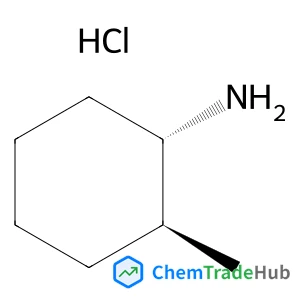
(1R,2R)-2-Methylcyclohexanamine hydrochloride (1:1)
CAS Number:
39558-31-1
Molecular Formula:
C7H16ClN
![5-Chloropyrrolo[2,1-f][1,2,4]triazin-4(3H)-one structure](https://static.chemtradehub.com/structs/888/888720-60-3-4f7c.webp "5-Chloropyrrolo[2,1-f][1,2,4]triazin-4(3H)-one structure")
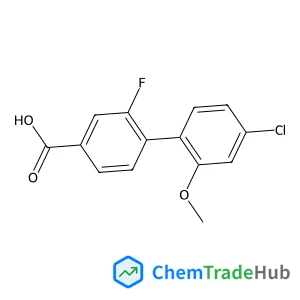
4-(4-Chloro-2-methoxyphenyl)-3-fluorobenzoic acid
CAS Number:
1261970-23-3
Molecular Formula:
C14H10ClFO3
Recommended Suppliers






Disclaimer
This page provides academic journal information for reference and research purposes only. We are not affiliated with any journal publishers and do not handle publication submissions. For publication-related inquiries, please contact the respective journal publishers directly.
If you notice any inaccuracies in the information displayed, please contact us at support@chemtradehub.com. We will promptly review and address your concerns.