












Improved photovoltaic performance of a 2D-conjugated benzodithiophene-based polymer by the side chain engineering of quinoxaline
Literature Information
Publication Date
2015-05-05
DOI
10.1039/C5PY00305A
Impact Factor
5.582
Authors
Qunping Fan, Manjun Xiao, Yu Liu, Wenyan Su, Huishan Gao, Hua Tan, Yafei Wang, Gangtie Lei, Renqiang Yang, Weiguo Zhu
View Original
Abstract
To investigate the influence of side chains of quinoxaline on the photovoltaic performances, a novel D–A-type polymer of PBDTDT(Qx-3)-T was synthesized and characterized, in which 5,8-dioctylthienyl substituted benzo[1,2-b:4,5-b′]dithiophene (BDT-T), thiophene (T) and 6,7-dioctyloxy-2,3-diphenylquinoxaline (Qx-3) were used as the donor (D) unit, π-bridge and acceptor (A) unit, respectively. The resulting polymer exhibited good thermal stability with a high decomposition temperature of 357 °C, a low optical bandgap of 1.78 eV with an absorption onset of 696 nm, a low-lying highest occupied molecular orbital (HOMO) energy level of −5.51 eV, and a high carrier mobility of 2.19 × 10⁻⁴ cm2 V−1 s−1. Compared to the reported analogues, polymer solar cells (PSCs) based on PBDTDT(Qx-3)-T/PC71BM demonstrated the highest open-circuit voltages (Voc) up to 0.96 V. The maximum power conversion efficiency (PCE) of 6.9% with a Voc of 0.94 V, short-circuit current (Jsc) of 11.28 mA cm−2 and a fill factor (FF) of 64.7% was obtained with a delicate balance among the above factors for the polymer in PSCs. On the basis of these results, it can be concluded that the appending two octyloxy side chains at 6,7-positions of quinoxaline in the BDT-T-alt-DTQx type polymers would be a feasible approach to improve photovoltaic properties.
Related Literature
Gradient and block side-chain liquid crystalline polyethers
Yu Liu, Wei Wei, Huiming Xiong
2014-09-24
Paper
DOI: 10.1039/C4PY01097C
Stereocomplex formation in stereoblock copolymer networks composed of 4-armed star-shaped lactide oligomers and a 2-armed ε-caprolactone oligomer
Mitsuhiro Shibata, Masaya Katoh, Hayato Takase, Ayaka Shibita
2015-04-20
Paper
DOI: 10.1039/C5PY00401B
Doubly responsive polymersomes towards monosaccharides and temperature under physiologically relevant conditions
Eun Sun Jeong, Chiyoung Park, Kyoung Taek Kim
2015-03-27
Paper
DOI: 10.1039/C5PY00302D
Cellulose grafting by photoinduced controlled radical polymerisation
Emma Larsson, Samuel A. Pendergraph, Tahani Kaldéus, Eva Malmström, Anna Carlmark
2014-12-24
Paper
DOI: 10.1039/C4PY01618A
Regulation of the self-assembly morphology of azobenzene-bearing double hydrophobic block copolymers in aqueous solution by shifting the dynamic host–guest complexation
Zai-Zai Tong, Rui-Yang Wang, Jie Huang, Jun-Ting Xu, Zhi-Qiang Fan
2015-01-16
Paper
DOI: 10.1039/C5PY00004A
Synthesis and LCST-type phase behavior of water-soluble polypeptide with Y-shaped and charged side-chains
Yanzhi Xu, Mengxiang Zhu, Minjie Li, Ying Ling, Haoyu Tang
2016-01-29
Paper
DOI: 10.1039/C5PY01991E
The use of endogenous gaseous molecules (NO and CO2) to regulate the self-assembly of a dual-responsive triblock copolymer
Jinming Hu, Michael R. Whittaker, Yang Li, John F. Quinn
2015-01-26
Paper
DOI: 10.1039/C4PY01678E
Multifunctional pH-sensitive micelles for tumor-specific uptake and cellular delivery
Tiehong Yang, Fei Li, Haitao Zhang, Li Fan, Youbei Qiao, Guangguo Tan, Haifei Zhang, Hong Wu
2014-11-20
Paper
DOI: 10.1039/C4PY01403K
NIR-responsive polypeptide copolymer upconversion composite nanoparticles for triggered drug release and enhanced cytotoxicity
Gang Liu, Na Liu, Linzhu Zhou, Yue Su, Chang-Ming Dong
2015-04-21
Paper
DOI: 10.1039/C5PY00479A
New insight into the polymerization mechanism of 1,3-dienes cationic polymerization. IV. Mechanism of unsaturation loss in the polymerization of isoprene
Victor A. Rozentsvet, Valery G. Kozlov, Nelly A. Sablina, Olesya A. Stotskaya, Frederic Peruch, Sergei V. Kostjuk
2016-12-21
Paper
DOI: 10.1039/C6PY01736C
You might also like
Compound Q&A
What are the main uses of (5-Sulfamoyl-3-pyridinyl)boronic acid (CAS: 951233-61-7)?
(5-Sulfamoyl-3-pyridinyl)boronic acid is primarily used in chemical synthesis, p...
951233-61-7(5-Sulfamoyl-3-pyrid...
Compound Q&A
How is Benzyl 2-methyl-2-(methylsulfonyl)-4-pentenoate (CAS: 1942858-50-5) typically synthesized?
Benzyl 2-methyl-2-(methylsulfonyl)-4-pentenoate is typically synthesized via est...
1942858-50-5Benzyl 2-methyl-2-(m...
Compound Q&A
What precautions should be taken when handling 8-Fluoroquinolin-6-ol (CAS: 209353-22-0)?
When handling 8-Fluoroquinolin-6-ol (CAS: 209353-22-0), it is important to use p...
209353-22-08-Fluoroquinolin-6-o...
Compound Q&A
What are the physical and chemical properties of 1,3-Dibromo-5-(2-methyl-2-propanyl)benzene (CAS: 129316-09-2)?
1,3-Dibromo-5-(2-methyl-2-propanyl)benzene (CAS: 129316-09-2) is a crystalline c...
129316-09-21,3-Dibromo-5-(2-met...
Compound Q&A
What industries use Ethyl 7-chloro-4-oxo-1-(1,3-thiazol-2-yl)-1,4-dihydro-1,8-naphthyridine-3-carboxylate (CAS: 174726-87-5)?
Ethyl 7-chloro-4-oxo-1-(1,3-thiazol-2-yl)-1,4-dihydro-1,8-naphthyridine-3-carbox...
174726-87-5Ethyl 7-chloro-4-oxo...
Compound Q&A
What precautions should be taken when handling Delta-7-Avenasterol (CAS: 23290-26-8)?
When handling Delta-7-Avenasterol (CAS: 23290-26-8), it is important to wear app...
23290-26-8Delta-7-Avenasterol
Compound Q&A
What precautions should be taken when handling N-({(5R)-3-[3-Fluoro-4-(4-morpholinyl)phenyl]-2-oxo-1,3-oxazolidin-5-yl}methyl)acetamide (CAS: 872992-20-6)?
Proper handling involves the use of personal protective equipment such as gloves...
872992-20-6N-({(5R)-3-[3-Fluoro...
Compound Q&A
What precautions should be taken when handling 2-Methyl-2-proanyl 4-[(2-aminophenyl)amino]-1-piperidinecarboxylate (CAS: 79099-00-6)?
When handling 2-Methyl-2-proanyl 4-[(2-aminophenyl)amino]-1-piperidinecarboxylat...
79099-00-62-Methyl-2-propanyl ...
Compound Q&A
What is N-Methyl-4-chlorobenzylamine hydrochloride (CAS: 65542-24-7)?
N-Methyl-4-chlorobenzylamine hydrochloride (CAS: 65542-24-7) is a organic compou...
65542-24-7N-Methyl-4-chloroben...
Compound Q&A
Is [2-(Dodecyloxy)ethoxy]acetic acid (CAS: 27306-90-7) safe?
[2-(Dodecyloxy)ethoxy]acetic acid (CAS: 27306-90-7) is generally considered safe...
27306-90-7[2-(Dodecyloxy)ethox...
Source Journal
Polymer Chemistry

CiteScore:
8.6
Self-citation Rate:
7.3%
Articles per Year:
457
Polymer Chemistry welcomes submissions in all areas of polymer science that have a strong focus on macromolecular chemistry. Manuscripts may cover a broad range of fields, yet no direct application focus is required.
Recommended Compounds
![4-Fluoro-2-(4-{[(3S,4R)-4-(2-hydroxy-2-propanyl)-3-pyrrolidinyl]amino}-6,7-dimethoxy-2-quinazolinyl)phenol hydrochloride (1:1) structure](https://static.chemtradehub.com/structs/143/1431697-96-9-619c.webp "4-Fluoro-2-(4-{[(3S,4R)-4-(2-hydroxy-2-propanyl)-3-pyrrolidinyl]amino}-6,7-dimethoxy-2-quinazolinyl)phenol hydrochloride (1:1) structure")
4-Fluoro-2-(4-{[(3S,4R)-4-(2-hydroxy-2-propanyl)-3-pyrrolidinyl]amino}-6,7-dimethoxy-2-quinazolinyl)phenol hydrochloride (1:1)
CAS Number:
1431697-96-9
Molecular Formula:
C23H28ClFN4O4
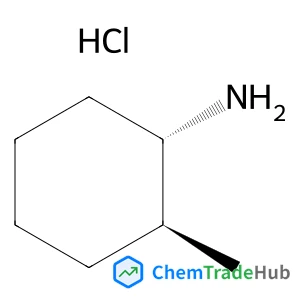
(1R,2R)-2-Methylcyclohexanamine hydrochloride (1:1)
CAS Number:
39558-31-1
Molecular Formula:
C7H16ClN
Recommended Suppliers





Disclaimer
This page provides academic journal information for reference and research purposes only. We are not affiliated with any journal publishers and do not handle publication submissions. For publication-related inquiries, please contact the respective journal publishers directly.
If you notice any inaccuracies in the information displayed, please contact us at support@chemtradehub.com. We will promptly review and address your concerns.