












Conjugated microporous copolymer networks with enhanced gas adsorption
Literature Information
Publication Date
2015-03-10
DOI
10.1039/C5PY00295H
Impact Factor
5.582
Authors
Miao Yu, Xiaoyan Wang, Xiao Yang, Yang Zhao, Jia-Xing Jiang
View Original
Abstract
A series of copolymerized conjugated microporous polymers (CP-CMPs) was synthesized by Suzuki cross-coupling copolymerization of 1,4-benzene diboronic acid with different ratios of comonomers of 1,3,6,8-tetrabromopyrene and 1,3,6,8-tetrabromocarbazole. These CP-CMPs are stable in common organic solvents and are thermally stable. The ratio of comonomers has a large effect on the pore properties of these CP-CMPs, such as the apparent Brunauer–Emmett–Teller (BET) specific surface area, micropore surface area, and micropore volume. CP-CMP5 copolymerized with 60 mol% 1,3,6,8-tetrabromocarbazole shows a high BET specific surface area of up to 2241 m2 g−1 and a high CO2 uptake of 4.57 mmol g−1 (1.13 bar/273 K) with a H2 uptake of 2.24 wt% (1.13 bar/77.3 K). These results demonstrate that copolymerization is an efficient strategy for tuning the pore properties of microporous organic polymers, and is promising for producing other microporous organic polymers with high porosity and CO2 uptake.
Recommended Journals
Related Literature
Correction: Hydrazone-Pd-catalyzed direct intermolecular reaction of o-alkynylphenols with allylic acetates
Kohei Watanabe, Eri Ishikawa, Chihiro Masuda
2018-07-11
Correction
DOI: 10.1039/C8OB90094A
C–H alkylation reactions of indoles mediated by Pd(ii) and norbornene: applications and recent developments
Marcus Wegmann, Michael Henkel, Thorsten Bach
2018-07-04
Review Article
DOI: 10.1039/C8OB01025K
Rhodol-based thallium sensors for cellular imaging of potassium channel activity
Brendan F. Dutter, Anna Ender
2018-07-20
Communication
DOI: 10.1039/C8OB01098F
Computational study of the mechanism of amide bond formation via CS2-releasing 1,3-acyl transfer
Yuan-Ye Jiang, Tian-Tian Liu, Xue Sun, Zhong-Yan Xu, Xia Fan, Ling Zhu, Siwei Bi
2018-07-25
Paper
DOI: 10.1039/C8OB01338A
A silver catalyzed domino reaction of N-cyanamide alkenes and 1,3-dicarbonyls for the synthesis of quinazolinones
Gang Xu, Chaodi Tong, Sunliang Cui, Liyan Dai
2018-07-25
Paper
DOI: 10.1039/C8OB01252K
The discovery of a freezing-induced peptide ligation during the total chemical synthesis of human interferon-ε
Yin-He Yang, Bin Di, Da-Song Yang
2018-06-25
Communication
DOI: 10.1039/C8OB01365A
Carbenium ion formation by fragmentation of electrochemically generated oxonium ions
Anna Lielpetere, Aigars Jirgensons
2018-06-27
Communication
DOI: 10.1039/C8OB01339J
Asymmetric organocatalytic synthesis of chiral 3,3-disubstituted oxindoles via a 1,6-conjugate addition reaction
Abdul Rahman, Qiaoxia Zhou, Xufeng Lin
2018-06-28
Paper
DOI: 10.1039/C8OB01169A
You might also like
Compound Q&A
What are the main uses of 4-Nitrophenyl phosphate disodium salt hexahydrate (CAS: 333338-18-4)?
4-Nitrophenyl phosphate disodium salt hexahydrate is primarily used as a substra...
333338-18-44-Nitrophenyl phosph...
Compound Q&A
What are the main uses of 2-(Trifluoromethyl)-1,3-oxazole-4-carboxylic Acid (CAS: 1060816-01-4)?
2-(Trifluoromethyl)-1,3-oxazole-4-carboxylic Acid (CAS: 1060816-01-4) is widely ...
1060816-01-42-(Trifluoromethyl)-...
Compound Q&A
How should 2-Fluoro-4-biphenylcarboxylic acid (CAS: 137045-30-8) be stored?
2-Fluoro-4-biphenylcarboxylic acid should be stored in a cool, dry place at room...
137045-30-82-Fluoro-4-biphenylc...
Compound Q&A
What industries use Prednisolone-21-Carboxylic Acid (CAS: 61549-70-0)?
Prednisolone-21-Carboxylic Acid is primarily used in the pharmaceutical industry...
61549-70-0Prednisolone-21-Carb...
Compound Q&A
How should 4-(Hydrazinomethyl)-1,2,3-benzenetriol (CAS: 3614-72-0) be stored?
4-(Hydrazinomethyl)-1,2,3-benzenetriol (CAS: 3614-72-0) should be stored in a co...
3614-72-04-(Hydrazinomethyl)-...
Compound Q&A
What industries use 4-Amino-1-methyl-1H-pyrazole-5-carboxylic acid hydrochloride (CAS: 92534-70-8)?
4-Amino-1-methyl-1H-pyrazole-5-carboxylic acid hydrochloride (CAS: 92534-70-8) i...
92534-70-84-Amino-1-methyl-1H-...
Compound Q&A
What regulatory guidelines apply to dehydropachymic acid (CAS: 77012-31-8)?
Dehydropachymic acid (CAS: 77012-31-8) is regulated by various agencies. It fall...
77012-31-8Dehydropachymic acid
Compound Q&A
What is the market or research trend for 6-[(2,2-Dimethylpropanoyl)amino]nicotinic acid (CAS: 898561-66-5)?
The market and research trends for 6-[(2,2-Dimethylpropanoyl)amino]nicotinic aci...
898561-66-56-[(2,2-Dimethylprop...
Compound Q&A
How should 1,10-Phenanthroline-2,9-dicarbaldehyde (CAS: 57709-62-3) be stored?
1,10-Phenanthroline-2,9-dicarbaldehyde should be stored in a cool, dry place awa...
57709-62-31,10-Phenanthroline-...
Compound Q&A
How is 5-Carbamoyl-11-oxo-10,11-dihydro-5H-dibenzo[b,f]azepin-10-yl acetate (CAS: 113952-21-9) typically synthesized?
5-Carbamoyl-11-oxo-10,11-dihydro-5H-dibenzo[b,f]azepin-10-yl acetate can be synt...
113952-21-95-Carbamoyl-11-oxo-1...
Source Journal
Polymer Chemistry

CiteScore:
8.6
Self-citation Rate:
7.3%
Articles per Year:
457
Polymer Chemistry welcomes submissions in all areas of polymer science that have a strong focus on macromolecular chemistry. Manuscripts may cover a broad range of fields, yet no direct application focus is required.
Recommended Compounds
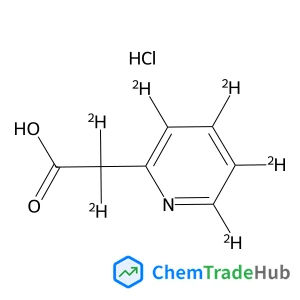
2,2-dideuterio-2-(3,4,5,6-tetradeuterio-2-pyridyl)acetic acid;hydrochloride
CAS Number:
1329799-67-8
Molecular Formula:
C7H2ClD6NO2
![(2E)-3-(3-Chlorophenyl)-N-{2-[4-(methylsulfonyl)-1-piperazinyl]-2-oxoethyl}acrylamide structure](https://static.chemtradehub.com/structs/250/2505001-54-5-c1e9.webp "(2E)-3-(3-Chlorophenyl)-N-{2-[4-(methylsulfonyl)-1-piperazinyl]-2-oxoethyl}acrylamide structure")
(2E)-3-(3-Chlorophenyl)-N-{2-[4-(methylsulfonyl)-1-piperazinyl]-2-oxoethyl}acrylamide
CAS Number:
2505001-54-5
Molecular Formula:
C16H20ClN3O4S
Recommended Suppliers




Disclaimer
This page provides academic journal information for reference and research purposes only. We are not affiliated with any journal publishers and do not handle publication submissions. For publication-related inquiries, please contact the respective journal publishers directly.
If you notice any inaccuracies in the information displayed, please contact us at support@chemtradehub.com. We will promptly review and address your concerns.