![Bis[(1,2,3,4,5-eta)-1-(diphenylphosphino)cyclopentadienyl]iron structure](https://static.chemtradehub.com/structs/121/12150-46-8-ecd2.webp "Bis[(1,2,3,4,5-eta)-1-(diphenylphosphino)cyclopentadienyl]iron structure")
Bis[(1,2,3,4,5-eta)-1-(diphenylphosphino)cyclopentadienyl]iron
CAS Number:
12150-46-8
Molecular Formula:
C34H28FeP2
Xinming Li, Xiaobei Zang, Kunlin Wang, Dan Xie
Hydrogen plays a crucial role in the chemical vapor deposition (CVD) growth of graphene. Here, we have revealed the roles of hydrogen in the two-step CVD growth of MoS2. Our study demonstrates that hydrogen acts as the following: (i) an inhibitor of the thermal-induced etching effect in the continuous film growth process; and (ii) a promoter of the desulfurization reaction by decreasing the S/Mo atomic ratio and the oxidation reaction of the obtained MoSx (0 < x < 2) films. A high hydrogen content of more than 100% in argon forms nano-sized circle-like defects and damages the continuity and uniformity of the film. Continuous MoS2 films with a high crystallinity and a nearly perfect S/Mo atomic ratio were finally obtained after sulfurization annealing with a hydrogen content in the range of 20%–80%. This insightful understanding reveals the crucial roles of hydrogen in the CVD growth of MoS2 and paves the way for the controllable synthesis of two-dimensional materials.
Guillermo Iván Guerrero-García, Enrique González-Tovar, Manuel Quesada-Pérez, Alberto Martín-Molina
DOI: 10.1039/C6CP03483G
Andranik Kazaryan, Rutger van Santen, Evert Jan Baerends
DOI: 10.1039/C5CP01812A
DOI: 10.1039/C5CP04272K
A. van Blaaderen, M. A. van Huis
DOI: 10.1039/C6CP03913H
Oleksandr I. Malyi, Priyadarshini Thiyam, Mathias Boström
DOI: 10.1039/C5CP02279G
Sudong Ben, Junhua Zhao, Timon Rabczuk
DOI: 10.1039/C5CP02802G
M. Jayakumar
DOI: 10.1039/C5CP02866C
Antonio Bauzá, Antonio Frontera
DOI: 10.1039/C6CP03862J
Rajamani Krishna
DOI: 10.1039/C5CP02726H
Liyang Luo, Ram B. Ambre, Sandeep B. Mane, Eric Wei-Guang Diau, Chen-Hsiung Hung
DOI: 10.1039/C5CP02367J
Ethyl 3-cyclohexylpropanoate is a clear, colorless to light yellow liquid with a...
Waste containing 2-(Hydroxymethyl)-5-(methoxycarbonyl)-6-methyl-4-(2-nitrophenyl...
Waste containing 2,4,6-Tris(pentafluoroethyl)-1,3,5-triazine (CAS: 858-46-8) sho...
When handling Chloroac-nle-oh (CAS: 56787-36-1), it is essential to wear appropr...
Ethyl 6-phenylimidazo[2,1-b][1,3]thiazole-3-carboxylate is primarily used in the...
Alternatives to alpha-(2-Bromophenyl)benzylamine (CAS: 55095-15-3) in synthesis ...
Waste containing 2-Chloro-5-methoxypyridine (CAS: 139585-48-1) should be managed...
1-(4-Methoxyphenyl)-2,5-dimethyl-1H-pyrrole (CAS: 5044-27-9) is used in various ...
There are alternative reagents and compounds that can be used in the synthesis o...
Tungsten(IV) oxide, also known as tungsten dioxide, is a chemical compound with ...
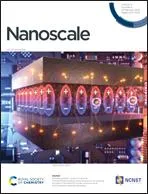
Nanoscale is a high-impact international journal, publishing high-quality research across nanoscience and nanotechnology. Nanoscale publishes a full mix of research articles on experimental and theoretical work, including reviews, communications, and full papers. Highly interdisciplinary, Nanoscale appeals to scientists, researchers and professionals interested in nanoscience and nanotechnology, quantum materials and quantum technology, including the areas of physics, chemistry, biology, medicine, materials, energy/environment, information technology, detection science, healthcare and drug discovery, and electronics. For publication in Nanoscale, papers must report high-quality reproducible new work that will be of significant general interest to the journal's wide international readership. Nanoscale is a collaborative venture between the Royal Society of Chemistry Publishing and a leading nanoscience research centre, the National Center for Nanoscience and Technology (NCNST) in Beijing, China. image block The journal publishes weekly issues, complementing and building on the nano content already published across the Royal Society of Chemistry Publishing journal portfolio. Since its launch in late 2009, Nanoscale has established itself as a platform for high-quality, cross-community research that bridges the various disciplines involved with nanoscience and nanotechnology, publishing important research from leading international research groups.