













Macro and nano scale modelling of water–water interactions at ambient and low temperature: relaxation and residence times
Literature Information
Publication Date
2016-01-12
DOI
10.1039/C5CP06791J
Impact Factor
3.676
Authors
Diego Prada-Gracia
View Original
Abstract
The decay dynamics of ambient and low temperature liquid water has been investigated through all-atom molecular dynamics simulations, residence times calculations and time correlation functions from 300 K down to 243 K. Those simulations replicate the experimental value of the self-diffusion constant as a function of temperature by tuning the damping factor of the Langevin equation of motion. A stretched exponential function exp[−(t/τ)β] has been found to properly describe the relaxation of residence times calculated at different temperatures for solvent molecules in a nanodrop of free water modelled as a sphere of nanometric dimensions. As the temperature goes down the decay time τ increases showing a divergence at Ts = 227 ± 3 K. The temperature independence of the dimensionless stretched exponent β = 0.59 ± 0.01 suggests the presence of, not a characteristic relaxation time (since β ≠ 1), but a distribution of decay times that also holds at low temperature. An explanation for such heterogeneity can be found at the nanoscopic level. Moreover it can be concluded that the distribution of times already reported for the dynamics of water surrounding proteins (β ≤ 0.5) can not be exclusively due to the presence of the biomolecule itself since isolated water also exhibits such behaviour. The above reported Ts and β values quantitatively reproduce experimental data.
Recommended Journals
Related Literature
Construction of semi-fluorinated polyimides with perfluorocyclobutyl aryl ether-based side chains
Mingchen Jia, Mingtao Zhou, Yongjun Li, Guolin Lu, Xiaoyu Huang
2018-01-24
Paper
DOI: 10.1039/C8PY00004B
SET-LRP mediated by TREN in biphasic water–organic solvent mixtures provides the most economical and efficient process
Adrian Moreno, Silvia Grama, Tong Liu, Marina Galià, Virgil Percec
2017-11-24
Paper
DOI: 10.1039/C7PY01841J
Versatile preparation of surface-skinless particles of epoxy resin-based monoliths using a well-defined diblock copolymer surfactant
Keita Sakakibara, Norio Ishizuka, Atsushi Goto, Yoshinobu Tsujii
2017-12-05
Paper
DOI: 10.1039/C7PY01682D
A displacement-type fluorescent probe reveals active species in the coordinative polymerization of olefins
Chao Yu, Pengfei Zhang, Fei Gao, Shaowen Zhang, Xiaofang Li
2017-12-26
Paper
DOI: 10.1039/C7PY01915G
Facile synthesis of ROS-responsive biodegradable main chain poly(carbonate-thioether) copolymers
Bingkun Yan, Yan Zhang, Chao Wei, Yue Xu
2018-01-17
Paper
DOI: 10.1039/C7PY01908D
Ethylene/propylene copolymerization catalyzed by half-titanocenes containing monodentate anionic nitrogen ligands: effect of ligands on catalytic behaviour and structure of copolymers
Zhi-Qian Zhang, Jun-Teng Qu, Shu Zhang, Qiu-Ping Miao, Yi-Xian Wu
2017-12-04
Paper
DOI: 10.1039/C7PY01807J
Advantages and limitations of diisocyanates in intramolecular collapse
Feng Wang, Charles E. Diesendruck
2017-05-26
Paper
DOI: 10.1039/C7PY00712D
Photo-reversible bonding and cleavage of block copolymers
Siham Telitel, Eva Blasco, Lukas D. Bangert
2017-06-16
Paper
DOI: 10.1039/C7PY00843K
Novel conjugated polymers based on bis-dithieno[3,2-b;2′,3′-d]pyrrole vinylene donor and diketopyrrolopyrrole acceptor: side chain engineering in organic field effect transistors
Song-Di Lin, Chih-Hao Chin, Wei-Tsung Chuang, Chain-Shu Hsu
2017-11-17
Paper
DOI: 10.1039/C7PY01340J
You might also like
Compound Q&A
What precautions should be taken when handling 4-(2-Furylmethyl)thiomorpholine 1,1-dioxide (CAS: 79206-94-3)?
When handling 4-(2-Furylmethyl)thiomorpholine 1,1-dioxide (CAS: 79206-94-3), it ...
79206-94-34-(2-Furylmethyl)thi...
Compound Q&A
What precautions should be taken when handling 4-Chloro-N-[2-(4-morpholinyl)ethyl]benzamide (CAS: 71320-77-9)?
When handling 4-Chloro-N-[2-(4-morpholinyl)ethyl]benzamide (CAS: 71320-77-9), it...
71320-77-94-Chloro-N-[2-(4-mor...
Compound Q&A
How should waste containing 2-[2-(2-Methoxyethoxy)ethoxy]ethyl 4-methylbenzenesulfonate (CAS: 62921-74-8) be handled?
Waste containing this compound (CAS: 62921-74-8) should be handled according to ...
62921-74-82-[2-(2-Methoxyethox...
Compound Q&A
How should waste containing (S)-Methyl 2-amino-3-cyclohexylpropanoate be handled?
Waste containing (S)-Methyl 2-amino-3-cyclohexylpropanoate should be collected i...
40056-18-6(S)-Methyl 2-amino-3...
Compound Q&A
How is 5-({4-[(2S,4R)-4-Hydroxy-2-methyltetrahydro-2H-pyran-4-yl]-2-thienyl}sulfanyl)-1-methyl-1,3-dihydro-2H-indol-2-one (CAS: 166882-70-8) typically synthesized?
This compound can be synthesized using a multi-step process involving the conjug...
166882-70-85-({4-[(2S,4R)-4-Hyd...
Compound Q&A
Are there alternatives to (2E)-3-(3,4-Dichlorophenyl)acrylic acid (CAS: 7312-27-8) in synthesis?
There are several alternatives to (2E)-3-(3,4-Dichlorophenyl)acrylic acid in syn...
7312-27-8(2E)-3-(3,4-Dichloro...
Compound Q&A
How should Ethyl 6-(2-nitrophenyl)imidazo[2,1-b][1,3]thiazole-3-carboxylate (CAS: 925437-84-9) be stored?
Ethyl 6-(2-nitrophenyl)imidazo[2,1-b][1,3]thiazole-3-carboxylate (CAS: 925437-84...
925437-84-9Ethyl 6-(2-nitrophen...
Compound Q&A
How should waste containing 2-(1,3-Thiazol-2-yl)ethanamine (CAS: 18453-07-1) be handled?
Waste containing 2-(1,3-Thiazol-2-yl)ethanamine (CAS: 18453-07-1) should be coll...
18453-07-12-(1,3-Thiazol-2-yl)...
Compound Q&A
How is Methyl 5-iodo-2-methylbenzoate (CAS: 103440-54-6) typically synthesized?
Methyl 5-iodo-2-methylbenzoate can be synthesized through the iodination of meth...
103440-54-6Methyl 5-iodo-2-meth...
Compound Q&A
How is 5-Chloro[1,2,4]triazolo[1,5-a]pyridine (CAS: 1427399-34-5) typically synthesized?
5-Chloro[1,2,4]triazolo[1,5-a]pyridine is commonly synthesized via the condensat...
1427399-34-55-Chloro[1,2,4]triaz...
Source Journal
Physical Chemistry Chemical Physics

CiteScore:
5.5
Self-citation Rate:
10.3%
Articles per Year:
3036
Physical Chemistry Chemical Physics (PCCP) is an international journal co-owned by 19 physical chemistry and physics societies from around the world. This journal publishes original, cutting-edge research in physical chemistry, chemical physics and biophysical chemistry. To be suitable for publication in PCCP, articles must include significant innovation and/or insight into physical chemistry; this is the most important criterion that reviewers and Editors will judge against when evaluating submissions. The journal has a broad scope and welcomes contributions spanning experiment, theory, computation and data science. Topical coverage includes spectroscopy, dynamics, kinetics, statistical mechanics, thermodynamics, electrochemistry, catalysis, surface science, quantum mechanics, quantum computing and machine learning. Interdisciplinary research areas such as polymers and soft matter, materials, nanoscience, energy, surfaces/interfaces, and biophysical chemistry are welcomed if they demonstrate significant innovation and/or insight into physical chemistry. Joined experimental/theoretical studies are particularly appreciated when complementary and based on up-to-date approaches.
Recommended Compounds
![1,2-Diphenyl-4-[2-(phenylsulfinyl)ethyl]-3,5-pyrazolidinedione structure](https://static.chemtradehub.com/structs/57-/57-96-5-efcc.webp "1,2-Diphenyl-4-[2-(phenylsulfinyl)ethyl]-3,5-pyrazolidinedione structure")
1,2-Diphenyl-4-[2-(phenylsulfinyl)ethyl]-3,5-pyrazolidinedione
CAS Number:
57-96-5
Molecular Formula:
C23H20N2O3S
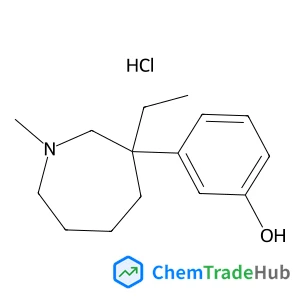
3-(3-Ethyl-1-methyl-3-azepanyl)phenol hydrochloride (1:1)
CAS Number:
59263-76-2
Molecular Formula:
C15H24ClNO


Recommended Suppliers





Disclaimer
This page provides academic journal information for reference and research purposes only. We are not affiliated with any journal publishers and do not handle publication submissions. For publication-related inquiries, please contact the respective journal publishers directly.
If you notice any inaccuracies in the information displayed, please contact us at support@chemtradehub.com. We will promptly review and address your concerns.