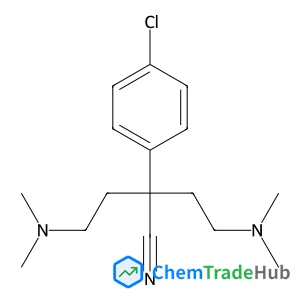
2-(4-Chlorophenyl)-4-(dimethylamino)-2-(2-(dimethylamino)ethyl)butanenitrile
CAS Number:
1246816-57-8
Molecular Formula:
C16H24ClN3
Lu Zhou, Jun Zhou, Zhao Feng, Fuyan Wang, Shushen Xie, Shizhong Bu
Based on a sandwich structure consisting of nano-Si immune probes and a SiC@Ag SERS-active immune substrate, a kind of ultra-sensitive immunoassay protocol is presented to detect tumor markers in human serum. The nano-Si immune probes were prepared by immobilizing the detecting antibodies onto the surfaces of SiO2-coated Si nanoparticles (NPs) which were modified with 3-(aminopropyl)trimethoxysilane, and the SiC@Ag SERS-active immune substrates were prepared by immobilizing the captured antibodies on Ag film sputtered on SiC sandpaper. To the best of our knowledge, it is the first time that Si NPs are directly used as Raman tags in an immunoassay strategy. And, the SiC@Ag SERS-active substrates exhibit excellent surface enhanced Raman scattering (SERS) performances with an enhancement factor of ∼105, owing to the plasmonic effect of the Ag film on the rough surface of the SiC sandpaper. In our experiments, the sandwich immunoassay structure has been successfully applied to detect prostate specific antigen (PSA), α-fetoprotein (AFP) and carbohydrate antigen 19-9 (CA19-9) in a human serum sample and the limit of detections are as low as 1.79 fg mL−1, 0.46 fg mL−1 and 1.3 × 10⁻³ U mL−1, respectively. It reveals that the proposed immunoassay protocol has demonstrated a high sensitivity for tumor markers in human serum and a potential practicability in biosensing and clinical diagnostics.

Lab on a Chip

Current Pharmaceutical Biotechnology

Environmental Toxicology and Pharmacology

European Journal of Organic Chemistry

Angewandte Chemie International Edition

Nature Reviews Drug Discovery

Mini-Reviews in Medicinal Chemistry

Physical Chemistry Chemical Physics

Faraday Discussions

Advanced Engineering Materials
Maxim V. Ivanov, Denan Wang, Depeng Zhang, Rajendra Rathore, Scott A. Reid
DOI: 10.1039/C8CP02936A
Blas P. Uberuaga, Romain Perriot, Ghanshyam Pilania
DOI: 10.1039/C8CP07597B
Zonghao Shen, John A. Kilner, Stephen J. Skinner
DOI: 10.1039/C8CP02797H
Fehmi Khadri, Kamel Hammami
DOI: 10.1039/C8CP07409G
Mário R. G. Marques, Jakob Wolff, Conrad Steigemann, Miguel A. L. Marques
DOI: 10.1039/C8CP05771K
Cristina García-Iriepa, Madjid Zemmouche, Isabelle Navizet
DOI: 10.1039/C8CP07352J
Junhui Weng, Shang-Peng Gao
DOI: 10.1039/C8CP04743J
Jiebo Li, Yufan Zhang, Junrong Zheng
DOI: 10.1039/C8CP05932B
Clément Maheu, Luis Cardenas, Eric Puzenat, Pavel Afanasiev, Christophe Geantet
DOI: 10.1039/C8CP04614J
Bastiaan Molleman, Tjisse Hiemstra
DOI: 10.1039/C8CP02346H
When handling 4-(2-Furylmethyl)thiomorpholine 1,1-dioxide (CAS: 79206-94-3), it ...
When handling 4-Chloro-N-[2-(4-morpholinyl)ethyl]benzamide (CAS: 71320-77-9), it...
Waste containing this compound (CAS: 62921-74-8) should be handled according to ...
Waste containing (S)-Methyl 2-amino-3-cyclohexylpropanoate should be collected i...
This compound can be synthesized using a multi-step process involving the conjug...
There are several alternatives to (2E)-3-(3,4-Dichlorophenyl)acrylic acid in syn...
Ethyl 6-(2-nitrophenyl)imidazo[2,1-b][1,3]thiazole-3-carboxylate (CAS: 925437-84...
Waste containing 2-(1,3-Thiazol-2-yl)ethanamine (CAS: 18453-07-1) should be coll...
Methyl 5-iodo-2-methylbenzoate can be synthesized through the iodination of meth...
5-Chloro[1,2,4]triazolo[1,5-a]pyridine is commonly synthesized via the condensat...

Analyst publishes analytical and bioanalytical research that reports premier fundamental discoveries and inventions, and the applications of those discoveries, unconfined by traditional discipline barriers.