












Equilibrium and dynamical properties of polymer chains in random medium filled with randomly distributed nano-sized fillers
Literature Information
Publication Date
2015-11-06
DOI
10.1039/C5CP06189J
Impact Factor
3.676
Authors
Chao-Yang Li, Meng-Bo Luo, Jian-Hua Huang, Hong Li
View Original
Abstract
The effect of randomly distributed nano-sized fillers on the equilibrium and dynamical properties of linear polymers is studied by using off-lattice Monte Carlo simulation. Lennard-Jones interactions between polymers and fillers are considered. Results show that the statistical dimensions and dynamical diffusion of polymer are dependent on the polymer–filler interaction strength εpf. The mean square radius of gyration 〈RG2〉 shows a minimum at a critical polymer–filler interaction εpf*. The value of εpf* decreases with the increase in the polymer length or the concentration of fillers. The exponent ν in 〈RG2〉 ∼ N2ν is a typical value of self-avoiding walking chain at small εpf but it increases sharply to a bigger value at εpf > εpf*. The mean square displacement decreases with the increase in εpf. Moreover, the normal diffusion of the polymer at weak interactions changes to subnormal diffusion at moderate and strong attractions. We find that polymers diffuse in dilute filler regions at weak attraction and diffuse in dense filler regions at strong attraction.
Related Literature
Rare earth oxide based electrocatalysts: synthesis, properties and applications
Yong Jiang, Zhong Liang, Qian Zhang, Yaping Du
2023-12-18
Review Article
DOI: 10.1039/D3CS00708A
Stimuli-responsive synthetic helical polymers
María Lago-Silva, Manuel Fernández-Míguez, Rafael Rodríguez, Emilio Quiñoá, Félix Freire
2023-12-18
Review Article
DOI: 10.1039/D3CS00952A
Metal nitrides for seawater electrolysis
Huashuai Hu, Xiaoli Wang, J. Paul Attfield, Minghui Yang
2023-11-29
Review Article
DOI: 10.1039/D3CS00717K
Photochemical halogen-bonding assisted carbothiophosphorylation reactions of alkenyl and 1,3-dienyl bromides
Helena F. Piedra, Victoria Gebler, Carlos Valdés, Manuel Plaza
2023-10-30
Edge Article
DOI: 10.1039/D3SC05263J
Benzoyldiisopropylchlorosilane: a visible light photocleavable alcohol protecting group
Florian Lind, Kirill Markelov, Armido Studer
2023-10-25
Edge Article
DOI: 10.1039/D3SC04975B
Advances in glycoside and oligosaccharide synthesis
Conor J. Crawford
2023-10-13
Review Article
DOI: 10.1039/D3CS00321C
A CuICoII cryptate for the visible light-driven reduction of CO2
Julia Jökel, Esma Birsen Boydas, Joël Wellauer, Oliver S. Wenger, Michael Römelt
2023-10-27
Edge Article
DOI: 10.1039/D3SC02679E
Chemical technology principles for selective bioconjugation of proteins and antibodies
Preeti Chauhan, Ragendu V., Mohan Kumar, Rajib Molla, Surya Dev Mishra, Sneha Basa, Vishal Rai
2023-12-14
Review Article
DOI: 10.1039/D3CS00715D
You might also like
Compound Q&A
How should waste containing 6-Chloro-5-(2'-hydroxy-3'-methoxy-4-biphenylyl)-3-(3-methoxyphenyl)-1H-pyrrolo[3,2-d]pyrimidine-2,4(3H,5H)-dione (CAS: 1346607-05-3) be handled?
Waste containing 6-Chloro-5-(2'-hydroxy-3'-methoxy-4-biphenylyl)-3-(3-methoxyphe...
1346607-05-36-Chloro-5-(2'-hydro...
Compound Q&A
What are the main uses of (3alpha,5alpha)-3-Hydroxypregnane-11,20-dione (CAS: 23930-19-0)?
(3alpha,5alpha)-3-Hydroxypregnane-11,20-dione is primarily used in the pharmaceu...
23930-19-0(3alpha,5alpha)-3-Hy...
Compound Q&A
What is the market or research trend for 4-Amino-6-chloro-2-pyridinecarboxylic acid (CAS: 546141-56-4)?
The market for 4-Amino-6-chloro-2-pyridinecarboxylic acid (CAS: 546141-56-4) is ...
546141-56-44-Amino-6-chloro-2-p...
Compound Q&A
Are there alternatives to (2-Benzoylethyl)trimethylammonium chloride (CAS: 24472-88-6) in synthesis?
Alternatives to (2-Benzoylethyl)trimethylammonium chloride (CAS: 24472-88-6) in ...
24472-88-6(2-Benzoylethyl)trim...
Compound Q&A
Is N-[4-Nitro-3-(trifluoromethyl)phenyl]acetamide (CAS: 393-12-4) safe?
N-[4-Nitro-3-(trifluoromethyl)phenyl]acetamide (CAS: 393-12-4) is generally safe...
393-12-4N-[4-Nitro-3-(triflu...
Compound Q&A
Are there alternatives to [(4R,5R,6S)-5-hydroxy-10-imino-3,7-dioxa-1,9-diazatricyclo[6.4.0.02,6]dodeca-8,11-dien-4-yl]methyl dihydrogen phosphate (CAS: 39679-56-6) in synthesis?
Alternative reagents such as other phosphates or similar functional groups can b...
39679-56-6[(4R,5R,6S)-5-hydrox...
Compound Q&A
Are there alternatives to N,N'-Bis(3-aminopropyl)-1,3-propanediamine (CAS: 4605-14-5) in synthesis?
There are alternatives to N,N'-Bis(3-aminopropyl)-1,3-propanediamine (CAS: 4605-...
4605-14-5N,N'-Bis(3-aminoprop...
Compound Q&A
What precautions should be taken when handling Aluminium trihexadecanoate (CAS: 555-35-1)?
When handling Aluminium trihexadecanoate, it is important to use appropriate per...
555-35-1Aluminium trihexadec...
Compound Q&A
What is (1,1-Dioxido-3-oxo-1,2-benzothiazol-2(3H)-yl)acetic acid (CAS: 52188-11-1)?
(1,1-Dioxido-3-oxo-1,2-benzothiazol-2(3H)-yl)acetic acid is a chemical compound ...
52188-11-1(1,1-Dioxido-3-oxo-1...
Compound Q&A
Are there alternatives to 5,5-dimethyloxolan-2-one (CAS: 3123-97-5) in synthesis?
Several alternatives to 5,5-dimethyloxolan-2-one (CAS: 3123-97-5) can be used in...
3123-97-55,5-dimethyloxolan-2...
Source Journal
Physical Chemistry Chemical Physics

CiteScore:
5.5
Self-citation Rate:
10.3%
Articles per Year:
3036
Physical Chemistry Chemical Physics (PCCP) is an international journal co-owned by 19 physical chemistry and physics societies from around the world. This journal publishes original, cutting-edge research in physical chemistry, chemical physics and biophysical chemistry. To be suitable for publication in PCCP, articles must include significant innovation and/or insight into physical chemistry; this is the most important criterion that reviewers and Editors will judge against when evaluating submissions. The journal has a broad scope and welcomes contributions spanning experiment, theory, computation and data science. Topical coverage includes spectroscopy, dynamics, kinetics, statistical mechanics, thermodynamics, electrochemistry, catalysis, surface science, quantum mechanics, quantum computing and machine learning. Interdisciplinary research areas such as polymers and soft matter, materials, nanoscience, energy, surfaces/interfaces, and biophysical chemistry are welcomed if they demonstrate significant innovation and/or insight into physical chemistry. Joined experimental/theoretical studies are particularly appreciated when complementary and based on up-to-date approaches.
Recommended Compounds

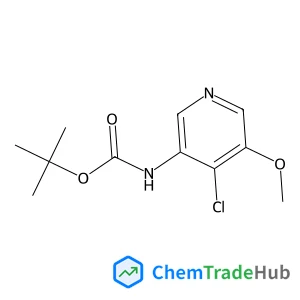
tert-Butyl 4-chloro-5-methoxypyridin-3-ylcarbamate
CAS Number:
1045858-17-0
Molecular Formula:
C11H15ClN2O3
![4-{[4-(Trifluoromethoxy)benzyl]oxy}benzonitrile structure](https://static.chemtradehub.com/structs/103/1036629-63-6-2172.webp "4-{[4-(Trifluoromethoxy)benzyl]oxy}benzonitrile structure")
4-{[4-(Trifluoromethoxy)benzyl]oxy}benzonitrile
CAS Number:
1036629-63-6
Molecular Formula:
C15H10F3NO2
Recommended Suppliers





Disclaimer
This page provides academic journal information for reference and research purposes only. We are not affiliated with any journal publishers and do not handle publication submissions. For publication-related inquiries, please contact the respective journal publishers directly.
If you notice any inaccuracies in the information displayed, please contact us at support@chemtradehub.com. We will promptly review and address your concerns.