












Dynamic and static behavior of the H⋯π and E⋯π interactions in EH2 adducts of benzene π-system (E = O, S, Se and Te), elucidated by QTAIM dual functional analysis
Literature Information
Publication Date
2016-01-05
DOI
10.1039/C5CP06062A
Impact Factor
3.676
Authors
Satoko Hayashi, Yuji Sugibayashi, Waro Nakanishi
View Original
Abstract
Dynamic and static behavior of the interactions in the EH2 adducts of a benzene π-system (E = O, S, Se and Te) is elucidated by applying QTAIM-DFA (QTAIM dual functional analysis). Two types of H-*-π and E-*-π interactions are detected in the adducts, where the asterisk (*) emphasizes the existence of the bond critical point (BCP) on the interaction in question. Total electron energy densities Hb(rc) are plotted versus Hb(rc) − Vb(rc)/2 [=(ℏ2/8m)∇2ρb(rc)] at BCPs in QTAIM-DFA, where Vb(rc) are the potential energy densities at BCPs. Data from the fully optimized structures are analyzed by polar (R, θ) coordinate representation. Each plot for an interaction, containing data from the perturbed structures with those of the fully optimized one, shows a specific curve, which provides important information. The plot is expressed by (θp, κp): θp corresponds to the tangent line for the plot and κp is the curvature. θ and θp are measured from the y-axis and y-direction, respectively. Moreover, (R, θ) corresponds to the static nature, (θp, κp) represents the dynamic nature of interactions. While θ classifies the interaction in question, θp characterizes it. Both values are less than 90° for all H-*-π and E-*-π interactions examined in this study; therefore, they are all classified by the pure closed-shell interactions and predicted to have the character of vdW nature. However, it is suggested that E-*-π has the nature of the stronger interaction than the case of H-*-π for dynamic behavior in the same species evaluated at the MP2 and M06-2X levels. The nature of the interactions is well analyzed and specified by applying QTAIM-DFA.
Recommended Journals
Related Literature
One-pot combination of enzyme and Pd nanoparticle catalysis for the synthesis of enantiomerically pure 1,2-amino alcohols
Joerg H. Schrittwieser, Francesca Coccia, Selin Kara, Barbara Grischek, Wolfgang Kroutil, Nicola d'Alessandro, Frank Hollmann
2013-09-11
Paper
DOI: 10.1039/C3GC41666F
Palladium supported on a magnetic microgel: an efficient and recyclable catalyst for Suzuki and Heck reactions in water
Jianhua Yang, Dongfang Wang, Wendong Liu, Xi Zhang, Fengling Bian, Wei Yu
2013-09-18
Paper
DOI: 10.1039/C3GC40941D
Bridging racemic lactate esters with stereoselective polylactic acid using commercial lipase catalysis
Pieter Van Wouwe, Michiel Dusselier, Aurelie Basiç, Bert F. Sels
2013-08-14
Paper
DOI: 10.1039/C3GC41457D
Depolymerisation of condensed tannins in ethanol as a gateway to biosourced phenolic synthons
Chahinez Aouf, Eric Dubreucq, Hélène Fulcrand
2013-08-23
Paper
DOI: 10.1039/C3GC41281D
Self-healable polymer networks based on the cross-linking of epoxidised soybean oil by an aqueous citric acid solution
Facundo I. Altuna, Valeria Pettarin, Roberto J. J. Williams
2013-09-09
Paper
DOI: 10.1039/C3GC41384E
An efficient palladium catalyst on bentonite for Suzuki–Miyaura reaction at room temperature
Guodong Ding, Weitao Wang, Tao Jiang, Buxing Han
2013-09-10
Paper
DOI: 10.1039/C3GC41469H
Productive sugar isomerization with highly active Sn in dealuminated β zeolites
Jan Dijkmans, Dries Gabriëls, Michiel Dusselier, Filip de Clippel, Pieter Vanelderen, Kristof Houthoofd, Annelies Malfliet, Yiannis Pontikes, Bert F. Sels
2013-08-02
Paper
DOI: 10.1039/C3GC41239C
Removal of platinum from water by precipitation or liquid–liquid extraction and separation from gold using ionic liquids
Sébastien Génand-Pinaz, Nicolas Papaiconomou, Jean-Marc Leveque
2013-07-02
Paper
DOI: 10.1039/C3GC40557E
Sodium salt effect on hydrothermal carbonization of biomass: a catalyst for carbon-based nanostructured materials for lithium-ion battery applications
Jin-Bum Park
2013-08-14
Communication
DOI: 10.1039/C3GC40480C
You might also like
Compound Q&A
What are the main uses of 1-(3-Aminophenyl)-3-[(3R)-1-(3,3-dimethyl-2-oxobutyl)-2-oxo-5-(2-pyridinyl)-2,3-dihydro-1H-1,4-benzodiazepin-3-yl]urea (CAS: 155412-88-7)?
This compound is mainly used as an intermediate in the synthesis of antipsychoti...
155412-88-71-(3-Aminophenyl)-3-...
Compound Q&A
How should waste containing 1-(D-Ribofuranosyl)-1,4-dihydro-3-pyridinecarboxamide (CAS: 19132-12-8) be handled?
Waste containing 1-(D-Ribofuranosyl)-1,4-dihydro-3-pyridinecarboxamide (CAS: 191...
19132-12-81-(D-Ribofuranosyl)-...
Compound Q&A
What regulatory guidelines apply to 2-Methyl-2-propanyl 3-bromo-3-(hydroxymethyl)-1-azetidinecarboxylate (CAS: 2007919-81-3)?
2-Methyl-2-propanyl 3-bromo-3-(hydroxymethyl)-1-azetidinecarboxylate (CAS: 20079...
2007919-81-32-Methyl-2-propanyl ...
Compound Q&A
What is N-(4-Chloro-2-pyridinyl)acetamide (CAS: 245056-66-0)?
N-(4-Chloro-2-pyridinyl)acetamide (CAS: 245056-66-0) is a chemical compound with...
245056-66-0N-(4-Chloro-2-pyridi...
Compound Q&A
What is 5-Chloro-2-hydroxybenzoic acid (CAS: 321-14-2)?
5-Chloro-2-hydroxybenzoic acid, also known as 5-chlorosalicylic acid, is an arom...
321-14-25-Chloro-2-hydroxybe...
Compound Q&A
What precautions should be taken when handling 1,1-Dichloro-1-fluoroethane (CAS: 1717-00-6)?
When handling 1,1-Dichloro-1-fluoroethane (CAS: 1717-00-6), it is important to u...
1717-00-61,1-Dichloro-1-fluor...
Compound Q&A
What are the physical and chemical properties of Fmoc-(2S,3R)-3-phenylpyrrolidine-2-carboxylic acid (CAS: 281655-32-1)?
Fmoc-(2S,3R)-3-phenylpyrrolidine-2-carboxylic acid is a white crystalline solid ...
281655-32-1Fmoc-(2S,3R)-3-pheny...
Compound Q&A
What are the main uses of 4-Amino-5-bromo-2-pyridinecarboxylic acid (CAS: 1363381-01-4)?
4-Amino-5-bromo-2-pyridinecarboxylic acid is primarily used as a precursor in th...
1363381-01-44-Amino-5-bromo-2-py...
Compound Q&A
What precautions should be taken when handling (S)-tert-butyl 2-((2-(4-bromophenyl)-2-oxoethyl)carbamoyl)pyrrolidine-1-carboxylate (CAS: 1007881-98-2)?
Handling this compound should be done with personal protective equipment (PPE) i...
1007881-98-2(S)-tert-butyl 2-((2...
Compound Q&A
What precautions should be taken when handling 8-bromo-2,2-dimethyl-3,4-dihydro-2H-1,4-benzoxazin-3-one (CAS: 688363-73-7)?
When handling 8-bromo-2,2-dimethyl-3,4-dihydro-2H-1,4-benzoxazin-3-one, use prop...
688363-73-78-bromo-2,2-dimethyl...
Source Journal
Physical Chemistry Chemical Physics

CiteScore:
5.5
Self-citation Rate:
10.3%
Articles per Year:
3036
Physical Chemistry Chemical Physics (PCCP) is an international journal co-owned by 19 physical chemistry and physics societies from around the world. This journal publishes original, cutting-edge research in physical chemistry, chemical physics and biophysical chemistry. To be suitable for publication in PCCP, articles must include significant innovation and/or insight into physical chemistry; this is the most important criterion that reviewers and Editors will judge against when evaluating submissions. The journal has a broad scope and welcomes contributions spanning experiment, theory, computation and data science. Topical coverage includes spectroscopy, dynamics, kinetics, statistical mechanics, thermodynamics, electrochemistry, catalysis, surface science, quantum mechanics, quantum computing and machine learning. Interdisciplinary research areas such as polymers and soft matter, materials, nanoscience, energy, surfaces/interfaces, and biophysical chemistry are welcomed if they demonstrate significant innovation and/or insight into physical chemistry. Joined experimental/theoretical studies are particularly appreciated when complementary and based on up-to-date approaches.
Recommended Compounds
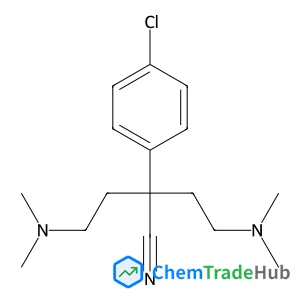
2-(4-Chlorophenyl)-4-(dimethylamino)-2-(2-(dimethylamino)ethyl)butanenitrile
CAS Number:
1246816-57-8
Molecular Formula:
C16H24ClN3
![Methyl 4-({[(2-methyl-2-propanyl)oxy]carbonyl}amino)bicyclo[2.2.2]octane-1-carboxylate structure](https://static.chemtradehub.com/structs/943/943845-74-7-b7e5.webp "Methyl 4-({[(2-methyl-2-propanyl)oxy]carbonyl}amino)bicyclo[2.2.2]octane-1-carboxylate structure")
Methyl 4-({[(2-methyl-2-propanyl)oxy]carbonyl}amino)bicyclo[2.2.2]octane-1-carboxylate
CAS Number:
943845-74-7
Molecular Formula:
C15H25NO4
![6-Benzyl-4,5,6,7-tetrahydro-1H-pyrazolo[3,4-c]pyridin-3(2H)-one structure](https://static.chemtradehub.com/structs/909/909187-64-0-f54f.webp "6-Benzyl-4,5,6,7-tetrahydro-1H-pyrazolo[3,4-c]pyridin-3(2H)-one structure")
6-Benzyl-4,5,6,7-tetrahydro-1H-pyrazolo[3,4-c]pyridin-3(2H)-one
CAS Number:
909187-64-0
Molecular Formula:
C13H15N3O
Recommended Suppliers




Disclaimer
This page provides academic journal information for reference and research purposes only. We are not affiliated with any journal publishers and do not handle publication submissions. For publication-related inquiries, please contact the respective journal publishers directly.
If you notice any inaccuracies in the information displayed, please contact us at support@chemtradehub.com. We will promptly review and address your concerns.