












Femtosecond predissociation dynamics of the methyl radical from the 3pz Rydberg state
Literature Information
Publication Date
2015-10-08
DOI
10.1039/C5CP05710H
Impact Factor
3.676
Authors
Garikoitz Balerdi, Joanne Woodhouse, Alexander Zanchet, Rebeca de Nalda, María L. Senent, Alberto García-Vela, Luis Bañares
View Original
Abstract
The real time dynamics of electronic predissociation of the CH3 radical (and its deuterated variant CD3) from selected vibrational states of the 3pz Rydberg state have been measured for the first time using a novel methodology based on a femtosecond three-color experiment to generate, two-photon excite and ionize methyl radicals as a function of time in combination with velocity map imaging detection. Subpicosecond lifetimes have been measured, showing a decreasing trend as vibrational excitation in the symmetric stretch and bending umbrella modes increases for both species. High-level ab initio calculations have been carried out in order to elucidate the CH3 3pz predissociation mechanism and support the lifetime measurements. The observed lifetimes are relevant for the understanding of the resonance enhanced multiphoton ionization spectroscopy of this radical.
Related Literature
Rare earth oxide based electrocatalysts: synthesis, properties and applications
Yong Jiang, Zhong Liang, Qian Zhang, Yaping Du
2023-12-18
Review Article
DOI: 10.1039/D3CS00708A
An efficient and mild oxidative approach from thiols to sulfonyl derivatives with DMSO/HBr
Hongye Wang, Zhaoting Li, Rongheng Dai, Ning Jiao, Song Song
2023-11-01
Edge Article
DOI: 10.1039/D3SC04945K
On-site airborne pathogen detection for infection risk mitigation
Andrew J. deMello, Maosheng Yao, Junji Cao
2023-10-26
Review Article
DOI: 10.1039/D3CS00417A
Unveiling practical considerations for reliable and standardized SERS measurements: lessons from a comprehensive review of oblique angle deposition-fabricated silver nanorod array substrates
Yiping Zhao, Amit Kumar, Yanjun Yang
2023-12-20
Review Article
DOI: 10.1039/D3CS00540B
Photo- and electro-chemical strategies for the activations of strong chemical bonds
Xianhai Tian, Yuliang Liu, Shahboz Yakubov, Jonathan Schütte, Shunsuke Chiba, Joshua P. Barham
2023-12-07
Review Article
DOI: 10.1039/D2CS00581F
Hybrid classical/machine-learning force fields for the accurate description of molecular condensed-phase systems
Moritz Thürlemann, Sereina Riniker
2023-10-31
Edge Article
DOI: 10.1039/D3SC04317G
Azaphosphinines and their derivatives
J. Nolan McNeill, Jeremy P. Bard, Darren W. Johnson, Michael M. Haley
2023-11-24
Review Article
DOI: 10.1039/D3CS00737E
Correction: A tutorial on asymmetric electrocatalysis
Jonas Rein, Samson B. Zacate, Kaining Mao, Song Lin
2023-12-05
Correction
DOI: 10.1039/D3CS90096G
Metal nitrides for seawater electrolysis
Huashuai Hu, Xiaoli Wang, J. Paul Attfield, Minghui Yang
2023-11-29
Review Article
DOI: 10.1039/D3CS00717K
You might also like
Compound Q&A
How should waste containing 6-Chloro-5-(2'-hydroxy-3'-methoxy-4-biphenylyl)-3-(3-methoxyphenyl)-1H-pyrrolo[3,2-d]pyrimidine-2,4(3H,5H)-dione (CAS: 1346607-05-3) be handled?
Waste containing 6-Chloro-5-(2'-hydroxy-3'-methoxy-4-biphenylyl)-3-(3-methoxyphe...
1346607-05-36-Chloro-5-(2'-hydro...
Compound Q&A
What are the main uses of (3alpha,5alpha)-3-Hydroxypregnane-11,20-dione (CAS: 23930-19-0)?
(3alpha,5alpha)-3-Hydroxypregnane-11,20-dione is primarily used in the pharmaceu...
23930-19-0(3alpha,5alpha)-3-Hy...
Compound Q&A
What is the market or research trend for 4-Amino-6-chloro-2-pyridinecarboxylic acid (CAS: 546141-56-4)?
The market for 4-Amino-6-chloro-2-pyridinecarboxylic acid (CAS: 546141-56-4) is ...
546141-56-44-Amino-6-chloro-2-p...
Compound Q&A
Are there alternatives to (2-Benzoylethyl)trimethylammonium chloride (CAS: 24472-88-6) in synthesis?
Alternatives to (2-Benzoylethyl)trimethylammonium chloride (CAS: 24472-88-6) in ...
24472-88-6(2-Benzoylethyl)trim...
Compound Q&A
Is N-[4-Nitro-3-(trifluoromethyl)phenyl]acetamide (CAS: 393-12-4) safe?
N-[4-Nitro-3-(trifluoromethyl)phenyl]acetamide (CAS: 393-12-4) is generally safe...
393-12-4N-[4-Nitro-3-(triflu...
Compound Q&A
Are there alternatives to [(4R,5R,6S)-5-hydroxy-10-imino-3,7-dioxa-1,9-diazatricyclo[6.4.0.02,6]dodeca-8,11-dien-4-yl]methyl dihydrogen phosphate (CAS: 39679-56-6) in synthesis?
Alternative reagents such as other phosphates or similar functional groups can b...
39679-56-6[(4R,5R,6S)-5-hydrox...
Compound Q&A
Are there alternatives to N,N'-Bis(3-aminopropyl)-1,3-propanediamine (CAS: 4605-14-5) in synthesis?
There are alternatives to N,N'-Bis(3-aminopropyl)-1,3-propanediamine (CAS: 4605-...
4605-14-5N,N'-Bis(3-aminoprop...
Compound Q&A
What precautions should be taken when handling Aluminium trihexadecanoate (CAS: 555-35-1)?
When handling Aluminium trihexadecanoate, it is important to use appropriate per...
555-35-1Aluminium trihexadec...
Compound Q&A
What is (1,1-Dioxido-3-oxo-1,2-benzothiazol-2(3H)-yl)acetic acid (CAS: 52188-11-1)?
(1,1-Dioxido-3-oxo-1,2-benzothiazol-2(3H)-yl)acetic acid is a chemical compound ...
52188-11-1(1,1-Dioxido-3-oxo-1...
Compound Q&A
Are there alternatives to 5,5-dimethyloxolan-2-one (CAS: 3123-97-5) in synthesis?
Several alternatives to 5,5-dimethyloxolan-2-one (CAS: 3123-97-5) can be used in...
3123-97-55,5-dimethyloxolan-2...
Source Journal
Physical Chemistry Chemical Physics

CiteScore:
5.5
Self-citation Rate:
10.3%
Articles per Year:
3036
Physical Chemistry Chemical Physics (PCCP) is an international journal co-owned by 19 physical chemistry and physics societies from around the world. This journal publishes original, cutting-edge research in physical chemistry, chemical physics and biophysical chemistry. To be suitable for publication in PCCP, articles must include significant innovation and/or insight into physical chemistry; this is the most important criterion that reviewers and Editors will judge against when evaluating submissions. The journal has a broad scope and welcomes contributions spanning experiment, theory, computation and data science. Topical coverage includes spectroscopy, dynamics, kinetics, statistical mechanics, thermodynamics, electrochemistry, catalysis, surface science, quantum mechanics, quantum computing and machine learning. Interdisciplinary research areas such as polymers and soft matter, materials, nanoscience, energy, surfaces/interfaces, and biophysical chemistry are welcomed if they demonstrate significant innovation and/or insight into physical chemistry. Joined experimental/theoretical studies are particularly appreciated when complementary and based on up-to-date approaches.
Recommended Compounds
![2-Methyl-2-propanyl [2-(2-oxa-6-azaspiro[3.3]hept-6-yl)ethyl]carbamate structure](https://static.chemtradehub.com/structs/141/1415562-38-7-c0a4.webp "2-Methyl-2-propanyl [2-(2-oxa-6-azaspiro[3.3]hept-6-yl)ethyl]carbamate structure")
2-Methyl-2-propanyl [2-(2-oxa-6-azaspiro[3.3]hept-6-yl)ethyl]carbamate
CAS Number:
1415562-38-7
Molecular Formula:
C12H22N2O3
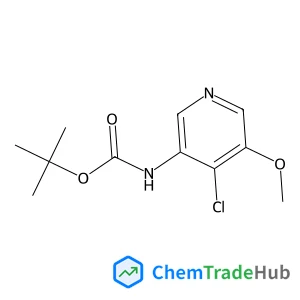
tert-Butyl 4-chloro-5-methoxypyridin-3-ylcarbamate
CAS Number:
1045858-17-0
Molecular Formula:
C11H15ClN2O3
Recommended Suppliers






Disclaimer
This page provides academic journal information for reference and research purposes only. We are not affiliated with any journal publishers and do not handle publication submissions. For publication-related inquiries, please contact the respective journal publishers directly.
If you notice any inaccuracies in the information displayed, please contact us at support@chemtradehub.com. We will promptly review and address your concerns.