












Mechanoelectrochemistry of PPy(DBS) from correlated characterization of electrochemical response and extensional strain
Literature Information
Publication Date
2015-11-13
DOI
10.1039/C5CP04945H
Impact Factor
3.676
Authors
Robert G. Northcutt, Vishnu-Baba Sundaresan
View Original
Abstract
This paper investigates nanostructured morphology-dependent charge storage and coupled mechanical strain of polypyrrole membranes doped with dodecylbenzenesulfonate (PPy(DBS)). Nanoscale features introduced in PPy(DBS) using phospholipid vesicles as soft-templates create a uniform and long-range order to the polymer morphology, and lead to higher specific capacitance. It is widely stated that nanostructured architecture offer reduced mechanical loading at higher charge capacities, but metrics and methods to precisely quantify coupled localized strains do not exist. Towards this goal, we demonstrate the use of scanning electrochemical microscope with shear force imaging hardware (SECM-SF) to precisely measure charge storage function and volumetric strain simultaneously, and define two metrics – filling efficiency and chemomechanical coupling coefficient to compare nanostructured morphologies and thicknesses. For thin membranes (smaller charge densities), planar and vesicle-templated membranes have comparable mechanoelectrochemical response. For thick membranes (0.4 to 0.8 C cm−2), a 15% increase in charge storage is associated with 50% reduction in extensional strain. These results allow for the formulation of rules to design nanostructured PPy(DBS)-based actuators and energy storage devices.
Recommended Journals
Related Literature
SF5- and SCF3-substituted tetrahydroquinoline compounds as potent bactericidal agents against multidrug-resistant persister Gram-positive bacteria
Neetu Dayal
2021-08-10
Research Article
DOI: 10.1039/D1MD00211B
Target 2035 – update on the quest for a probe for every protein
Susanne Müller, Suzanne Ackloo, Arij Al Chawaf, Hartmut Beck, Shaunna Beedie, Ulrich A. K. Betz, Gustavo Arruda Bezerra, Paul E. Brennan, David Brown, Peter J. Brown, Alex N. Bullock, Adrian J. Carter, Apirat Chaikuad, Mathilde Chaineau, Alessio Ciulli, Ian Collins, Jan Dreher, Kristina Edfeldt, Aled M. Edwards, Ursula Egner, Stephen M. Fuchs, Matthew D. Hall, Ingo V. Hartung, Alexander Hillisch, Stephen H. Hitchcock, Evert Homan, Natarajan Kannan, James R. Kiefer, Stefan Knapp, Milka Kostic, Stefan Kubicek, Andrew R. Leach, Sven Lindemann, Hisanori Matsui, Jordan L. Meier, Maurice Michel, Maxwell R. Morgan, Anke Mueller-Fahrnow, Dafydd R. Owen, Benjamin G. Perry, Saul H. Rosenberg, Kumar Singh Saikatendu, Cora Scholten, Sujata Sharma, Anton Simeonov, Michael Sundström, Matthew H. Todd, Claudia Tredup, Timothy M. Willson, Georg E. Winter
2021-12-03
Opinion
DOI: 10.1039/D1MD00228G
Novel fluorinated ring-fused chlorins as promising PDT agents against melanoma and esophagus cancer
Nelson A. M. Pereira, Bruno F. O. Nascimento, João Pina, Gonçalo Brites, J. Sérgio Seixas de Melo, Marta Pineiro, Teresa M. V. D. Pinho e Melo
2021-04-14
Research Article
DOI: 10.1039/D0MD00433B
Discovery of sustainable drugs for Alzheimer's disease: cardanol-derived cholinesterase inhibitors with antioxidant and anti-amyloid properties
Giselle de Andrade Ramos, Andressa Souza de Oliveira, Manuela Bartolini, Marina Naldi, Irene Liparulo, Christian Bergamini, Elisa Uliassi, Ling Wu, Paul E. Fraser, Monica Abreu, Alessandra Sofia Kiametis, Ricardo Gargano, Edilberto Rocha Silveira, Guilherme D. Brand, Lukas Prchal, Maria Laura Bolognesi, Luiz Antonio Soares Romeiro
2021-05-05
Research Article
DOI: 10.1039/D1MD00046B
Drugging the undruggable: a computational chemist's view of KRASG12C
Michael S. Bodnarchuk, Doyle J. Cassar, Jason G. Kettle, Graeme Robb, Richard A. Ward
2021-03-29
Research Article
DOI: 10.1039/D1MD00055A
Expanding the repertoire of methanocarba nucleosides from purinergic signaling to diverse targets
Kenneth A. Jacobson, Veronica Salmaso, R. Rama Suresh, Dilip K. Tosh
2021-07-13
Review Article
DOI: 10.1039/D1MD00167A
Using NMR to identify binding regions for N and C-terminal Hsp90 inhibitors using Hsp90 domains
Jeanette R. McConnell, H. Jane Dyson, Shelli R. McAlpine
2021-02-15
Research Article
DOI: 10.1039/D0MD00387E
The tridecaptins: non-ribosomal peptides that selectively target Gram-negative bacteria
Samantha J. Bann, Ross D. Ballantine, Stephen A. Cochrane
2021-01-22
Review Article
DOI: 10.1039/D0MD00413H
Structural evolution of toll-like receptor 7/8 agonists from imidazoquinolines to imidazoles
Deepender Kaushik, Arshpreet Kaur
2021-05-14
Review Article
DOI: 10.1039/D1MD00031D
You might also like
Compound Q&A
How should waste containing 6-Chloro-5-(2'-hydroxy-3'-methoxy-4-biphenylyl)-3-(3-methoxyphenyl)-1H-pyrrolo[3,2-d]pyrimidine-2,4(3H,5H)-dione (CAS: 1346607-05-3) be handled?
Waste containing 6-Chloro-5-(2'-hydroxy-3'-methoxy-4-biphenylyl)-3-(3-methoxyphe...
1346607-05-36-Chloro-5-(2'-hydro...
Compound Q&A
What are the main uses of (3alpha,5alpha)-3-Hydroxypregnane-11,20-dione (CAS: 23930-19-0)?
(3alpha,5alpha)-3-Hydroxypregnane-11,20-dione is primarily used in the pharmaceu...
23930-19-0(3alpha,5alpha)-3-Hy...
Compound Q&A
What is the market or research trend for 4-Amino-6-chloro-2-pyridinecarboxylic acid (CAS: 546141-56-4)?
The market for 4-Amino-6-chloro-2-pyridinecarboxylic acid (CAS: 546141-56-4) is ...
546141-56-44-Amino-6-chloro-2-p...
Compound Q&A
Are there alternatives to (2-Benzoylethyl)trimethylammonium chloride (CAS: 24472-88-6) in synthesis?
Alternatives to (2-Benzoylethyl)trimethylammonium chloride (CAS: 24472-88-6) in ...
24472-88-6(2-Benzoylethyl)trim...
Compound Q&A
Is N-[4-Nitro-3-(trifluoromethyl)phenyl]acetamide (CAS: 393-12-4) safe?
N-[4-Nitro-3-(trifluoromethyl)phenyl]acetamide (CAS: 393-12-4) is generally safe...
393-12-4N-[4-Nitro-3-(triflu...
Compound Q&A
Are there alternatives to [(4R,5R,6S)-5-hydroxy-10-imino-3,7-dioxa-1,9-diazatricyclo[6.4.0.02,6]dodeca-8,11-dien-4-yl]methyl dihydrogen phosphate (CAS: 39679-56-6) in synthesis?
Alternative reagents such as other phosphates or similar functional groups can b...
39679-56-6[(4R,5R,6S)-5-hydrox...
Compound Q&A
Are there alternatives to N,N'-Bis(3-aminopropyl)-1,3-propanediamine (CAS: 4605-14-5) in synthesis?
There are alternatives to N,N'-Bis(3-aminopropyl)-1,3-propanediamine (CAS: 4605-...
4605-14-5N,N'-Bis(3-aminoprop...
Compound Q&A
What precautions should be taken when handling Aluminium trihexadecanoate (CAS: 555-35-1)?
When handling Aluminium trihexadecanoate, it is important to use appropriate per...
555-35-1Aluminium trihexadec...
Compound Q&A
What is (1,1-Dioxido-3-oxo-1,2-benzothiazol-2(3H)-yl)acetic acid (CAS: 52188-11-1)?
(1,1-Dioxido-3-oxo-1,2-benzothiazol-2(3H)-yl)acetic acid is a chemical compound ...
52188-11-1(1,1-Dioxido-3-oxo-1...
Compound Q&A
Are there alternatives to 5,5-dimethyloxolan-2-one (CAS: 3123-97-5) in synthesis?
Several alternatives to 5,5-dimethyloxolan-2-one (CAS: 3123-97-5) can be used in...
3123-97-55,5-dimethyloxolan-2...
Source Journal
Physical Chemistry Chemical Physics

CiteScore:
5.5
Self-citation Rate:
10.3%
Articles per Year:
3036
Physical Chemistry Chemical Physics (PCCP) is an international journal co-owned by 19 physical chemistry and physics societies from around the world. This journal publishes original, cutting-edge research in physical chemistry, chemical physics and biophysical chemistry. To be suitable for publication in PCCP, articles must include significant innovation and/or insight into physical chemistry; this is the most important criterion that reviewers and Editors will judge against when evaluating submissions. The journal has a broad scope and welcomes contributions spanning experiment, theory, computation and data science. Topical coverage includes spectroscopy, dynamics, kinetics, statistical mechanics, thermodynamics, electrochemistry, catalysis, surface science, quantum mechanics, quantum computing and machine learning. Interdisciplinary research areas such as polymers and soft matter, materials, nanoscience, energy, surfaces/interfaces, and biophysical chemistry are welcomed if they demonstrate significant innovation and/or insight into physical chemistry. Joined experimental/theoretical studies are particularly appreciated when complementary and based on up-to-date approaches.
Recommended Compounds

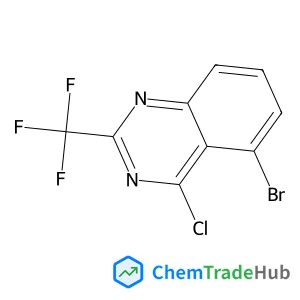
5-Bromo-4-chloro-2-(trifluoromethyl)quinazoline
CAS Number:
2089311-03-3
Molecular Formula:
C9H3BrClF3N2
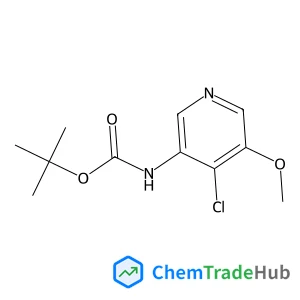
tert-Butyl 4-chloro-5-methoxypyridin-3-ylcarbamate
CAS Number:
1045858-17-0
Molecular Formula:
C11H15ClN2O3
Recommended Suppliers




Disclaimer
This page provides academic journal information for reference and research purposes only. We are not affiliated with any journal publishers and do not handle publication submissions. For publication-related inquiries, please contact the respective journal publishers directly.
If you notice any inaccuracies in the information displayed, please contact us at support@chemtradehub.com. We will promptly review and address your concerns.