












S⋯O chalcogen bonding in sulfa drugs: insights from multipole charge density and X-ray wavefunction of acetazolamide‡
Literature Information
Publication Date
2015-08-25
DOI
10.1039/C5CP04412J
Impact Factor
3.676
Authors
Dylan Jayatilaka, T. N. Guru Row
View Original
Abstract
Experimental charge density analysis combined with the quantum crystallographic technique of X-ray wavefunction refinement (XWR) provides quantitative insights into the intra- and intermolecular interactions formed by acetazolamide, a diuretic drug. Firstly, the analysis of charge density topology at the intermolecular level shows the presence of exceptionally strong interaction motifs such as a DDAA–AADD (D-donor, A-acceptor) type quadruple hydrogen bond motif and a sulfonamide dimer synthon. The nature and strength of intra-molecular S⋯O chalcogen bonding have been characterized using descriptors from the multipole model (MM) and XWR. Although pure geometrical criteria suggest the possibility of two intra-molecular S⋯O chalcogen bonded ring motifs, only one of them satisfies the “orbital geometry” so as to exhibit an interaction in terms of an electron density bond path and a bond critical point. The presence of ‘σ-holes’ on the sulfur atom leading to the S⋯O chalcogen bond has been visualized on the electrostatic potential surface and Laplacian isosurfaces close to the ‘reactive surface’. The electron localizability indicator (ELI) and Roby bond orders derived from the ‘experimental wave function’ provide insights into the nature of S⋯O chalcogen bonding.
Related Literature
Nickel based electrocatalysts for oxygen evolution in high current density, alkaline water electrolysers
Xiaohong Li, Frank C. Walsh, Derek Pletcher
2010-11-15
Paper
DOI: 10.1039/C0CP00993H
Direct ab initio MD study on the interaction of hydroperoxy radical (HOO) with water molecules
Hiroto Tachikawa, Shigeaki Abe
2010-02-24
Paper
DOI: 10.1039/B923310E
Hydrogen-bond strengths by magnetically induced currents
Heike Fliegl, Olli Lehtonen, Dage Sundholm
2010-11-12
Communication
DOI: 10.1039/C0CP00622J
The inactivation of lipid peroxide radical by quercetin. A theoretical insight
Sandro G. Chiodo, Monica Leopoldini, Nino Russo, Marirosa Toscano
2010-03-29
Paper
DOI: 10.1039/B924521A
Analysis and improvement of rate constant determination of reactions involving charged reactants
Keith M. Krise, Angela A. Hwang, Bratoljub H. Milosavljevic
2010-06-08
Paper
DOI: 10.1039/B927266F
Regenerable Fe–Mn–ZnO/SiO2 sorbents for room temperature removal of H2S from fuel reformates: performance, active sites, Operando studies
Priyanka Dhage, Divya Repala, Evert C. Duin, Bruce J. Tatarchuk
2010-12-06
Paper
DOI: 10.1039/C0CP01355B
The importance of ion size and electrode curvature on electrical double layers in ionic liquids
Guang Feng, Rui Qiao, Jingsong Huang, Sheng Dai, Bobby G. Sumpter, Vincent Meunier
2010-11-15
Paper
DOI: 10.1039/C0CP02077J
Affinity of hydroxyapatite (001) and (010) surfaces to formic and alendronic acids: a quantum-mechanical and infrared study
Fabio Chiatti, Marta Corno, Yuriy Sakhno, Gianmario Martra, Piero Ugliengo
2010-11-12
Paper
DOI: 10.1039/C0CP01143F
Enhanced field emission property of a novel Al2O3nanoparticle-decorated tubular SiC emitter with low turn-on and threshold field
H. Cui, L. Gong, G. Z. Yang, Y. Sun, J. Chen, C. X. Wang
2010-11-09
Paper
DOI: 10.1039/C0CP01313G
Multimodal coupling of optical transitions and plasmonic oscillations in rhodamine B modified gold nanoparticles
Magdalena Stobiecka, Maria Hepel
2010-11-12
Paper
DOI: 10.1039/C0CP00553C
You might also like
Compound Q&A
What is 1-(2,4,6-Trifluorophenyl)ethanol (CAS: 1250113-83-7)?
1-(2,4,6-Trifluorophenyl)ethanol is an organic compound with the CAS number 1250...
1250113-83-71-(2,4,6-Trifluoroph...
Compound Q&A
Is 1-(2,4-Dimethoxybenzyl)-4-(hydroxymethyl)-2-pyrrolidinone (CAS: 919111-34-5) safe?
1-(2,4-Dimethoxybenzyl)-4-(hydroxymethyl)-2-pyrrolidinone (CAS: 919111-34-5) is ...
919111-34-51-(2,4-Dimethoxybenz...
Compound Q&A
What are the physical and chemical properties of (7S,15R)-6β,15-Diacetoxy-7α,20-epoxy-7-hydroxykaura-2,16-dien-1-one (CAS: 51419-51-3)?
(7S,15R)-6β,15-Diacetoxy-7α,20-epoxy-7-hydroxykaura-2,16-dien-1-one is a crystal...
51419-51-3(7S,15R)-6β,15-Diace...
Compound Q&A
What regulatory guidelines apply to rac-ethyl (1r,4r)-4-hydroxycyclohexane-1-carboxylate, trans (CAS: 3618-04-0)?
The compound rac-ethyl (1r,4r)-4-hydroxycyclohexane-1-carboxylate, trans (CAS: 3...
3618-04-0rac-ethyl (1r,4r)-4-...
Compound Q&A
What is the market or research trend for 2-(2,4-Difluorophenoxy)-3-nitropyridine (CAS: 175135-62-3)?
The market for 2-(2,4-Difluorophenoxy)-3-nitropyridine (CAS: 175135-62-3) is cur...
175135-62-32-(2,4-Difluoropheno...
Compound Q&A
What are the main uses of 6-Diazo-5-oxo-L-norleucine (CAS: 157-03-9)?
The main uses of 6-Diazo-5-oxo-L-norleucine (CAS: 157-03-9) include research in ...
157-03-96-Diazo-5-oxo-L-norl...
Compound Q&A
What precautions should be taken when handling 2-Aminoethyl-mono-amide-DOTA-tris(tBu ester) (CAS: 173308-19-5)?
When handling 2-Aminoethyl-mono-amide-DOTA-tris(tBu ester) (CAS: 173308-19-5), i...
173308-19-52-Aminoethyl-mono-am...
Compound Q&A
How is 5-Methylimidazo[1,2-a]pyridine-3-carbaldehyde (CAS: 178488-37-4) typically synthesized?
5-Methylimidazo[1,2-a]pyridine-3-carbaldehyde (CAS: 178488-37-4) can be synthesi...
178488-37-45-Methylimidazo[1,2-...
Compound Q&A
Are there alternatives to 2,4,6-Trihydroxyisophthalaldehyde (CAS: 4396-13-8) in synthesis?
There are alternative reagents that can be used in the synthesis of 2,4,6-Trihyd...
4396-13-82,4,6-Trihydroxyisop...
Compound Q&A
What is (2Z)-3-(5-Fluoro-1H-indol-3-yl)-2-sulfanylacrylic acid (CAS: 179461-52-0)?
(2Z)-3-(5-Fluoro-1H-indol-3-yl)-2-sulfanylacrylic acid is a chemical compound wi...
179461-52-0(2Z)-3-(5-Fluoro-1H-...
Source Journal
Physical Chemistry Chemical Physics

CiteScore:
5.5
Self-citation Rate:
10.3%
Articles per Year:
3036
Physical Chemistry Chemical Physics (PCCP) is an international journal co-owned by 19 physical chemistry and physics societies from around the world. This journal publishes original, cutting-edge research in physical chemistry, chemical physics and biophysical chemistry. To be suitable for publication in PCCP, articles must include significant innovation and/or insight into physical chemistry; this is the most important criterion that reviewers and Editors will judge against when evaluating submissions. The journal has a broad scope and welcomes contributions spanning experiment, theory, computation and data science. Topical coverage includes spectroscopy, dynamics, kinetics, statistical mechanics, thermodynamics, electrochemistry, catalysis, surface science, quantum mechanics, quantum computing and machine learning. Interdisciplinary research areas such as polymers and soft matter, materials, nanoscience, energy, surfaces/interfaces, and biophysical chemistry are welcomed if they demonstrate significant innovation and/or insight into physical chemistry. Joined experimental/theoretical studies are particularly appreciated when complementary and based on up-to-date approaches.
Recommended Compounds
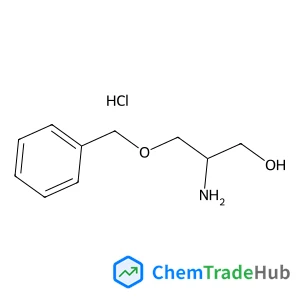
(R)-2-amino-3-(benzyloxy)propan-1-ol hydrochloride
CAS Number:
58577-95-0
Molecular Formula:
C10H16ClNO2
![2-(Methylsulfonyl)-2,4,5,6-tetrahydropyrrolo[3,4-c]pyrazole structure](https://static.chemtradehub.com/structs/122/1226781-80-1-09d5.webp "2-(Methylsulfonyl)-2,4,5,6-tetrahydropyrrolo[3,4-c]pyrazole structure")
2-(Methylsulfonyl)-2,4,5,6-tetrahydropyrrolo[3,4-c]pyrazole
CAS Number:
1226781-80-1
Molecular Formula:
C6H9N3O2S
Recommended Suppliers





Disclaimer
This page provides academic journal information for reference and research purposes only. We are not affiliated with any journal publishers and do not handle publication submissions. For publication-related inquiries, please contact the respective journal publishers directly.
If you notice any inaccuracies in the information displayed, please contact us at support@chemtradehub.com. We will promptly review and address your concerns.