












Building solids inside nano-space: from confined amorphous through confined solvate to confined ‘metastable’ polymorph
Literature Information
Publication Date
2015-08-17
DOI
10.1039/C5CP03880D
Impact Factor
3.676
Authors
K. P. Nartowski, J. Tedder, D. E. Braun, L. Fábián, Y. Z. Khimyak
View Original
Abstract
The nanocrystallisation of complex molecules inside mesoporous hosts and control over the resulting structure is a significant challenge. To date the largest organic molecule crystallised inside the nano-pores is a known pharmaceutical intermediate – ROY (259.3 g mol−1). In this work we demonstrate smart manipulation of the phase of a larger confined pharmaceutical – indomethacin (IMC, 357.8 g mol−1), a substance with known conformational flexibility and complex polymorphic behaviour. We show the detailed structural analysis and the control of solid state transformations of encapsulated molecules inside the pores of mesoscopic cellular foam (MCF, pore size ca. 29 nm) and controlled pore glass (CPG, pore size ca. 55 nm). Starting from confined amorphous IMC we drive crystallisation into a confined methanol solvate, which upon vacuum drying leads to the stabilised rare form V of IMC inside the MCF host. In contrast to the pure form, encapsulated form V does not transform into a more stable polymorph upon heating. The size of the constraining pores and the drug concentration within the pores determine whether the amorphous state of the drug is stabilised or it recrystallises into confined nanocrystals. The work presents, in a critical manner, an application of complementary techniques (DSC, PXRD, solid-state NMR, N2 adsorption) to confirm unambiguously the phase transitions under confinement and offers a comprehensive strategy towards the formation and control of nano-crystalline encapsulated organic solids.
Related Literature
Quantum spin Hall effect in tilted penta silicene and its isoelectronic substitutions
Lijin Zhan, Yimei Fang, Ruotong Zhang, Xiancong Lu, Tie-yu Lü, Shunqing Wu
2022-05-04
Paper
DOI: 10.1039/D2CP01390H
Polarizable molecular dynamics simulations on the conductivity of pure 1-methylimidazolium acetate systems
Christian Schröder
2022-06-06
Paper
DOI: 10.1039/D2CP01501C
2,2,3,3,3-Pentafluoro-1-propanol and its dimer: structural diversity, conformational conversion, and tunnelling motion
Bowei Wu, Jiarui Ma, Wolfgang Jäger, Yunjie Xu
2022-05-24
Paper
DOI: 10.1039/D2CP01895K
Probing the molecular structure of aqueous triiodide via X-ray photoelectron spectroscopy and correlated electron phenomena
Vladislav Kochetov, Sergey I. Bokarev, Iain Wilkinson
2022-06-03
Paper
DOI: 10.1039/D1CP05840A
Molecular simulation of enhanced separation of humid air components using GO–PVA nanocomposite membranes under differential pressures
Yilin Liu, Jincai Su, Fei Duan, Xin Cui, Weichao Yan, Liwen Jin
2022-06-16
Paper
DOI: 10.1039/D2CP01411D
Non-Covalent Interactions Atlas benchmark data sets 5: London dispersion in an extended chemical space
2022-06-06
Paper
DOI: 10.1039/D2CP01602H
Improved photocatalytic activity of TiO2 nanoparticles through nitrogen and phosphorus co-doped carbon quantum dots: an experimental and theoretical study
H. J. Yashwanth, Robert L. Z. Hoye, Ram J. Choudhary, Deodatta M. Phase, Sanjay D. Dhole
2022-06-06
Paper
DOI: 10.1039/D2CP01405J
Adsorption of NO, NO2 and H2O in divalent cation faujasite type zeolites: a density functional theory screening approach
Etienne Paul Hessou, Hubert Monnier, Marie-Antoinette Dziurla, Abdellatif Hasnaoui, Guillaume Maurin
2022-06-03
Paper
DOI: 10.1039/D2CP00553K
Insulation of a coumarin derivative with [1]rotaxane to control solvation-induced effects in excited-state dynamics for enhanced luminescence
Go M. Russell, Jun Terao
2022-06-02
Communication
DOI: 10.1039/D2CP02221D
You might also like
Compound Q&A
What precautions should be taken when handling 2-Methyl-2-propanyl 5-amino-2-thiophenecarboxylate (CAS: 1498311-57-1)?
When handling 2-Methyl-2-propanyl 5-amino-2-thiophenecarboxylate (CAS: 1498311-5...
1498311-57-12-Methyl-2-propanyl ...
Compound Q&A
What are the physical and chemical properties of 5-Bromo-1,2-dichloro-3-fluorobenzene (CAS: 1000572-93-9)?
5-Bromo-1,2-dichloro-3-fluorobenzene (CAS: 1000572-93-9) is a crystalline solid ...
1000572-93-95-Bromo-1,2-dichloro...
Compound Q&A
How should (2R)-2-Amino-2-(4-bromophenyl)ethanol (CAS: 354153-64-3) be stored?
(2R)-2-Amino-2-(4-bromophenyl)ethanol (CAS: 354153-64-3) should be stored in a c...
354153-64-3(2R)-2-Amino-2-(4-br...
Compound Q&A
What regulatory guidelines apply to Methyl 4-(aminomethyl)tetrahydro-2H-pyran-4-carboxylate hydrochloride (CAS: 362707-24-2)?
Methyl 4-(aminomethyl)tetrahydro-2H-pyran-4-carboxylate hydrochloride (CAS: 3627...
362707-24-2Methyl 4-(aminomethy...
Compound Q&A
What are the main uses of 1,4-dimethyl-1H-pyrazole-5-sulfonyl chloride (CAS: 1174834-52-6)?
1,4-Dimethyl-1H-pyrazole-5-sulfonyl chloride is primarily used as an intermediat...
1174834-52-61,4-dimethyl-1H-pyra...
Compound Q&A
Is Dinaphtho[1,2-b:2',1'-d]furan (CAS: 239-69-0) safe?
Dinaphtho[1,2-b:2',1'-d]furan is generally safe when handled with appropriate pe...
239-69-0Dinaphtho[1,2-b:2',1...
Compound Q&A
What is the market or research trend for 7-Methyl-7,9-dihydro-1H-purine-2,6,8(3H)-trione (CAS: 612-37-3)?
The market for 7-Methyl-7,9-dihydro-1H-purine-2,6,8(3H)-trione (CAS: 612-37-3) i...
612-37-37-Methyl-7,9-dihydro...
Compound Q&A
What are the physical and chemical properties of 2-(4-Chlorophenyl)malonaldehyde (CAS: 205676-17-1)?
2-(4-Chlorophenyl)malonaldehyde (CAS: 205676-17-1) is a colorless or light yello...
205676-17-12-(4-Chlorophenyl)ma...
Compound Q&A
How is 2-Methylchrysene (CAS: 3351-32-4) typically synthesized?
2-Methylchrysene (CAS: 3351-32-4) is typically synthesized via the reaction of c...
3351-32-42-Methylchrysene
Compound Q&A
Is N-(6-aminopyrimidin-4-yl)acetamide (CAS: 89533-23-3) safe?
N-(6-aminopyrimidin-4-yl)acetamide (CAS: 89533-23-3) is generally considered saf...
89533-23-3N-(6-aminopyrimidin-...
Source Journal
Physical Chemistry Chemical Physics

CiteScore:
5.5
Self-citation Rate:
10.3%
Articles per Year:
3036
Physical Chemistry Chemical Physics (PCCP) is an international journal co-owned by 19 physical chemistry and physics societies from around the world. This journal publishes original, cutting-edge research in physical chemistry, chemical physics and biophysical chemistry. To be suitable for publication in PCCP, articles must include significant innovation and/or insight into physical chemistry; this is the most important criterion that reviewers and Editors will judge against when evaluating submissions. The journal has a broad scope and welcomes contributions spanning experiment, theory, computation and data science. Topical coverage includes spectroscopy, dynamics, kinetics, statistical mechanics, thermodynamics, electrochemistry, catalysis, surface science, quantum mechanics, quantum computing and machine learning. Interdisciplinary research areas such as polymers and soft matter, materials, nanoscience, energy, surfaces/interfaces, and biophysical chemistry are welcomed if they demonstrate significant innovation and/or insight into physical chemistry. Joined experimental/theoretical studies are particularly appreciated when complementary and based on up-to-date approaches.
Recommended Compounds
![3-(benzotriazol-1-yl)-N-[[2-[(3-bromophenyl)methoxy]phenyl]methylideneamino]propanamide structure](https://static.chemtradehub.com/structs/559/5595-78-8-0a32.webp "3-(benzotriazol-1-yl)-N-[[2-[(3-bromophenyl)methoxy]phenyl]methylideneamino]propanamide structure")
3-(benzotriazol-1-yl)-N-[[2-[(3-bromophenyl)methoxy]phenyl]methylideneamino]propanamide
CAS Number:
5595-78-8
Molecular Formula:
C32H52O2
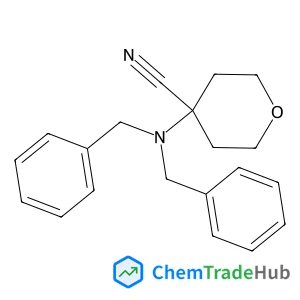
4-(Dibenzylamino)tetrahydro-2H-pyran-4-carbonitrile
CAS Number:
1630906-81-8
Molecular Formula:
C20H22N2O
Recommended Suppliers






Disclaimer
This page provides academic journal information for reference and research purposes only. We are not affiliated with any journal publishers and do not handle publication submissions. For publication-related inquiries, please contact the respective journal publishers directly.
If you notice any inaccuracies in the information displayed, please contact us at support@chemtradehub.com. We will promptly review and address your concerns.