












![1-Oxa-8-azaspiro[4.5]decan-3-ol structure](https://static.chemtradehub.com/structs/757/757239-76-2-a0ec.webp "1-Oxa-8-azaspiro[4.5]decan-3-ol structure")
Rose Bengal-photosensitized oxidation of 4-thiothymidine in aqueous medium: evidence for the reaction of the nucleoside with singlet state oxygen
Literature Information
Publication Date
2015-09-14
DOI
10.1039/C5CP03615A
Impact Factor
3.676
Authors
Vito Rizzi, Andrea Ventrella, Paola Fini, Aurore Fraix, Salvatore Sortino, Francesco Longobardi
View Original
Abstract
The photoreactivity of 4-thiothymidine (S4TdR) under visible light in the presence of Rose Bengal (RB), acting as a photosensitizer, was investigated in aqueous solutions at pH 7 and 12, using UV-vis, FTIR-ATR and 1H-NMR spectroscopic techniques, time resolved absorption spectroscopy and electrospray ionization mass spectrometry (ESI-MS). Evidence for the generation of thymidine (TdR) as the main product, after one hour of irradiation, was obtained from UV-Vis data, that suggested 4-thiothymidine photodegradation to be faster at basic pH, and confirmed by FTIR-ATR and 1H-NMR data. Clues for the presence of a further product, likely corresponding to a dimeric form of S4TdR, were obtained from the latter techniques. Besides indicating the presence of thymidine, the ESI-MS and MS/MS spectra of the reaction mixtures enabled the identification of the additional product as a S–S bridged covalent dimer of 4-thiothymidine. The concentration of the dimeric species could be estimated with the aid of 1H-NMR data and was found to be lower than that of thymidine in pH 7 reaction mixtures and almost negligible in the pH 12 ones. From a mechanistic point of view, time-resolved absorption spectroscopy measurements provided direct evidence that the formation of the two products cannot be ascribed to a photoinduced electron transfer involving S4TdR and the excited triplet state of RB. Rather, their generation can be interpreted as the result of a bimolecular reaction occurring between singlet state oxygen (1O2), photogenerated by RB, and S4TdR, as demonstrated by the direct detection of 1O2 through IR luminescence spectroscopy. More specifically, a sequential reaction pathway, consisting in the generation of an electrophilic hydroxylated form of S4TdR and its subsequent, rapid reaction with S4TdR, was hypothesized to explain the presence of the S–S bridged covalent dimer of 4-thiothymidine in the reaction mixtures. The described processes make S4TdR an interesting candidate in the role of molecular probe for the detection of 1O2 under different pH conditions.
Related Literature
Multipole-moment effects in ion–molecule reactions at low temperatures: part III – the He+ + CH4 and He+ + CD4 reactions at low collision energies and the effect of the charge-octupole interaction
Valentina Zhelyazkova, Fernanda B. V. Martins, Frédéric Merkt
2022-06-08
Paper
DOI: 10.1039/D1CP05861D
Low recombination rates and improving charge transfer as decisive conditions for high current densities and fill factors in ZnS complex systems
Cristian Dias Fernandes, Mateus Meneghetti Ferrer, Cristiane Wienke Raubach, Eduardo Ceretta Moreira, Pedro Lovato Gomes Jardim, Ramon Dadalto Carvalho, Elson Longo
2022-05-24
Paper
DOI: 10.1039/D2CP00328G
Adiabatic models for the quantum dynamics of surface scattering with lattice effects
Qingyong Meng, Jianxing Ma, Xingyu Zhang
2022-06-06
Perspective
DOI: 10.1039/D2CP01560A
Isotope effects on the dynamics of amorphous ices and aqueous phosphoric acid solutions
C. M. Tonauer, T. Loerting
2022-06-14
Paper
DOI: 10.1039/D2CP01455F
Quantum spin Hall effect in tilted penta silicene and its isoelectronic substitutions
Lijin Zhan, Yimei Fang, Ruotong Zhang, Xiancong Lu, Tie-yu Lü, Shunqing Wu
2022-05-04
Paper
DOI: 10.1039/D2CP01390H
Photoionization of the aqueous phase: clusters, droplets and liquid jets
Bernd Winter
2022-04-27
Perspective
DOI: 10.1039/D2CP00164K
Quantifying the ion coordination strength in polymer electrolytes
Rassmus Andersson, Guiomar Hernández, Jonas Mindemark
2022-06-28
Paper
DOI: 10.1039/D2CP01904C
SANS characterization of time dependent, slow molecular exchange in an SDS micellar system
Jae-Min Ha, Youngkyu Han
2022-05-13
Paper
DOI: 10.1039/D2CP00930G
Electronic structures of hydroxylated low index surfaces of rutile and anatase-type titanium dioxide
Lu Wu, Jin Lin, Linyuan Ren, Qianni Li, Xin Chi, Ling Luo, Ming-Hua Zeng
2022-05-27
Paper
DOI: 10.1039/D1CP04729A
Premelting layer during ice growth: role of clusters
Shifan Cui, Haoxiang Chen, Zhengpu Zhao
2022-06-15
Paper
DOI: 10.1039/D2CP00412G
You might also like
Compound Q&A
What precautions should be taken when handling 2-Methyl-2-propanyl 5-amino-2-thiophenecarboxylate (CAS: 1498311-57-1)?
When handling 2-Methyl-2-propanyl 5-amino-2-thiophenecarboxylate (CAS: 1498311-5...
1498311-57-12-Methyl-2-propanyl ...
Compound Q&A
What are the physical and chemical properties of 5-Bromo-1,2-dichloro-3-fluorobenzene (CAS: 1000572-93-9)?
5-Bromo-1,2-dichloro-3-fluorobenzene (CAS: 1000572-93-9) is a crystalline solid ...
1000572-93-95-Bromo-1,2-dichloro...
Compound Q&A
How should (2R)-2-Amino-2-(4-bromophenyl)ethanol (CAS: 354153-64-3) be stored?
(2R)-2-Amino-2-(4-bromophenyl)ethanol (CAS: 354153-64-3) should be stored in a c...
354153-64-3(2R)-2-Amino-2-(4-br...
Compound Q&A
What regulatory guidelines apply to Methyl 4-(aminomethyl)tetrahydro-2H-pyran-4-carboxylate hydrochloride (CAS: 362707-24-2)?
Methyl 4-(aminomethyl)tetrahydro-2H-pyran-4-carboxylate hydrochloride (CAS: 3627...
362707-24-2Methyl 4-(aminomethy...
Compound Q&A
What are the main uses of 1,4-dimethyl-1H-pyrazole-5-sulfonyl chloride (CAS: 1174834-52-6)?
1,4-Dimethyl-1H-pyrazole-5-sulfonyl chloride is primarily used as an intermediat...
1174834-52-61,4-dimethyl-1H-pyra...
Compound Q&A
Is Dinaphtho[1,2-b:2',1'-d]furan (CAS: 239-69-0) safe?
Dinaphtho[1,2-b:2',1'-d]furan is generally safe when handled with appropriate pe...
239-69-0Dinaphtho[1,2-b:2',1...
Compound Q&A
What is the market or research trend for 7-Methyl-7,9-dihydro-1H-purine-2,6,8(3H)-trione (CAS: 612-37-3)?
The market for 7-Methyl-7,9-dihydro-1H-purine-2,6,8(3H)-trione (CAS: 612-37-3) i...
612-37-37-Methyl-7,9-dihydro...
Compound Q&A
What are the physical and chemical properties of 2-(4-Chlorophenyl)malonaldehyde (CAS: 205676-17-1)?
2-(4-Chlorophenyl)malonaldehyde (CAS: 205676-17-1) is a colorless or light yello...
205676-17-12-(4-Chlorophenyl)ma...
Compound Q&A
How is 2-Methylchrysene (CAS: 3351-32-4) typically synthesized?
2-Methylchrysene (CAS: 3351-32-4) is typically synthesized via the reaction of c...
3351-32-42-Methylchrysene
Compound Q&A
Is N-(6-aminopyrimidin-4-yl)acetamide (CAS: 89533-23-3) safe?
N-(6-aminopyrimidin-4-yl)acetamide (CAS: 89533-23-3) is generally considered saf...
89533-23-3N-(6-aminopyrimidin-...
Source Journal
Physical Chemistry Chemical Physics

CiteScore:
5.5
Self-citation Rate:
10.3%
Articles per Year:
3036
Physical Chemistry Chemical Physics (PCCP) is an international journal co-owned by 19 physical chemistry and physics societies from around the world. This journal publishes original, cutting-edge research in physical chemistry, chemical physics and biophysical chemistry. To be suitable for publication in PCCP, articles must include significant innovation and/or insight into physical chemistry; this is the most important criterion that reviewers and Editors will judge against when evaluating submissions. The journal has a broad scope and welcomes contributions spanning experiment, theory, computation and data science. Topical coverage includes spectroscopy, dynamics, kinetics, statistical mechanics, thermodynamics, electrochemistry, catalysis, surface science, quantum mechanics, quantum computing and machine learning. Interdisciplinary research areas such as polymers and soft matter, materials, nanoscience, energy, surfaces/interfaces, and biophysical chemistry are welcomed if they demonstrate significant innovation and/or insight into physical chemistry. Joined experimental/theoretical studies are particularly appreciated when complementary and based on up-to-date approaches.
Recommended Compounds
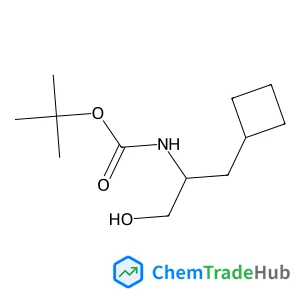
2-Methyl-2-propanyl (1-cyclobutyl-3-hydroxy-2-propanyl)carbamate
CAS Number:
816429-99-9
Molecular Formula:
C12H23NO3
![2-Bromo-7-chloro-4H-pyrrolo[2,3-b]pyrazine structure](https://static.chemtradehub.com/structs/115/1150617-58-5-0b0a.webp "2-Bromo-7-chloro-4H-pyrrolo[2,3-b]pyrazine structure")
Recommended Suppliers



Disclaimer
This page provides academic journal information for reference and research purposes only. We are not affiliated with any journal publishers and do not handle publication submissions. For publication-related inquiries, please contact the respective journal publishers directly.
If you notice any inaccuracies in the information displayed, please contact us at support@chemtradehub.com. We will promptly review and address your concerns.