












Quantifying the ion coordination strength in polymer electrolytes
Literature Information
Publication Date
2022-06-28
DOI
10.1039/D2CP01904C
Impact Factor
3.676
Authors
Rassmus Andersson, Guiomar Hernández, Jonas Mindemark
View Original
Abstract
In the progress of implementing solid polymer electrolytes (SPEs) into batteries, fundamental understanding of the processes occurring within and in the vicinity of the SPE are required. An important but so far relatively unexplored parameter influencing the ion transport properties is the ion coordination strength. Our understanding of the coordination chemistry and its role for the ion transport is partly hampered by the scarcity of suitable methods to measure this phenomenon. Herein, two qualitative methods and one quantitative method to assess the ion coordination strength are presented, contrasted and discussed for TFSI-based salts of Li+, Na+ and Mg2+ in polyethylene oxide (PEO), poly(ε-caprolactone) (PCL) and poly(trimethylene carbonate) (PTMC). For the qualitative methods, the coordination strength is probed by studying the equilibrium between cation coordination to polymer ligands or solvent molecules, whereas the quantitative method studies the ion dissociation equilibrium of salts in solvent-free polymers. All methods are in agreement that regardless of cation, the strongest coordination strength is observed for PEO, while PTMC exhibits the weakest coordination strength. Considering the cations, the weakest coordination is observed for Mg2+ in all polymers, indicative of the strong ion–ion interactions in Mg(TFSI)2, whilst the coordination strength for Li+ and Na+ seems to be more influenced by the interplay between the cation charge/radius and the polymer structure. The trends observed are in excellent agreement with previously observed transference numbers, confirming the importance and its connection to the ion transport in SPEs.
Recommended Journals
Related Literature
Polyester-graft-phosphorylcholine prepared by ring-opening polymerization and click chemistry
Beth M. Cooper, Delphine Chan-Seng, Debasis Samanta, Xiongfei Zhang, Sangram Parelkar, Todd Emrick
2008-12-17
Communication
DOI: 10.1039/B817600K
Reversible photoisomerisability and particle size changes of mill-dispersed azobenzene crystals in water
2009-01-27
Communication
DOI: 10.1039/B820022J
Enantioselective self-assembly of chiralcalix[4]arene acid with amines
Yan-Song Zheng, Shu-Yun Ran, Yu-Jian Hu, Xian-Xian Liu
2009-01-29
Communication
DOI: 10.1039/B817974C
The generation and trapping of enantiopure bromonium ions
D. Christopher Braddock, Stephen A. Hermitage, Lilian Kwok, Rebecca Pouwer, Joanna M. Redmond, Andrew J. P. White
2009-01-06
Communication
DOI: 10.1039/B816914D
Anion receptors that contain metals as structural units
Valeria Amendola, Luigi Fabbrizzi
2008-12-03
Feature Article
DOI: 10.1039/B808264M
Exceptionally high H2storage by a metal–organic polyhedral framework
Yong Yan, Xiang Lin, Sihai Yang, Alexander J. Blake, Anne Dailly, Neil R. Champness, Peter Hubberstey, Martin Schröder
2009-01-27
Communication
DOI: 10.1039/B900013E
Nitrogen-doped titania nanosheets towards visible light response
Lianzhou Wang, Chenghua Sun, Zhigang Chen, Xiaoxia Yan, Lina Cheng, Hui-Ming Cheng, Gao Qing (Max) Lu
2009-01-22
Communication
DOI: 10.1039/B820483G
The importance of surface chemistry in mesoporous materials: lessons from porous silicon biosensors
Kristopher A. Kilian, Till Böcking, J. Justin Gooding
2008-10-30
Feature Article
DOI: 10.1039/B815449J
You might also like
Compound Q&A
What precautions should be taken when handling 2-Methyl-2-propanyl 5-amino-2-thiophenecarboxylate (CAS: 1498311-57-1)?
When handling 2-Methyl-2-propanyl 5-amino-2-thiophenecarboxylate (CAS: 1498311-5...
1498311-57-12-Methyl-2-propanyl ...
Compound Q&A
What are the physical and chemical properties of 5-Bromo-1,2-dichloro-3-fluorobenzene (CAS: 1000572-93-9)?
5-Bromo-1,2-dichloro-3-fluorobenzene (CAS: 1000572-93-9) is a crystalline solid ...
1000572-93-95-Bromo-1,2-dichloro...
Compound Q&A
How should (2R)-2-Amino-2-(4-bromophenyl)ethanol (CAS: 354153-64-3) be stored?
(2R)-2-Amino-2-(4-bromophenyl)ethanol (CAS: 354153-64-3) should be stored in a c...
354153-64-3(2R)-2-Amino-2-(4-br...
Compound Q&A
What regulatory guidelines apply to Methyl 4-(aminomethyl)tetrahydro-2H-pyran-4-carboxylate hydrochloride (CAS: 362707-24-2)?
Methyl 4-(aminomethyl)tetrahydro-2H-pyran-4-carboxylate hydrochloride (CAS: 3627...
362707-24-2Methyl 4-(aminomethy...
Compound Q&A
What are the main uses of 1,4-dimethyl-1H-pyrazole-5-sulfonyl chloride (CAS: 1174834-52-6)?
1,4-Dimethyl-1H-pyrazole-5-sulfonyl chloride is primarily used as an intermediat...
1174834-52-61,4-dimethyl-1H-pyra...
Compound Q&A
Is Dinaphtho[1,2-b:2',1'-d]furan (CAS: 239-69-0) safe?
Dinaphtho[1,2-b:2',1'-d]furan is generally safe when handled with appropriate pe...
239-69-0Dinaphtho[1,2-b:2',1...
Compound Q&A
What is the market or research trend for 7-Methyl-7,9-dihydro-1H-purine-2,6,8(3H)-trione (CAS: 612-37-3)?
The market for 7-Methyl-7,9-dihydro-1H-purine-2,6,8(3H)-trione (CAS: 612-37-3) i...
612-37-37-Methyl-7,9-dihydro...
Compound Q&A
What are the physical and chemical properties of 2-(4-Chlorophenyl)malonaldehyde (CAS: 205676-17-1)?
2-(4-Chlorophenyl)malonaldehyde (CAS: 205676-17-1) is a colorless or light yello...
205676-17-12-(4-Chlorophenyl)ma...
Compound Q&A
How is 2-Methylchrysene (CAS: 3351-32-4) typically synthesized?
2-Methylchrysene (CAS: 3351-32-4) is typically synthesized via the reaction of c...
3351-32-42-Methylchrysene
Compound Q&A
Is N-(6-aminopyrimidin-4-yl)acetamide (CAS: 89533-23-3) safe?
N-(6-aminopyrimidin-4-yl)acetamide (CAS: 89533-23-3) is generally considered saf...
89533-23-3N-(6-aminopyrimidin-...
Source Journal
Physical Chemistry Chemical Physics

CiteScore:
5.5
Self-citation Rate:
10.3%
Articles per Year:
3036
Physical Chemistry Chemical Physics (PCCP) is an international journal co-owned by 19 physical chemistry and physics societies from around the world. This journal publishes original, cutting-edge research in physical chemistry, chemical physics and biophysical chemistry. To be suitable for publication in PCCP, articles must include significant innovation and/or insight into physical chemistry; this is the most important criterion that reviewers and Editors will judge against when evaluating submissions. The journal has a broad scope and welcomes contributions spanning experiment, theory, computation and data science. Topical coverage includes spectroscopy, dynamics, kinetics, statistical mechanics, thermodynamics, electrochemistry, catalysis, surface science, quantum mechanics, quantum computing and machine learning. Interdisciplinary research areas such as polymers and soft matter, materials, nanoscience, energy, surfaces/interfaces, and biophysical chemistry are welcomed if they demonstrate significant innovation and/or insight into physical chemistry. Joined experimental/theoretical studies are particularly appreciated when complementary and based on up-to-date approaches.
Recommended Compounds
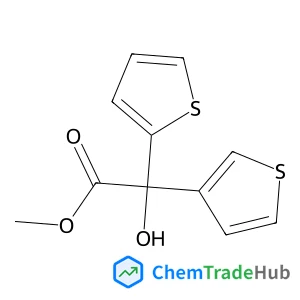
![L-Lysine,N6-[2-[[(1,1-dimethylethoxy)carbonyl]amino]benzoyl]-N2-[(9H-fluoren-9-ylmethoxy)carbonyl]- structure](https://static.chemtradehub.com/structs/159/159322-59-5-c046.webp "L-Lysine,N6-[2-[[(1,1-dimethylethoxy)carbonyl]amino]benzoyl]-N2-[(9H-fluoren-9-ylmethoxy)carbonyl]- structure")
L-Lysine,N6-[2-[[(1,1-dimethylethoxy)carbonyl]amino]benzoyl]-N2-[(9H-fluoren-9-ylmethoxy)carbonyl]-
CAS Number:
159322-59-5
Molecular Formula:
C33H37N3O7
![1-{[5-(4,4,5,5-Tetramethyl-1,3,2-dioxaborolan-2-yl)-2-thienyl]methyl}piperidine structure](https://static.chemtradehub.com/structs/121/1218790-44-3-baef.webp "1-{[5-(4,4,5,5-Tetramethyl-1,3,2-dioxaborolan-2-yl)-2-thienyl]methyl}piperidine structure")
1-{[5-(4,4,5,5-Tetramethyl-1,3,2-dioxaborolan-2-yl)-2-thienyl]methyl}piperidine
CAS Number:
1218790-44-3
Molecular Formula:
C16H26BNO2S
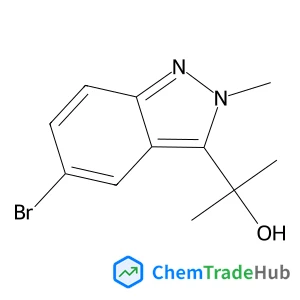
2-(5-Bromo-2-methyl-2H-indazol-3-yl)-2-propanol
CAS Number:
1823787-20-7
Molecular Formula:
C11H13BrN2O
Recommended Suppliers







Disclaimer
This page provides academic journal information for reference and research purposes only. We are not affiliated with any journal publishers and do not handle publication submissions. For publication-related inquiries, please contact the respective journal publishers directly.
If you notice any inaccuracies in the information displayed, please contact us at support@chemtradehub.com. We will promptly review and address your concerns.