












The luminescence properties of heteroleptic [OsCl(CO)(N∩N)(P∩P)]+ complexes – radiative and non-radiative deactivation of the excited 3*MLCT state
Literature Information
Publication Date
2015-08-19
DOI
10.1039/C5CP03299G
Impact Factor
3.676
Authors
Anna Kamecka, Andrzej Kapturkiewicz
View Original
Abstract
The luminescence properties of the heteroleptic [OsCl(CO)(N∩N)(P∩P)]+ complexes with bidentate phosphine P∩P and diimine N∩N ligands have been studied in acetonitrile solutions at room temperature and in methanol/ethanol (1 : 1) glasses at 77 K. At room temperature the investigated complexes feature strong (with the quantum yields ϕem from 0.17 up to 0.64), long-lived (with lifetimes τem in the range of 1.5–44.2 μs) 3*MLCT emission. Analysis of 3*MLCT emission band shapes leads to the quantities relevant for the radiative electron transfer (between the Os2+ central ion and the N∩N ligand) in the Marcus inverted region. It is also demonstrated that radiative kr and non-radiative knr decay rate constants of the excited 3*MLCT states can be interpreted within the Mulliken–Hush formalism. Especially values of knr rate constants can be predicted using the parameters available from the analysis of the radiative 1*MLCT ← S0 and 3*MLCT → S0 charge transfer processes.
Related Literature
Sequestration of naphthenic acids from aqueous solution using β-cyclodextrin-based polyurethanes
Mohamed H. Mohamed, Lee D. Wilson, John V. Headley, Kerry M. Peru
2010-11-12
Paper
DOI: 10.1039/C0CP00421A
Structure and stability of one-dimensional o-phthalaldehyde lines on the Si(100)-2 × 1:H surface
Jin-Ho Choi, Jun-Hyung Cho
2010-11-16
Communication
DOI: 10.1039/C0CP01284J
Solvatochromic shifts of single-walled carbon nanotubes in nonpolar microenvironments
Carlos A. Silvera-Batista, Randy K. Wang, Philip Weinberg
2010-05-12
Paper
DOI: 10.1039/B927053A
The mystery of gold's chemical activity: local bonding, morphology and reactivity of atomic oxygen
Thomas A. Baker, Xiaoying Liu
2010-11-22
Perspective
DOI: 10.1039/C0CP01514H
The inactivation of lipid peroxide radical by quercetin. A theoretical insight
Sandro G. Chiodo, Monica Leopoldini, Nino Russo, Marirosa Toscano
2010-03-29
Paper
DOI: 10.1039/B924521A
Predicting the coordination geometry for Mg2+ in the p53 DNA-binding domain: insights from computational studies
Teng Wang, Xueguang Shao, Wensheng Cai, Yonglai Xue, Shuai Wang, Xizeng Feng
2010-11-15
Paper
DOI: 10.1039/C0CP00678E
Ion–molecule reactions of ammonia clusters with C60 aggregates embedded in helium droplets
Harald Schöbel, Christian Leidlmair, Peter Bartl, Abid Aleem, Michaela Hager, Olof Echt, Tilmann D. Märk, Paul Scheier
2010-11-12
Paper
DOI: 10.1039/C0CP01268H
Negative differential resistance in oxidized zigzag graphene nanoribbons
Min Wang, Chang Ming Li
2010-12-09
Paper
DOI: 10.1039/C0CP00828A
You might also like
Compound Q&A
What is 1-(2,4,6-Trifluorophenyl)ethanol (CAS: 1250113-83-7)?
1-(2,4,6-Trifluorophenyl)ethanol is an organic compound with the CAS number 1250...
1250113-83-71-(2,4,6-Trifluoroph...
Compound Q&A
Is 1-(2,4-Dimethoxybenzyl)-4-(hydroxymethyl)-2-pyrrolidinone (CAS: 919111-34-5) safe?
1-(2,4-Dimethoxybenzyl)-4-(hydroxymethyl)-2-pyrrolidinone (CAS: 919111-34-5) is ...
919111-34-51-(2,4-Dimethoxybenz...
Compound Q&A
What are the physical and chemical properties of (7S,15R)-6β,15-Diacetoxy-7α,20-epoxy-7-hydroxykaura-2,16-dien-1-one (CAS: 51419-51-3)?
(7S,15R)-6β,15-Diacetoxy-7α,20-epoxy-7-hydroxykaura-2,16-dien-1-one is a crystal...
51419-51-3(7S,15R)-6β,15-Diace...
Compound Q&A
What regulatory guidelines apply to rac-ethyl (1r,4r)-4-hydroxycyclohexane-1-carboxylate, trans (CAS: 3618-04-0)?
The compound rac-ethyl (1r,4r)-4-hydroxycyclohexane-1-carboxylate, trans (CAS: 3...
3618-04-0rac-ethyl (1r,4r)-4-...
Compound Q&A
What is the market or research trend for 2-(2,4-Difluorophenoxy)-3-nitropyridine (CAS: 175135-62-3)?
The market for 2-(2,4-Difluorophenoxy)-3-nitropyridine (CAS: 175135-62-3) is cur...
175135-62-32-(2,4-Difluoropheno...
Compound Q&A
What are the main uses of 6-Diazo-5-oxo-L-norleucine (CAS: 157-03-9)?
The main uses of 6-Diazo-5-oxo-L-norleucine (CAS: 157-03-9) include research in ...
157-03-96-Diazo-5-oxo-L-norl...
Compound Q&A
What precautions should be taken when handling 2-Aminoethyl-mono-amide-DOTA-tris(tBu ester) (CAS: 173308-19-5)?
When handling 2-Aminoethyl-mono-amide-DOTA-tris(tBu ester) (CAS: 173308-19-5), i...
173308-19-52-Aminoethyl-mono-am...
Compound Q&A
How is 5-Methylimidazo[1,2-a]pyridine-3-carbaldehyde (CAS: 178488-37-4) typically synthesized?
5-Methylimidazo[1,2-a]pyridine-3-carbaldehyde (CAS: 178488-37-4) can be synthesi...
178488-37-45-Methylimidazo[1,2-...
Compound Q&A
Are there alternatives to 2,4,6-Trihydroxyisophthalaldehyde (CAS: 4396-13-8) in synthesis?
There are alternative reagents that can be used in the synthesis of 2,4,6-Trihyd...
4396-13-82,4,6-Trihydroxyisop...
Compound Q&A
What is (2Z)-3-(5-Fluoro-1H-indol-3-yl)-2-sulfanylacrylic acid (CAS: 179461-52-0)?
(2Z)-3-(5-Fluoro-1H-indol-3-yl)-2-sulfanylacrylic acid is a chemical compound wi...
179461-52-0(2Z)-3-(5-Fluoro-1H-...
Source Journal
Physical Chemistry Chemical Physics

CiteScore:
5.5
Self-citation Rate:
10.3%
Articles per Year:
3036
Physical Chemistry Chemical Physics (PCCP) is an international journal co-owned by 19 physical chemistry and physics societies from around the world. This journal publishes original, cutting-edge research in physical chemistry, chemical physics and biophysical chemistry. To be suitable for publication in PCCP, articles must include significant innovation and/or insight into physical chemistry; this is the most important criterion that reviewers and Editors will judge against when evaluating submissions. The journal has a broad scope and welcomes contributions spanning experiment, theory, computation and data science. Topical coverage includes spectroscopy, dynamics, kinetics, statistical mechanics, thermodynamics, electrochemistry, catalysis, surface science, quantum mechanics, quantum computing and machine learning. Interdisciplinary research areas such as polymers and soft matter, materials, nanoscience, energy, surfaces/interfaces, and biophysical chemistry are welcomed if they demonstrate significant innovation and/or insight into physical chemistry. Joined experimental/theoretical studies are particularly appreciated when complementary and based on up-to-date approaches.
Recommended Compounds
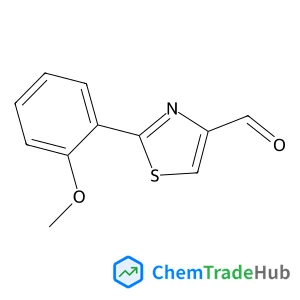
![2-(Methylsulfonyl)-2,4,5,6-tetrahydropyrrolo[3,4-c]pyrazole structure](https://static.chemtradehub.com/structs/122/1226781-80-1-09d5.webp "2-(Methylsulfonyl)-2,4,5,6-tetrahydropyrrolo[3,4-c]pyrazole structure")
2-(Methylsulfonyl)-2,4,5,6-tetrahydropyrrolo[3,4-c]pyrazole
CAS Number:
1226781-80-1
Molecular Formula:
C6H9N3O2S
Recommended Suppliers




Disclaimer
This page provides academic journal information for reference and research purposes only. We are not affiliated with any journal publishers and do not handle publication submissions. For publication-related inquiries, please contact the respective journal publishers directly.
If you notice any inaccuracies in the information displayed, please contact us at support@chemtradehub.com. We will promptly review and address your concerns.