












The mystery of gold's chemical activity: local bonding, morphology and reactivity of atomic oxygen
Literature Information
Publication Date
2010-11-22
DOI
10.1039/C0CP01514H
Impact Factor
3.676
Authors
Thomas A. Baker, Xiaoying Liu
View Original
Abstract
Recently, gold has been intensely studied as a catalyst for key synthetic reactions. Gold is an attractive catalyst because, surprisingly, it is highly active and very selective for partial oxidation processes suggesting promise for energy-efficient “green” chemistry. The underlying origin of the high activity of Au is a controversial subject since metallic gold is commonly thought to be inert. Herein, we establish that one origin of the high activity for gold catalysis is the extremely reactive nature of atomic oxygen bound in 3-fold coordination sites on metallic gold. This is the predominant form of O at low concentrations on the surface, which is a strong indication that it is most relevant to catalytic conditions. Atomic oxygen bound to metallic Au in 3-fold sites has high activity for CO oxidation, oxidation of olefins, and oxidative transformations of alcohols and amines. Among the factors identified as important in Au–O interaction are the morphology of the surface, the local binding site of oxygen, and the degree of order of the oxygen overlayer. In this Perspective, we present an overview of both theory and experiments that identify the reactive forms of O and their associated charge density distributions and bond strengths. We also analyze and model the release of Au atoms induced by O binding to the surface. This rough surface also has the potential for O2 dissociation, which is a critical step if Au is to be activated catalytically. We further show the strong parallels between product distributions and reactivity for O-covered Au at low pressure (ultrahigh vacuum) and for nanoporous Au catalysts operating at atmospheric pressure as evidence that atomic O is the active species under working catalytic conditions when metallic Au is present. We briefly discuss the possible contributions of oxidants that may contain intact O–O bonds and of the Au–metal oxide support interface in Au catalysis. Finally, the challenges and future directions for fully understanding the activity of gold are considered.
Related Literature
New geldanamycin derivatives with anti Hsp properties by mutasynthesis
Jekaterina Hermane, Simone Eichner, Lena Mancuso, Benjamin Schröder, Florenz Sasse, Carsten Zeilinger, Andreas Kirschning
2019-05-07
Paper
DOI: 10.1039/C9OB00892F
Decarboxylative acylation of N-free indoles enabled by a catalytic amount of copper catalyst and liquid-assisted grinding
Jingbo Yu, Chao Zhang, Xinjie Yang, Weike Su
2019-04-06
Communication
DOI: 10.1039/C9OB00622B
Structural characteristics requisite for the ligand-based selective detection of i-motif DNA
Sagar Satpathi, Subrahmanyam Sappati, Konoya Das
2019-05-08
Paper
DOI: 10.1039/C9OB01020C
A novel codrug made of the combination of ethionamide and its potentiating booster: synthesis, self-assembly into nanoparticles and antimycobacterial evaluation
Alexandra Pastor, Arnaud Machelart, Xue Li, Nicolas Willand, Alain Baulard, Priscille Brodin, Ruxandra Gref, Didier Desmaële
2019-05-02
Paper
DOI: 10.1039/C9OB00680J
I2/DMSO mediated multicomponent reaction for the synthesis of 2-arylbenzo[d]imidazo[2,1-b] thiazole derivatives
Asim Jana, Prabhas Bhaumick, Anoop Kumar Panday, Richa Mishra, Lokman H. Choudhury
2019-05-16
Paper
DOI: 10.1039/C9OB00515C
Chemodivergent reaction of azomethine imines and 2H-azirines for the synthesis of nitrogen-containing scaffolds
Yufeng Wu, Bing Tian, Chao Hu, Kohei Sekine, Matthias Rudolph, Frank Rominger
2019-05-10
Communication
DOI: 10.1039/C9OB00740G
Transition metal-free α-Csp3–H oxidative sulfuration of benzyl thiosulfates with anilines to form N-aryl thioamides
Mengjun Qiao, Ling Chen, Fengyi Zhou, Yali Zhang, Lingfei Zhou
2019-03-19
Paper
DOI: 10.1039/C9OB00336C
Unprecedented E-stereoselectivity on the sigmatropic Hurd–Claisen rearrangement of Morita–Baylis–Hillman adducts: a joint experimental–theoretical study
Vinicius Sobral Silva, Terezinha Alves Tolentino, Tiago Costa Alves Fontoura Rodrigues, Fernanda Ferrari Martins Santos, Daniel Francisco Scalabrini Machado, Wender Alves Silva, Heibbe Cristhian Benedito de Oliveira, Angelo Henrique Lira Machado
2019-04-05
Paper
DOI: 10.1039/C9OB00533A
You might also like
Compound Q&A
What is 1-(2,4,6-Trifluorophenyl)ethanol (CAS: 1250113-83-7)?
1-(2,4,6-Trifluorophenyl)ethanol is an organic compound with the CAS number 1250...
1250113-83-71-(2,4,6-Trifluoroph...
Compound Q&A
Is 1-(2,4-Dimethoxybenzyl)-4-(hydroxymethyl)-2-pyrrolidinone (CAS: 919111-34-5) safe?
1-(2,4-Dimethoxybenzyl)-4-(hydroxymethyl)-2-pyrrolidinone (CAS: 919111-34-5) is ...
919111-34-51-(2,4-Dimethoxybenz...
Compound Q&A
What are the physical and chemical properties of (7S,15R)-6β,15-Diacetoxy-7α,20-epoxy-7-hydroxykaura-2,16-dien-1-one (CAS: 51419-51-3)?
(7S,15R)-6β,15-Diacetoxy-7α,20-epoxy-7-hydroxykaura-2,16-dien-1-one is a crystal...
51419-51-3(7S,15R)-6β,15-Diace...
Compound Q&A
What regulatory guidelines apply to rac-ethyl (1r,4r)-4-hydroxycyclohexane-1-carboxylate, trans (CAS: 3618-04-0)?
The compound rac-ethyl (1r,4r)-4-hydroxycyclohexane-1-carboxylate, trans (CAS: 3...
3618-04-0rac-ethyl (1r,4r)-4-...
Compound Q&A
What is the market or research trend for 2-(2,4-Difluorophenoxy)-3-nitropyridine (CAS: 175135-62-3)?
The market for 2-(2,4-Difluorophenoxy)-3-nitropyridine (CAS: 175135-62-3) is cur...
175135-62-32-(2,4-Difluoropheno...
Compound Q&A
What are the main uses of 6-Diazo-5-oxo-L-norleucine (CAS: 157-03-9)?
The main uses of 6-Diazo-5-oxo-L-norleucine (CAS: 157-03-9) include research in ...
157-03-96-Diazo-5-oxo-L-norl...
Compound Q&A
What precautions should be taken when handling 2-Aminoethyl-mono-amide-DOTA-tris(tBu ester) (CAS: 173308-19-5)?
When handling 2-Aminoethyl-mono-amide-DOTA-tris(tBu ester) (CAS: 173308-19-5), i...
173308-19-52-Aminoethyl-mono-am...
Compound Q&A
How is 5-Methylimidazo[1,2-a]pyridine-3-carbaldehyde (CAS: 178488-37-4) typically synthesized?
5-Methylimidazo[1,2-a]pyridine-3-carbaldehyde (CAS: 178488-37-4) can be synthesi...
178488-37-45-Methylimidazo[1,2-...
Compound Q&A
Are there alternatives to 2,4,6-Trihydroxyisophthalaldehyde (CAS: 4396-13-8) in synthesis?
There are alternative reagents that can be used in the synthesis of 2,4,6-Trihyd...
4396-13-82,4,6-Trihydroxyisop...
Compound Q&A
What is (2Z)-3-(5-Fluoro-1H-indol-3-yl)-2-sulfanylacrylic acid (CAS: 179461-52-0)?
(2Z)-3-(5-Fluoro-1H-indol-3-yl)-2-sulfanylacrylic acid is a chemical compound wi...
179461-52-0(2Z)-3-(5-Fluoro-1H-...
Source Journal
Physical Chemistry Chemical Physics

CiteScore:
5.5
Self-citation Rate:
10.3%
Articles per Year:
3036
Physical Chemistry Chemical Physics (PCCP) is an international journal co-owned by 19 physical chemistry and physics societies from around the world. This journal publishes original, cutting-edge research in physical chemistry, chemical physics and biophysical chemistry. To be suitable for publication in PCCP, articles must include significant innovation and/or insight into physical chemistry; this is the most important criterion that reviewers and Editors will judge against when evaluating submissions. The journal has a broad scope and welcomes contributions spanning experiment, theory, computation and data science. Topical coverage includes spectroscopy, dynamics, kinetics, statistical mechanics, thermodynamics, electrochemistry, catalysis, surface science, quantum mechanics, quantum computing and machine learning. Interdisciplinary research areas such as polymers and soft matter, materials, nanoscience, energy, surfaces/interfaces, and biophysical chemistry are welcomed if they demonstrate significant innovation and/or insight into physical chemistry. Joined experimental/theoretical studies are particularly appreciated when complementary and based on up-to-date approaches.
Recommended Compounds
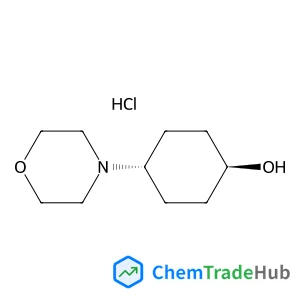
trans-4-(4-Morpholinyl)cyclohexanol hydrochloride (1:1)
CAS Number:
1588441-09-1
Molecular Formula:
C10H20ClNO2
Recommended Suppliers






Disclaimer
This page provides academic journal information for reference and research purposes only. We are not affiliated with any journal publishers and do not handle publication submissions. For publication-related inquiries, please contact the respective journal publishers directly.
If you notice any inaccuracies in the information displayed, please contact us at support@chemtradehub.com. We will promptly review and address your concerns.