












Real time observation of the excimer formation dynamics of a gas phase benzene dimer by picosecond pump–probe spectroscopy
Literature Information
Publication Date
2015-07-17
DOI
10.1039/C5CP03010B
Impact Factor
3.676
Authors
Mitsuhiko Miyazaki, Masaaki Fujii
View Original
Abstract
We observed the real-time excimer (EXC) formation dynamics of a gas phase benzene dimer (Bz2) cluster after photo-excitation to the S1 state by applying an ionization detected picosecond transient absorption method for probing the visible EXC absorption for the first time. The time evolution of the EXC absorption from the S1 00 level shows a rise that is well fitted by a single exponential function with a time constant of 18 ± 2 ps. The structure of the Bz dimer has a T-shaped structure in the ground electronic state, and that in the EXC state is a parallel sandwich (SW) structure. Thus, the observed rise time corresponds to the structural change from the T to the SW structures, which directly shows the EXC formation. On the other hand, the EXC formation after excitation of the S1 61 vibrational level of the stem site showed a faster rise of the time constant of 10 ± 2 ps. Supposing equilibrium between the EXC and the local excited states, it followed that the intramolecular vibrational energy redistribution rate of the 61 level is largely enhanced and becomes faster than the EXC formation reaction.
Related Literature
Chiral-at-metal rhodium(iii) complex catalyzed enantioselective synthesis of C2-substituted benzofuran derivatives
Qiang Kang, Yu Du
2019-09-18
Research Article
DOI: 10.1039/C9QO01022J
Asymmetric synthesis of spiro-structural 2,3-dihydrobenzofurans via the bifunctional phosphonium salt-promoted [4 + 1] cyclization of ortho-quinone methides with α-bromoketones
Song Zhang, Jianke Pan, Hongsu Zhang, Tianli Wang
2019-10-08
Research Article
DOI: 10.1039/C9QO01096C
Immobilization of manganese dioxide nanoparticles on modified poly 2,4-dichlorostyrene microspheres: a highly efficient and recyclable catalyst for borrowing hydrogen reactions
Yilin Zhang, Lu Jin, Le Pan, Guangming Du, Dongdong Ye
2019-09-03
Research Article
DOI: 10.1039/C9QO00892F
Efficient construction of pyrrolo[1′,2′:1,2]azocino[4,5-c]quinolines via cascade cycloaddition and annulation reaction
Wen-Tao Wu, Ying Han, Jing Sun, Chao-Guo Yan
2019-09-04
Research Article
DOI: 10.1039/C9QO00891H
Organocatalyzed asymmetric formal [3 + 2] cycloaddition of isocyanoacetates with N-itaconimides: facile access to optically active spiropyrroline succinimide derivatives
Mei-Xin Zhao, Qiang Liu, Kun-Ming Yu, Xiao-Li Zhao
2019-10-17
Research Article
DOI: 10.1039/C9QO00939F
A practical and effective method for the N–N bond cleavage of N-amino-heterocycles
Giacomo Mari, Gianfranco Favi, Stefania Santeusanio, Fabio Mantellini, Lucia De Crescentini
2019-08-27
Research Article
DOI: 10.1039/C9QO00895K
TFA-promoted sulfonation/cascade cyclization of 2-propynolphenols with sodium sulfinates to 4-sulfonyl 2H-chromenes under metal-free conditions
Tao Yang, Peihao Kou, Fengyan Jin, Xian-Rong Song, Jiang Bai, Haixin Ding, Qiang Xiao, Yong-Min Liang
2019-07-19
Research Article
DOI: 10.1039/C9QO00712A
You might also like
Compound Q&A
Is 6-(3-Fluorophenyl)picolinic acid (CAS: 887982-40-3) safe?
6-(3-Fluorophenyl)picolinic acid is generally considered safe for laboratory use...
887982-40-36-(3-Fluorophenyl)pi...
Compound Q&A
What industries use (3R)-3-Pyrrolidinol (CAS: 2799-21-5)?
(3R)-3-Pyrrolidinol is used in the pharmaceutical industry as a precursor for dr...
2799-21-5(3R)-3-Pyrrolidinol
Compound Q&A
What precautions should be taken when handling (4R,5R)-4,5-Diethoxycarbonyl-2,2-dimethyldioxolane (CAS: 59779-75-8)?
When handling (4R,5R)-4,5-Diethoxycarbonyl-2,2-dimethyldioxolane (CAS: 59779-75-...
59779-75-8(4R,5R)-4,5-Diethoxy...
Compound Q&A
How is 1-(6-Chloroimidazo[1,2-b]pyridazin-3-yl)ethanone (CAS: 90734-71-7) typically synthesized?
1-(6-Chloroimidazo[1,2-b]pyridazin-3-yl)ethanone is often synthesized via a mult...
90734-71-71-(6-Chloroimidazo[1...
Compound Q&A
What is the market or research trend for N-Ethyl-3,4-dimethylbenzylamine (CAS: 39180-83-1)?
The market for N-Ethyl-3,4-dimethylbenzylamine (CAS: 39180-83-1) remains steady,...
39180-83-1N-Ethyl-3,4-dimethyl...
Compound Q&A
What is Tert-butyl 3-(pyrrolidin-1-yl)azetidine-1-carboxylate (CAS: 1019008-21-9)?
Tert-butyl 3-(pyrrolidin-1-yl)azetidine-1-carboxylate is a chemical compound wit...
1019008-21-9Tert-butyl 3-(pyrrol...
Compound Q&A
What regulatory guidelines apply to 1-Bromo-3-chloro-2,4-dimethoxybenzene (CAS: 1228956-93-1)?
1-Bromo-3-chloro-2,4-dimethoxybenzene (CAS: 1228956-93-1) falls under the classi...
1228956-93-11-Bromo-3-chloro-2,4...
Compound Q&A
Is 8-Bromo-2-methyl-3,4-dihydroisoquinolin-1(2H)-one (CAS: 1368622-07-4) safe?
The safety of 8-Bromo-2-methyl-3,4-dihydroisoquinolin-1(2H)-one (CAS: 1368622-07...
1368622-07-48-Bromo-2-methyl-3,4...
Compound Q&A
Is Benzyl [(3S)-2,6-dioxo-3-piperidinyl]carbamate (CAS: 22785-43-9) safe?
Benzyl [(3S)-2,6-dioxo-3-piperidinyl]carbamate is generally safe when handled wi...
22785-43-9Benzyl [(3S)-2,6-dio...
Compound Q&A
How should 1-{[4-(4,4,5,5-Tetramethyl-1,3,2-dioxaborolan-2-yl)phenyl]sulfonyl}pyrrolidine (CAS: 928657-21-0) be stored?
1-{[4-(4,4,5,5-Tetramethyl-1,3,2-dioxaborolan-2-yl)phenyl]sulfonyl}pyrrolidine s...
928657-21-01-{[4-(4,4,5,5-Tetra...
Source Journal
Physical Chemistry Chemical Physics

CiteScore:
5.5
Self-citation Rate:
10.3%
Articles per Year:
3036
Physical Chemistry Chemical Physics (PCCP) is an international journal co-owned by 19 physical chemistry and physics societies from around the world. This journal publishes original, cutting-edge research in physical chemistry, chemical physics and biophysical chemistry. To be suitable for publication in PCCP, articles must include significant innovation and/or insight into physical chemistry; this is the most important criterion that reviewers and Editors will judge against when evaluating submissions. The journal has a broad scope and welcomes contributions spanning experiment, theory, computation and data science. Topical coverage includes spectroscopy, dynamics, kinetics, statistical mechanics, thermodynamics, electrochemistry, catalysis, surface science, quantum mechanics, quantum computing and machine learning. Interdisciplinary research areas such as polymers and soft matter, materials, nanoscience, energy, surfaces/interfaces, and biophysical chemistry are welcomed if they demonstrate significant innovation and/or insight into physical chemistry. Joined experimental/theoretical studies are particularly appreciated when complementary and based on up-to-date approaches.
Recommended Compounds
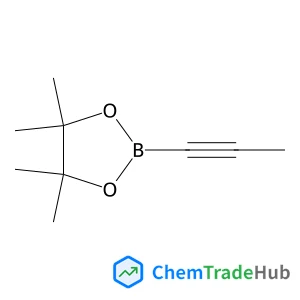
4,4,5,5-Tetramethyl-2-(1-propyn-1-YL)-1,3,2-dioxaborolane
CAS Number:
347389-75-7
Molecular Formula:
C9H15BO2
![(3R,4aR,7aS,9aR,10S,11R,13aR,13bS,15aS,15bR)-3,11-Dihydroxy-10-(hydroxymethyl)-4,4,7a,10,13a,15b-hexamethyl-1,2,3,4,4a,7,7a,8,9,9a,10,11,12,13,13a,13b,14,15,15a,15b-icosahydro-5H-naphtho[2',1':4,5]cyc
lohepta[1,2-a]naphthalen-5-one structure](https://static.chemtradehub.com/structs/538/53800-21-8-9f18.webp "(3R,4aR,7aS,9aR,10S,11R,13aR,13bS,15aS,15bR)-3,11-Dihydroxy-10-(hydroxymethyl)-4,4,7a,10,13a,15b-hexamethyl-1,2,3,4,4a,7,7a,8,9,9a,10,11,12,13,13a,13b,14,15,15a,15b-icosahydro-5H-naphtho[2',1':4,5]cyc
lohepta[1,2-a]naphthalen-5-one structure")
![trans-2-{[(Tert-butoxy)carbonyl]amino}cyclobutane-1-carboxylic acid structure](https://static.chemtradehub.com/structs/951/951173-25-4-27cd.webp "trans-2-{[(Tert-butoxy)carbonyl]amino}cyclobutane-1-carboxylic acid structure")
trans-2-{[(Tert-butoxy)carbonyl]amino}cyclobutane-1-carboxylic acid
CAS Number:
951173-25-4
Molecular Formula:
C10H17NO4
Recommended Suppliers








Disclaimer
This page provides academic journal information for reference and research purposes only. We are not affiliated with any journal publishers and do not handle publication submissions. For publication-related inquiries, please contact the respective journal publishers directly.
If you notice any inaccuracies in the information displayed, please contact us at support@chemtradehub.com. We will promptly review and address your concerns.