











In situ growth of TiO2 nanocrystals on g-C3N4 for enhanced photocatalytic performance
Literature Information
Publication Date
2015-05-27
DOI
10.1039/C5CP02554K
Impact Factor
3.676
Authors
Hong Li, Liang Zhou, Lingzhi Wang, Yongdi Liu, Juying Lei, Jinlong Zhang
View Original
Abstract
Well dispersed TiO2 nanocrystals with (001) facets were successfully grown in situ on g-C3N4 through a facial solvothermal method. The resultant TiO2/g-C3N4 composites exhibit remarkably higher efficiency for photocatalytic degradation of phenol as compared to pure catalysts (g-C3N4 or TiO2) or mechanically mixed TiO2/g-C3N4. The optimal composite with 11.2 wt% TiO2 showed the highest degradation rate constant, which is 2.8 times that of pure g-C3N4, 2.2 times that of pure TiO2, and 1.4 times that of mechanically mixed TiO2/g-C3N4. The enhanced photocatalytic activity is mainly attributed to the effective charge separation derived from two aspects: (1) well matched energy levels between TiO2 and g-C3N4 and (2) a uniform and close contact between TiO2 and g-C3N4 that resulted from the in situ growth of highly dispersed TiO2 nanocrystals. The TiO2/g-C3N4 hybrid material prepared in this study is expected to provide a good foundation for the further design and synthesis of advanced TiO2/g-C3N4-based functional materials, and the in situ growth method developed is hopeful to provide a new strategy for the synthesis of other semiconductor-modified g-C3N4 materials.
Recommended Journals
Related Literature
Correction: pH sensitive water-in-water emulsions based on the pullulan and poly(N,N-dimethylacrylamide) aqueous two-phase system
Alexander Plucinski, Bernhard V. K. J. Schmidt
2022-07-18
Correction
DOI: 10.1039/D2PY90095E
Design of selective divalent chain transfer agents for coordinative chain transfer polymerization of ethylene and its copolymerization with butadiene
Julien Thuilliez
2022-03-10
Paper
DOI: 10.1039/D2PY00155A
Precision synthesis for well-defined linear and/or architecturally controlled thermoresponsive poly(N-substituted acrylamide)s
Atsushi Narumi, Shin-ichiro Sato
2022-02-02
Review Article
DOI: 10.1039/D1PY01449H
Exploiting the reversible covalent bonding of boronic acids for self-healing/recycling of main-chain polybenzoxazines
Sevinc Gulyuz, Yusuf Yagci, Baris Kiskan
2022-05-20
Paper
DOI: 10.1039/D2PY00068G
Thermoresponsive metalloprotein-based hybrid hydrogels for the reversible and highly selective removal of lead(ii) from water
Tianbiao Wei, Shanqing Huang, Qingyuan Hu, Jue Wang, Zhongzhong Huo, Tongyang Zhu, Chi Wu, Hao Chen
2022-02-07
Paper
DOI: 10.1039/D1PY01574E
Recent advances in asymmetric organocatalysis based on helical polymers
Li Zhou, Kai He, Na Liu
2022-06-02
Review Article
DOI: 10.1039/D2PY00483F
Effect of radical copolymerization of the (oxa)norbornene end-group of RAFT-prepared macromonomers on bottlebrush copolymer synthesis via ROMP
Daniel J. Keddie
2022-02-02
Paper
DOI: 10.1039/D1PY01599K
You might also like
Compound Q&A
What are the main uses of 1-(3-Aminophenyl)-3-[(3R)-1-(3,3-dimethyl-2-oxobutyl)-2-oxo-5-(2-pyridinyl)-2,3-dihydro-1H-1,4-benzodiazepin-3-yl]urea (CAS: 155412-88-7)?
This compound is mainly used as an intermediate in the synthesis of antipsychoti...
155412-88-71-(3-Aminophenyl)-3-...
Compound Q&A
How should waste containing 1-(D-Ribofuranosyl)-1,4-dihydro-3-pyridinecarboxamide (CAS: 19132-12-8) be handled?
Waste containing 1-(D-Ribofuranosyl)-1,4-dihydro-3-pyridinecarboxamide (CAS: 191...
19132-12-81-(D-Ribofuranosyl)-...
Compound Q&A
What regulatory guidelines apply to 2-Methyl-2-propanyl 3-bromo-3-(hydroxymethyl)-1-azetidinecarboxylate (CAS: 2007919-81-3)?
2-Methyl-2-propanyl 3-bromo-3-(hydroxymethyl)-1-azetidinecarboxylate (CAS: 20079...
2007919-81-32-Methyl-2-propanyl ...
Compound Q&A
What is N-(4-Chloro-2-pyridinyl)acetamide (CAS: 245056-66-0)?
N-(4-Chloro-2-pyridinyl)acetamide (CAS: 245056-66-0) is a chemical compound with...
245056-66-0N-(4-Chloro-2-pyridi...
Compound Q&A
What is 5-Chloro-2-hydroxybenzoic acid (CAS: 321-14-2)?
5-Chloro-2-hydroxybenzoic acid, also known as 5-chlorosalicylic acid, is an arom...
321-14-25-Chloro-2-hydroxybe...
Compound Q&A
What precautions should be taken when handling 1,1-Dichloro-1-fluoroethane (CAS: 1717-00-6)?
When handling 1,1-Dichloro-1-fluoroethane (CAS: 1717-00-6), it is important to u...
1717-00-61,1-Dichloro-1-fluor...
Compound Q&A
What are the physical and chemical properties of Fmoc-(2S,3R)-3-phenylpyrrolidine-2-carboxylic acid (CAS: 281655-32-1)?
Fmoc-(2S,3R)-3-phenylpyrrolidine-2-carboxylic acid is a white crystalline solid ...
281655-32-1Fmoc-(2S,3R)-3-pheny...
Compound Q&A
What are the main uses of 4-Amino-5-bromo-2-pyridinecarboxylic acid (CAS: 1363381-01-4)?
4-Amino-5-bromo-2-pyridinecarboxylic acid is primarily used as a precursor in th...
1363381-01-44-Amino-5-bromo-2-py...
Compound Q&A
What precautions should be taken when handling (S)-tert-butyl 2-((2-(4-bromophenyl)-2-oxoethyl)carbamoyl)pyrrolidine-1-carboxylate (CAS: 1007881-98-2)?
Handling this compound should be done with personal protective equipment (PPE) i...
1007881-98-2(S)-tert-butyl 2-((2...
Compound Q&A
What precautions should be taken when handling 8-bromo-2,2-dimethyl-3,4-dihydro-2H-1,4-benzoxazin-3-one (CAS: 688363-73-7)?
When handling 8-bromo-2,2-dimethyl-3,4-dihydro-2H-1,4-benzoxazin-3-one, use prop...
688363-73-78-bromo-2,2-dimethyl...
Source Journal
Physical Chemistry Chemical Physics

CiteScore:
5.5
Self-citation Rate:
10.3%
Articles per Year:
3036
Physical Chemistry Chemical Physics (PCCP) is an international journal co-owned by 19 physical chemistry and physics societies from around the world. This journal publishes original, cutting-edge research in physical chemistry, chemical physics and biophysical chemistry. To be suitable for publication in PCCP, articles must include significant innovation and/or insight into physical chemistry; this is the most important criterion that reviewers and Editors will judge against when evaluating submissions. The journal has a broad scope and welcomes contributions spanning experiment, theory, computation and data science. Topical coverage includes spectroscopy, dynamics, kinetics, statistical mechanics, thermodynamics, electrochemistry, catalysis, surface science, quantum mechanics, quantum computing and machine learning. Interdisciplinary research areas such as polymers and soft matter, materials, nanoscience, energy, surfaces/interfaces, and biophysical chemistry are welcomed if they demonstrate significant innovation and/or insight into physical chemistry. Joined experimental/theoretical studies are particularly appreciated when complementary and based on up-to-date approaches.
Recommended Compounds
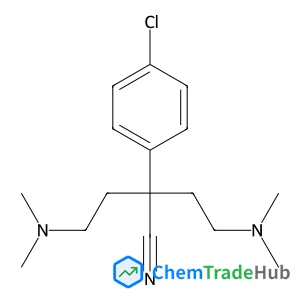
2-(4-Chlorophenyl)-4-(dimethylamino)-2-(2-(dimethylamino)ethyl)butanenitrile
CAS Number:
1246816-57-8
Molecular Formula:
C16H24ClN3
![2,6-Bis({(2R)-2-[hydroxy(diphenyl)methyl]-1-pyrrolidinyl}methyl)-4-methylphenol structure](https://static.chemtradehub.com/structs/877/877395-58-9-70bf.webp "2,6-Bis({(2R)-2-[hydroxy(diphenyl)methyl]-1-pyrrolidinyl}methyl)-4-methylphenol structure")
2,6-Bis({(2R)-2-[hydroxy(diphenyl)methyl]-1-pyrrolidinyl}methyl)-4-methylphenol
CAS Number:
877395-58-9
Molecular Formula:
C43H46N2O3
Recommended Suppliers




Disclaimer
This page provides academic journal information for reference and research purposes only. We are not affiliated with any journal publishers and do not handle publication submissions. For publication-related inquiries, please contact the respective journal publishers directly.
If you notice any inaccuracies in the information displayed, please contact us at support@chemtradehub.com. We will promptly review and address your concerns.