












Comparison studies of rheological and thermal behaviors of ionic liquids and nanoparticle ionic liquids
Literature Information
Publication Date
2015-06-19
DOI
10.1039/C5CP02463C
Impact Factor
3.676
Authors
Yiting Xu, Qiang Zheng, Yihu Song
View Original
Abstract
Novel nanoparticle ionic liquids (NILs) are prepared by grafting modified nanoparticles with long-chain ionic liquids (ILs). The NIL behaves like a liquid at ambient temperature. We studied the rheological behavior of the IL and NIL over the range of 10–55 °C and found an extraordinary difference between the IL and NIL: a small content of nanosilica (7%) moderately improves the crystallinity by 7% of the poly(ethylene glycol) (PEG) segment in the IL, and it improves the dynamic moduli significantly (by 5 times at room temperature). It retards the decay temperature (by 10 °C) of the dynamic moduli during heating as well. The thermal rheological hysteresis observed during heating–cooling temperature sweeps is ascribed to the melting–recrystallization of the PEG segments. Meanwhile, the IL and NIL express accelerated crystallization behavior in comparison with the oligomeric anion. For the first time, we find that ILs and NILs are able to form nanoparticle-containing spherulites at room temperature after long time aging.
Related Literature
Stress effects on the initial lithiation of crystalline silicon nanowires: reactive molecular dynamics simulations using ReaxFF
Alireza Ostadhossein, Ekin D. Cubuk, Georgios A. Tritsaris, Efthimios Kaxiras, Sulin Zhang, Adri C. T. van Duin
2014-12-18
Paper
DOI: 10.1039/C4CP05198J
Effective targeting of proton transfer at ground and excited states of ortho-(2′-imidazolyl)naphthol constitutional isomers
Thaís C. F. Oliveira, Luiz F. V. Carmo, Bárbara Murta, Luís G.T.A. Duarte, Rene A. Nome, Willian R. Rocha, Tiago A. S. Brandão
2014-12-09
Paper
DOI: 10.1039/C4CP04337E
Proton, muon and 13C hyperfine coupling constants of C60X and C70X (X = H, Mu)
Jean-Claude Brodovitch, Brenda Addison-Jones, Khashayar Ghandi
2014-11-26
Paper
DOI: 10.1039/C4CP04899G
Carrier dynamics of a visible-light-responsive Ta3N5 photoanode for water oxidation
Ahmed Ziani, Ela Nurlaela, Dattatray S. Dhawale, Diego Alves Silva, Erkki Alarousu, Omar F. Mohammed, Kazuhiro Takanabe
2014-12-05
Paper
DOI: 10.1039/C4CP05616G
A new working mode for molecular springs: water intrusion induced by cooling and associated isobaric heat capacity change of a {ZIF-8 + water} system
V. Eroshenko
2014-11-18
Communication
DOI: 10.1039/C4CP03944K
Mass analyzed threshold ionization detected infrared spectroscopy: isomerization activity of the phenol–Ar cluster near the ionization threshold
Mitsuhiko Miyazaki, Shunpei Yoshikawa, François Michels, Kentaro Misawa, Shun-ichi Ishiuchi, Makoto Sakai, Otto Dopfer, Klaus Müller-Dethlefs, Masaaki Fujii
2014-11-27
Paper
DOI: 10.1039/C4CP04584J
Solution-phase hierarchical self-organization of ultralong Se nanowires into diverse macroarchitectures and their enhanced field emission
Xueli Guo, Lihui Fang, Yiwei Tan
2014-12-04
Paper
DOI: 10.1039/C4CP04051A
Nucleation and growth kinetics of zirconium-oxo-alkoxy nanoparticles
Sana Labidi, Zixian Jia, Mounir Ben Amar, Khay Chhor, Andrei Kanaev
2014-12-01
Paper
DOI: 10.1039/C4CP05149A
Theoretical evaluation of the surface electrochemistry of perovskites with promising photon absorption properties for solar water splitting
Joseph H. Montoya, Monica Garcia-Mota
2014-11-27
Paper
DOI: 10.1039/C4CP05259E
Extinction measurements for optical band gap determination of soot in a series of nitrogen-diluted ethylene/air non-premixed flames
Erin M. Adkins, J. Houston Miller
2014-12-05
Paper
DOI: 10.1039/C4CP04452E
You might also like
Compound Q&A
What are the main uses of (5-Sulfamoyl-3-pyridinyl)boronic acid (CAS: 951233-61-7)?
(5-Sulfamoyl-3-pyridinyl)boronic acid is primarily used in chemical synthesis, p...
951233-61-7(5-Sulfamoyl-3-pyrid...
Compound Q&A
How is Benzyl 2-methyl-2-(methylsulfonyl)-4-pentenoate (CAS: 1942858-50-5) typically synthesized?
Benzyl 2-methyl-2-(methylsulfonyl)-4-pentenoate is typically synthesized via est...
1942858-50-5Benzyl 2-methyl-2-(m...
Compound Q&A
What precautions should be taken when handling 8-Fluoroquinolin-6-ol (CAS: 209353-22-0)?
When handling 8-Fluoroquinolin-6-ol (CAS: 209353-22-0), it is important to use p...
209353-22-08-Fluoroquinolin-6-o...
Compound Q&A
What are the physical and chemical properties of 1,3-Dibromo-5-(2-methyl-2-propanyl)benzene (CAS: 129316-09-2)?
1,3-Dibromo-5-(2-methyl-2-propanyl)benzene (CAS: 129316-09-2) is a crystalline c...
129316-09-21,3-Dibromo-5-(2-met...
Compound Q&A
What industries use Ethyl 7-chloro-4-oxo-1-(1,3-thiazol-2-yl)-1,4-dihydro-1,8-naphthyridine-3-carboxylate (CAS: 174726-87-5)?
Ethyl 7-chloro-4-oxo-1-(1,3-thiazol-2-yl)-1,4-dihydro-1,8-naphthyridine-3-carbox...
174726-87-5Ethyl 7-chloro-4-oxo...
Compound Q&A
What precautions should be taken when handling Delta-7-Avenasterol (CAS: 23290-26-8)?
When handling Delta-7-Avenasterol (CAS: 23290-26-8), it is important to wear app...
23290-26-8Delta-7-Avenasterol
Compound Q&A
What precautions should be taken when handling N-({(5R)-3-[3-Fluoro-4-(4-morpholinyl)phenyl]-2-oxo-1,3-oxazolidin-5-yl}methyl)acetamide (CAS: 872992-20-6)?
Proper handling involves the use of personal protective equipment such as gloves...
872992-20-6N-({(5R)-3-[3-Fluoro...
Compound Q&A
What precautions should be taken when handling 2-Methyl-2-proanyl 4-[(2-aminophenyl)amino]-1-piperidinecarboxylate (CAS: 79099-00-6)?
When handling 2-Methyl-2-proanyl 4-[(2-aminophenyl)amino]-1-piperidinecarboxylat...
79099-00-62-Methyl-2-propanyl ...
Compound Q&A
What is N-Methyl-4-chlorobenzylamine hydrochloride (CAS: 65542-24-7)?
N-Methyl-4-chlorobenzylamine hydrochloride (CAS: 65542-24-7) is a organic compou...
65542-24-7N-Methyl-4-chloroben...
Compound Q&A
Is [2-(Dodecyloxy)ethoxy]acetic acid (CAS: 27306-90-7) safe?
[2-(Dodecyloxy)ethoxy]acetic acid (CAS: 27306-90-7) is generally considered safe...
27306-90-7[2-(Dodecyloxy)ethox...
Source Journal
Physical Chemistry Chemical Physics

CiteScore:
5.5
Self-citation Rate:
10.3%
Articles per Year:
3036
Physical Chemistry Chemical Physics (PCCP) is an international journal co-owned by 19 physical chemistry and physics societies from around the world. This journal publishes original, cutting-edge research in physical chemistry, chemical physics and biophysical chemistry. To be suitable for publication in PCCP, articles must include significant innovation and/or insight into physical chemistry; this is the most important criterion that reviewers and Editors will judge against when evaluating submissions. The journal has a broad scope and welcomes contributions spanning experiment, theory, computation and data science. Topical coverage includes spectroscopy, dynamics, kinetics, statistical mechanics, thermodynamics, electrochemistry, catalysis, surface science, quantum mechanics, quantum computing and machine learning. Interdisciplinary research areas such as polymers and soft matter, materials, nanoscience, energy, surfaces/interfaces, and biophysical chemistry are welcomed if they demonstrate significant innovation and/or insight into physical chemistry. Joined experimental/theoretical studies are particularly appreciated when complementary and based on up-to-date approaches.
Recommended Compounds
![5-Chloropyrrolo[2,1-f][1,2,4]triazin-4(3H)-one structure](https://static.chemtradehub.com/structs/888/888720-60-3-4f7c.webp "5-Chloropyrrolo[2,1-f][1,2,4]triazin-4(3H)-one structure")
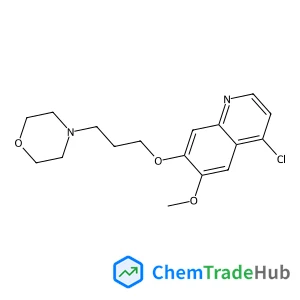
4-(3-((4-Chloro-6-methoxyquinolin-7-yl)oxy)propyl)morpholine
CAS Number:
205448-32-4
Molecular Formula:
C17H21ClN2O3
![[3-Fluoro-4-(1-pyrrolidinylcarbonyl)phenyl]boronic acid structure](https://static.chemtradehub.com/structs/874/874289-09-5-e3d4.webp "[3-Fluoro-4-(1-pyrrolidinylcarbonyl)phenyl]boronic acid structure")
[3-Fluoro-4-(1-pyrrolidinylcarbonyl)phenyl]boronic acid
CAS Number:
874289-09-5
Molecular Formula:
C11H13BFNO3
Recommended Suppliers







Disclaimer
This page provides academic journal information for reference and research purposes only. We are not affiliated with any journal publishers and do not handle publication submissions. For publication-related inquiries, please contact the respective journal publishers directly.
If you notice any inaccuracies in the information displayed, please contact us at support@chemtradehub.com. We will promptly review and address your concerns.