












Origin of the enhanced Li+ ionic conductivity in Gd+3 substituted Li5+2xLa3Nb2−xGdxO12 lithium conducting garnets
Literature Information
Publication Date
2015-05-18
DOI
10.1039/C5CP02393A
Impact Factor
3.676
Authors
Munirah M. Al-Quaimi
View Original
Abstract
In the present study, we report the synthesis and the Li+-ion conductivity of new Gd+3 substituted Li5+2xLa3Nb2−xGdxO12 (x = 0.0, 0.25, 0.4, 0.5, 0.6) garnets. The structural study by XRD showed that pure cubic garnet phases were obtained with upto x = 0.5 composition. With the further increase of the Gd+3 content to x ≥ 0.6, secondary phases are observed. The ionic conductivity was studied by impedance spectroscopy. We found that the Li+ ionic conductivity increased with increasing Gd+3 content with a maximum value of 1.12 × 10⁻⁴ S cm−1 at RT, which was two orders of magnitude larger than the previously reported value of 10−6 S cm−1 for pure Li5La3Nb2O12. A slight drop in the conductivity value to 6.25 × 10⁻⁵ S cm−1 was observed for x = 0.6 composition. By a systematic analysis of the conductivity spectra at different temperatures of the investigated materials, we are able to estimate the true values of the concentration, nc, and mobility, μ, of mobile Li+ that contribute to the conduction process; nc was found to increase by a factor of only ∼2 with increasing Gd+3 content from x = 0.0 to x = 0.5, whereas the mobility/diffusivity of Li+ increased considerably with increasing Gd+3 content. Therefore, the enhanced conductivity of the current materials is mainly due to the enhanced mobility of Li+. Surprisingly, the fraction of mobile Li+ represents only 3.44–6.96% of the total Li+ density of the materials.
Related Literature
Integration of plasma and electrocatalysis to synthesize cyclohexanone oxime under ambient conditions using air as a nitrogen source
Xingxing Tan, Xiaodong Ma, Jiaqi Feng
2023-10-30
Edge Article
DOI: 10.1039/D3SC02871B
Implications of Ga promotion and metal–oxide interface from tailored PtGa propane dehydrogenation catalysts supported on carbon
Enzo Brack, Marc-Georg Willinger, Christophe Copéret
2023-10-25
Edge Article
DOI: 10.1039/D3SC04711C
Strengths of covalent bonds in LnO2 determined from O K-edge XANES spectra using a Hubbard model
Wayne W. Lukens, Jr, Stefan G. Minasian, Corwin H. Booth
2023-11-03
Edge Article
DOI: 10.1039/D3SC03304J
The semisynthesis of nucleolar human selenoprotein H
Rebecca Notis Dardashti, Shay Laps, Jacob S. Gichtin
2023-10-24
Edge Article
DOI: 10.1039/D3SC03059H
Advances in glycoside and oligosaccharide synthesis
Conor J. Crawford
2023-10-13
Review Article
DOI: 10.1039/D3CS00321C
Single atom catalyst-mediated generation of reactive species in water treatment
Virender K. Sharma, Xingmao Ma
2023-10-19
Tutorial Review
DOI: 10.1039/D3CS00627A
Chalcogen bonding catalysis
Govindasamy Sekar, Vysakh Venugopalan Nair, Jieping Zhu
2023-12-07
Tutorial Review
DOI: 10.1039/D3CS00503H
Interfacial engineering of transition metal dichalcogenide/carbon heterostructures for electrochemical energy applications
Fang He, Shi-Zhang Qiao
2023-10-23
Review Article
DOI: 10.1039/D3CS00445G
You might also like
Compound Q&A
How should waste containing 6-Chloro-5-(2'-hydroxy-3'-methoxy-4-biphenylyl)-3-(3-methoxyphenyl)-1H-pyrrolo[3,2-d]pyrimidine-2,4(3H,5H)-dione (CAS: 1346607-05-3) be handled?
Waste containing 6-Chloro-5-(2'-hydroxy-3'-methoxy-4-biphenylyl)-3-(3-methoxyphe...
1346607-05-36-Chloro-5-(2'-hydro...
Compound Q&A
What are the main uses of (3alpha,5alpha)-3-Hydroxypregnane-11,20-dione (CAS: 23930-19-0)?
(3alpha,5alpha)-3-Hydroxypregnane-11,20-dione is primarily used in the pharmaceu...
23930-19-0(3alpha,5alpha)-3-Hy...
Compound Q&A
What is the market or research trend for 4-Amino-6-chloro-2-pyridinecarboxylic acid (CAS: 546141-56-4)?
The market for 4-Amino-6-chloro-2-pyridinecarboxylic acid (CAS: 546141-56-4) is ...
546141-56-44-Amino-6-chloro-2-p...
Compound Q&A
Are there alternatives to (2-Benzoylethyl)trimethylammonium chloride (CAS: 24472-88-6) in synthesis?
Alternatives to (2-Benzoylethyl)trimethylammonium chloride (CAS: 24472-88-6) in ...
24472-88-6(2-Benzoylethyl)trim...
Compound Q&A
Is N-[4-Nitro-3-(trifluoromethyl)phenyl]acetamide (CAS: 393-12-4) safe?
N-[4-Nitro-3-(trifluoromethyl)phenyl]acetamide (CAS: 393-12-4) is generally safe...
393-12-4N-[4-Nitro-3-(triflu...
Compound Q&A
Are there alternatives to [(4R,5R,6S)-5-hydroxy-10-imino-3,7-dioxa-1,9-diazatricyclo[6.4.0.02,6]dodeca-8,11-dien-4-yl]methyl dihydrogen phosphate (CAS: 39679-56-6) in synthesis?
Alternative reagents such as other phosphates or similar functional groups can b...
39679-56-6[(4R,5R,6S)-5-hydrox...
Compound Q&A
Are there alternatives to N,N'-Bis(3-aminopropyl)-1,3-propanediamine (CAS: 4605-14-5) in synthesis?
There are alternatives to N,N'-Bis(3-aminopropyl)-1,3-propanediamine (CAS: 4605-...
4605-14-5N,N'-Bis(3-aminoprop...
Compound Q&A
What precautions should be taken when handling Aluminium trihexadecanoate (CAS: 555-35-1)?
When handling Aluminium trihexadecanoate, it is important to use appropriate per...
555-35-1Aluminium trihexadec...
Compound Q&A
What is (1,1-Dioxido-3-oxo-1,2-benzothiazol-2(3H)-yl)acetic acid (CAS: 52188-11-1)?
(1,1-Dioxido-3-oxo-1,2-benzothiazol-2(3H)-yl)acetic acid is a chemical compound ...
52188-11-1(1,1-Dioxido-3-oxo-1...
Compound Q&A
Are there alternatives to 5,5-dimethyloxolan-2-one (CAS: 3123-97-5) in synthesis?
Several alternatives to 5,5-dimethyloxolan-2-one (CAS: 3123-97-5) can be used in...
3123-97-55,5-dimethyloxolan-2...
Source Journal
Physical Chemistry Chemical Physics

CiteScore:
5.5
Self-citation Rate:
10.3%
Articles per Year:
3036
Physical Chemistry Chemical Physics (PCCP) is an international journal co-owned by 19 physical chemistry and physics societies from around the world. This journal publishes original, cutting-edge research in physical chemistry, chemical physics and biophysical chemistry. To be suitable for publication in PCCP, articles must include significant innovation and/or insight into physical chemistry; this is the most important criterion that reviewers and Editors will judge against when evaluating submissions. The journal has a broad scope and welcomes contributions spanning experiment, theory, computation and data science. Topical coverage includes spectroscopy, dynamics, kinetics, statistical mechanics, thermodynamics, electrochemistry, catalysis, surface science, quantum mechanics, quantum computing and machine learning. Interdisciplinary research areas such as polymers and soft matter, materials, nanoscience, energy, surfaces/interfaces, and biophysical chemistry are welcomed if they demonstrate significant innovation and/or insight into physical chemistry. Joined experimental/theoretical studies are particularly appreciated when complementary and based on up-to-date approaches.
Recommended Compounds
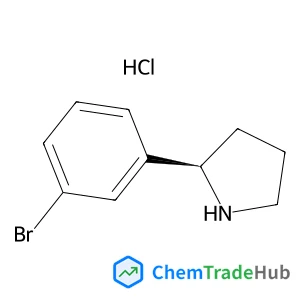
(2R)-2-(3-Bromophenyl)pyrrolidine hydrochloride (1:1)
CAS Number:
1391550-13-2
Molecular Formula:
C10H13BrClN
Recommended Suppliers






Disclaimer
This page provides academic journal information for reference and research purposes only. We are not affiliated with any journal publishers and do not handle publication submissions. For publication-related inquiries, please contact the respective journal publishers directly.
If you notice any inaccuracies in the information displayed, please contact us at support@chemtradehub.com. We will promptly review and address your concerns.