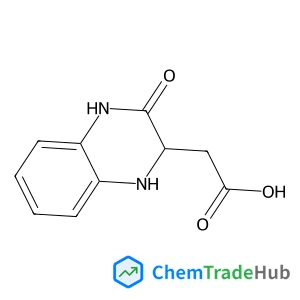
(3-Oxo-1,2,3,4-tetrahydro-2-quinoxalinyl)acetic acid
CAS Number:
136584-14-0
Molecular Formula:
C10H10N2O3
Jin Zhang, Xinfeng Li, Huafeng Dong, Qingfeng Zeng
With the motivation of exploring new high-strength ceramics, ab initio evolutionary simulations are performed to search for all the stable compounds in the Zr–O system. We have found that not only the traditional compound ZrO2, but also the ordered suboxides R-Zr6O, Rc-Zr3O, P1m-Zr2O and P2m-ZrO are stable at zero pressure. The crystal structure of semimetallic P2m-ZrO consists of Zr-graphene layers and can be described as an intercalated version of the ω-Zr structure. An interesting massive Dirac cone is found in the three-dimensional (3D) band structure of P2m-ZrO at the Γ-point. The elastic properties, the hardness and the correlation between the mechanical properties of Zr–O compounds and the oxygen content have been systematically investigated. Surprisingly, the hardest zirconium oxide is not ZrO2, but ZrO. Both P2m-ZrO and P1m-Zr2O exhibit relatively high hardness values of 14 GPa and 10 GPa, respectively. The anisotropic Young's modulus E, torsion shear modulus Gt and linear compressibility β have been derived for P2m-ZrO and P1m-Zr2O. Further analyses of the density of states, the band structure and the crystal orbital Hamilton population indicate that the electronic structure of Zr–O compounds is directly related to their mechanical properties. The simultaneous occurrence of the 3D-framework of Zr–O and the strong Zr–Zr bonds in P2m-ZrO explains its high hardness.

Contact Lens & Anterior Eye

Molecules

Current Pharmaceutical Biotechnology

Journal of Enzyme inhibition and Medicinal Chemistry

Photochemical & Photobiological Sciences

Lab on a Chip

European Journal of Organic Chemistry

Faraday Discussions

Environmental Toxicology and Pharmacology

Journal of Medical Biochemistry
Petrus F. Kuijpers, Diana Bernin
DOI: 10.1039/D2PY00231K
Marta Angoy, M. Victoria Jiménez, Fernando J. Lahoz, Eugenio Vispe, Jesús J. Pérez-Torrente
DOI: 10.1039/D1PY01650D
Tianbiao Wei, Shanqing Huang, Qingyuan Hu, Jue Wang, Zhongzhong Huo, Tongyang Zhu, Chi Wu, Hao Chen
DOI: 10.1039/D1PY01574E
Talia A. Shmool, Anna P. Constantinou, Andreas Jirkas, Chen Zhao, Theoni K. Georgiou, Jason P. Hallett
DOI: 10.1039/D2PY00053A
Jiliang Tian, Xingwang Zhang, Shaofeng Liu
DOI: 10.1039/D2PY00125J
Vikram Baddam, Lauri Välinen, Linus Kuckling, Heikki Tenhu
DOI: 10.1039/D2PY00301E
Jie Li, Peng Liu
DOI: 10.1039/D1PY01670A
This compound is mainly used as an intermediate in the synthesis of antipsychoti...
Waste containing 1-(D-Ribofuranosyl)-1,4-dihydro-3-pyridinecarboxamide (CAS: 191...
2-Methyl-2-propanyl 3-bromo-3-(hydroxymethyl)-1-azetidinecarboxylate (CAS: 20079...
N-(4-Chloro-2-pyridinyl)acetamide (CAS: 245056-66-0) is a chemical compound with...
5-Chloro-2-hydroxybenzoic acid, also known as 5-chlorosalicylic acid, is an arom...
When handling 1,1-Dichloro-1-fluoroethane (CAS: 1717-00-6), it is important to u...
Fmoc-(2S,3R)-3-phenylpyrrolidine-2-carboxylic acid is a white crystalline solid ...
4-Amino-5-bromo-2-pyridinecarboxylic acid is primarily used as a precursor in th...
Handling this compound should be done with personal protective equipment (PPE) i...
When handling 8-bromo-2,2-dimethyl-3,4-dihydro-2H-1,4-benzoxazin-3-one, use prop...

Physical Chemistry Chemical Physics (PCCP) is an international journal co-owned by 19 physical chemistry and physics societies from around the world. This journal publishes original, cutting-edge research in physical chemistry, chemical physics and biophysical chemistry. To be suitable for publication in PCCP, articles must include significant innovation and/or insight into physical chemistry; this is the most important criterion that reviewers and Editors will judge against when evaluating submissions. The journal has a broad scope and welcomes contributions spanning experiment, theory, computation and data science. Topical coverage includes spectroscopy, dynamics, kinetics, statistical mechanics, thermodynamics, electrochemistry, catalysis, surface science, quantum mechanics, quantum computing and machine learning. Interdisciplinary research areas such as polymers and soft matter, materials, nanoscience, energy, surfaces/interfaces, and biophysical chemistry are welcomed if they demonstrate significant innovation and/or insight into physical chemistry. Joined experimental/theoretical studies are particularly appreciated when complementary and based on up-to-date approaches.

![Methyl 4-({[(2-methyl-2-propanyl)oxy]carbonyl}amino)bicyclo[2.2.2]octane-1-carboxylate structure](https://static.chemtradehub.com/structs/943/943845-74-7-b7e5.webp "Methyl 4-({[(2-methyl-2-propanyl)oxy]carbonyl}amino)bicyclo[2.2.2]octane-1-carboxylate structure")